Last updated: September 2026
How Much Is Your Accordion Worth?
Whether you have a Hohner, Giulietti, Gabbanelli, Scandalli, Paolo Soprani, or any other brand of piano accordion, button accordion, or concertina, our AI analyzes the brand, type, reed configuration, and condition to provide an accurate valuation. Inherited an accordion? Downsizing a collection? Know what your instrument is worth.
Get the free app for unlimited scans


Compare real prices
See what accordions are listed for right now
Affiliate link: we earn a commission if you buy, at no extra cost to you.
What do you want to value?
Get the free app for unlimited scans
Why Knowing Your Accordions Value Matters
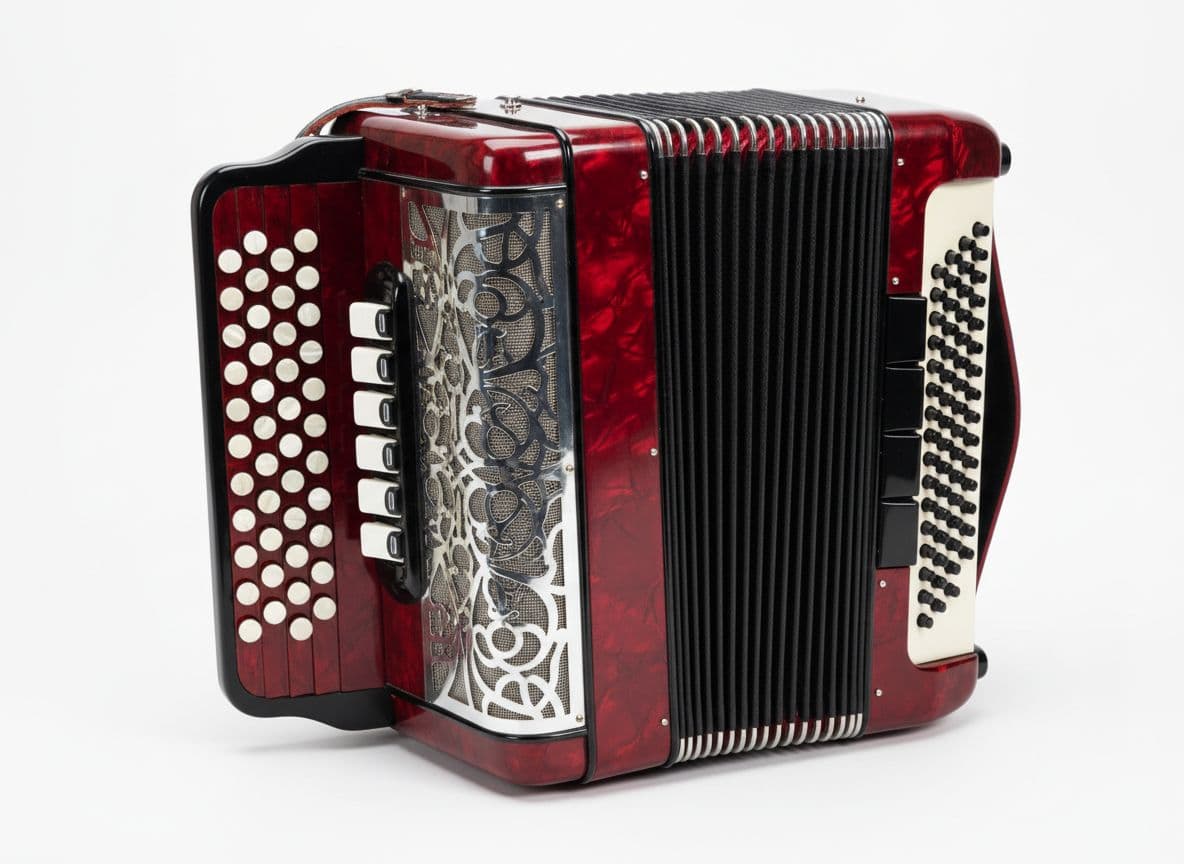
Accordions are one of the most misunderstood instruments when it comes to value. Many people inherit or find accordions and assume they are either worthless or extremely valuable. The truth depends entirely on the specific instrument. Quality Italian-made accordions from the mid-20th century golden era (1940s-1970s) can be worth $500-$5,000+, while mass-produced student models and cheap imports may be worth only $50-$200. The accordion market has experienced a revival driven by folk, zydeco, Tejano, polka, and world music scenes. Professional-quality instruments are in steady demand, while beginner and student models are plentiful and affordable. The key value factors are the maker, number of reeds/voices, bass buttons, and most critically, whether the reeds are in tune and the bellows are airtight. An accordion with stuck reeds or leaking bellows needs expensive repairs that can exceed the instrument's value.
Key Factors That Affect Accordions Value
Understanding what drives the price of accordions helps you get the most accurate valuation.
Brand & Origin
Italian-made accordions (Giulietti, Scandalli, Paolo Soprani, Excelsior, Borsini) are the most valued. Handmade Italian reeds are superior in tone and durability. German brands (Hohner, Weltmeister) range from student to professional quality. Gabbanelli is the premium choice for Tejano and Norteño music. Castagnari and Saltarelle are premier button accordion/melodeon makers. Asian-made student models have minimal resale value ($50-$150).
Type & Configuration
Full-size piano accordions (41 keys, 120 bass) are the standard professional instrument. Smaller configurations (25-37 keys, 48-96 bass) serve students and casual players. Button accordions (diatonic and chromatic) serve folk, Cajun, and Latin music markets. Chromatic button accordions (bayan) are valued in classical and Eastern European markets. Concertinas (Anglo, English, Duet) are a separate collectible market. More reeds/voices (switches) indicate higher quality.
Reed Quality & Tuning
Hand-made reeds (tipo a mano, a mano) are the mark of a professional instrument and command premiums. Machine-made reeds are standard in student and mid-range instruments. All reeds must play. Stuck, broken, or badly out-of-tune reeds require professional repair ($200-$1,000+). The number of reed sets (2, 3, or 4 sets) determines the instrument's tonal range and value. Musette tuning (wet tuning) is desired for French, Cajun, and folk music.
Bellows Condition
Bellows are the lungs of the accordion. They must be airtight. Leaking bellows (the accordion won't hold air when compressed) need professional repair ($300-$800). Bellows corners are the most common wear point. Cracking or taping indicates age and use. Bellows material (leather vs. cardboard with leather corners) affects durability. A bellows test (compress and hold. Should maintain pressure for 15+ seconds) is the quickest quality check.
Cosmetic Condition & Completeness
Celluloid finish (the decorative covering) should be intact. Chipping, cracking, or missing pieces reduce visual appeal and value. Rhinestones, mother-of-pearl, and decorative inlays indicate higher-end instruments. All keys and buttons should move freely. Bass mechanism should be responsive. Straps should be intact or easily replaceable. Original case adds 5-10% to value. A polished, clean instrument photographs and sells better.
Tips for Valuing Accordions
Get the most accurate valuation by following these tips when photographing your accordions.
Photograph the front showing all keys, buttons, switches, and decorative elements
Show the brand name/logo prominently. This is the first thing buyers look for
Demonstrate the bellows by compressing them and noting how long they hold pressure
Play a few notes on video if possible to demonstrate that reeds are working and in tune
Accordions Market Insights
The accordion market is niche but dedicated. eBay is the primary online marketplace. It reaches the global buyer base that local platforms cannot. Liberty Bellows (Philadelphia) and Accordion Gallery (Houston) are major dealers that buy and sell used instruments. Local music stores rarely handle accordions. Specialist accordion shops are the best resource for consignment or trade. Facebook groups dedicated to accordion buying/selling are active communities. The Tejano/Norteño market in Texas and the Southwest drives strong demand for Gabbanelli and Hohner button accordions. The folk/Celtic market values Castagnari and Saltarelle button boxes. Vintage Italian piano accordions from the 1950s-1970s are sought after by jazz and world music players. Shipping accordions requires careful packing. They are delicate instruments, and improper shipping damages reeds and bellows.
Notable Accordions Values
Real-world examples of what specific accordions have sold for, so you can benchmark your own.
| Accordion | Condition | Typical Value |
|---|---|---|
| Hohner Corona II Classic (Diatonic Button) | Used, Good | $300 - $600 |
| Hohner Anacleto Rey del Norte (Button) | Used, Good | $800 - $2,000 |
| Scandalli Super VI (Piano, Italian) | Used, Good | $1,500 - $4,000 |
| Paolo Soprani (Piano, Vintage 1950s-60s) | Used, Fair-Good | $400 - $1,200 |
| Hohner Morino Artiste (Piano, Vintage) | Used, Good | $1,000 - $3,500 |
| Castagnari Handry (Diatonic Button, New) | New / Near Mint | $2,000 - $3,500 |
| Stradella / Generic Chinese Student Piano Accordion | Used, Fair | $50 - $250 |
| Victoria Bayan (Russian Button, Vintage) | Used, Good | $600 - $2,000 |
| Pigini Mythos (Piano, High-End Italian) | Used, Near Mint | $4,000 - $9,000+ |
Based on eBay sold listings, accordion dealer catalogs (e.g., Accordion Life, Liberty Bellows), and collector forum price discussions.
Find Out What Your Accordions Are Worth
Upload a photo now and get a free AI-powered valuation in seconds. No sign-up required.
Accordions Valuation FAQ
How much is a vintage accordion worth?
Quality Italian-made professional accordions (1940s-1970s): $500-$3,000+ depending on brand and condition. Premium Italian brands in excellent condition: $1,000-$5,000. German Hohner professional models: $300-$1,500. Student and mid-range models: $100-$400. Mass-produced imports: $50-$200. The brand, reed quality, and playability determine value more than age alone.
Are old accordions worth anything?
It depends entirely on the brand and condition. A 1960s Giulietti or Scandalli in good playing condition is worth $800-$3,000+. A 1960s no-name student accordion might be worth $50-$100. The key is whether the reeds play, the bellows hold air, and the brand is recognized. Many old accordions need $300-$1,000 in repairs to be playable, which can exceed their value for lower-end models.
How much does accordion repair cost?
Basic tuning: $200-$500 depending on the number of reeds. Bellows replacement: $500-$1,000+. Reed replacement: $50-$200 per reed. Full restoration of a vintage instrument: $1,000-$3,000. Bass mechanism repair: $200-$600.compare repair costs to the instrument's market value before investing. For premium Italian instruments, repairs are almost always worthwhile. For student models, repairs often exceed the instrument's value.
Where can I sell an accordion?
eBay reaches the widest buyer base and is the most effective platform for accordions. Specialty dealers (Liberty Bellows, Accordion Gallery) buy directly or consign. Facebook accordion groups connect you with knowledgeable buyers. Local music stores rarely handle accordions. Craigslist works for local sales. Accordion conventions and festivals are excellent selling opportunities. Proper packing is essential for shipping. Double-box with extensive cushioning.
How do I know if my accordion is good quality?
Check for: Italian manufacture (look for 'Made in Italy' stamp), hand-made reeds (marked 'tipo a mano' or 'a mano'), 4 or 5 reed sets (more switches = more voices = higher quality), 41 treble keys and 120 bass buttons (full-size), solid celluloid finish, and responsive key/button action. Professional instruments are noticeably heavier than student models due to more reeds and better construction. The brand name is the quickest quality indicator.
Value anything, anytime
Unlimited valuations, saved history and full reports in the free app.