Last updated: September 2026
How Much Are Antique Bottles Worth?
Antique bottles. From medicine bottles and flasks to soda bottles and poison bottles. Are among the most collected antiques in America. Many are found while digging, metal detecting, or cleaning out old properties. Our AI identifies your bottle's type, age, color, and condition for an accurate market valuation.
Get the free app for unlimited scans


Compare real prices
See what antique bottles are listed for right now
Affiliate link: we earn a commission if you buy, at no extra cost to you.
What do you want to value?
Get the free app for unlimited scans
Why Knowing Your Antique Bottles Value Matters
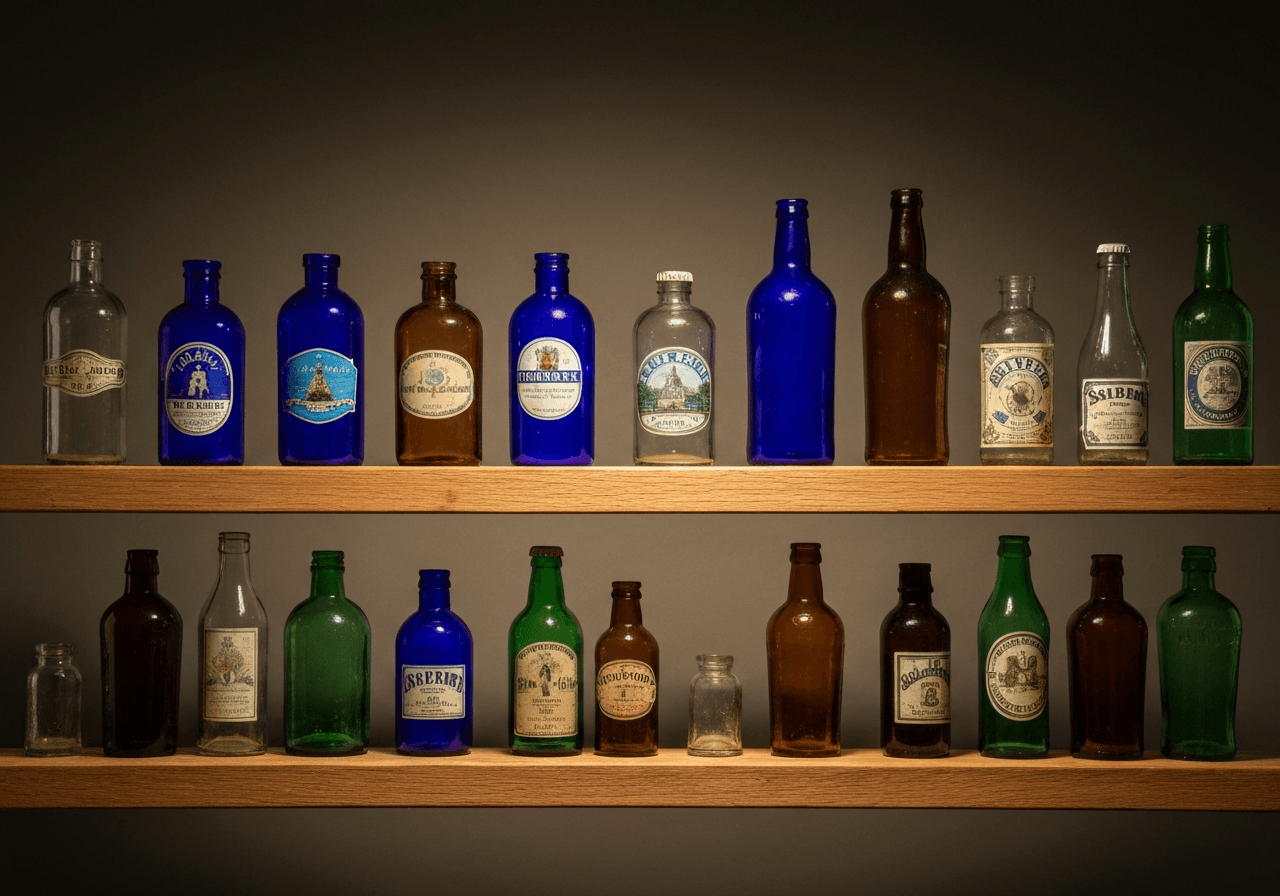
Bottle collecting is one of the most accessible antique hobbies, with common finds worth $5-$30 and rare specimens worth thousands. Color is king in bottle collecting: a common aqua bottle might be $5, but the same bottle in cobalt blue, amber, or especially emerald green or yellow can be worth $50-$500+. Historical flasks with embossed designs, pontiled medicine bottles, and early soda bottles with blob tops are the most valuable categories. Many old bottles are found during property excavations, demolitions, and in old dump sites. They're literally treasure waiting to be dug up.
Key Factors That Affect Antique Bottles Value
Understanding what drives the price of antique bottles helps you get the most accurate valuation.
Color
Common aqua/clear: base value. Cobalt blue: 3-10x base. Amber/brown: 2-3x. Emerald green: 5-15x. Olive green: 2-5x. Amethyst/purple (sun-colored): 2-5x. Yellow/citron: 10-20x+ (very rare). Color is the single biggest value factor.
Type
Historical flasks (embossed eagles, portraits): $50-$50,000+. Bitters bottles: $20-$5,000+. Poison bottles (skull & crossbones, cobalt): $25-$500+. Blob-top sodas: $10-$200+. Medicine/pharmacy: $5-$200+. Ink bottles (geometric shapes): $10-$300+. Fruit jars (Mason): $5-$100+.
Age Indicators
Pontil mark on base (pre-1860): significant age premium.applied lip (pre-1880): adds value. Tooled lip (1880-1910): moderate age. Machine-made (post-1910): lowest age value. Free-blown (pre-1830): very valuable. Age is determined by manufacturing characteristics, not just appearance.
Embossing & Design
Embossed city/merchant names: add local history premium. Pictorial flasks (eagles, ships, railroads): highly collectible. Figural bottles (shaped like animals, buildings): $50-$500+. Clear embossing with readable text: preferred over worn examples.
Condition
Mint (no chips, cracks, staining): full value. Light haze/staining: 80-90%. Chips: 30-60% reduction depending on location. Cracks: 50-80% reduction. Cleaned/polished (professionally tumbled): acceptable and common.
Tips for Valuing Antique Bottles
Get the most accurate valuation by following these tips when photographing your antique bottles.
Note the color in natural light. Bottle color is the #1 value factor
Check the base for a pontil mark (rough scar). this indicates pre-1860 manufacture
Photograph any embossing clearly. City names and merchant names add value
Don't try to remove internal staining with harsh chemicals. Professional tumbling is preferred
Antique Bottles Market Insights
Bottle collecting has a passionate community with active clubs, shows, and auction houses. The American Bottle Auctions and Glass Works Auctions regularly achieve strong prices. Rare colored bottles and historical flasks are investment-grade antiques. The hobby benefits from ongoing finds. Old dump sites, privy digs, and construction projects continue to unearth bottles, keeping fresh material entering the market. Online platforms have expanded the buyer pool, generally supporting prices.
Find Out What Your Antique Bottles Are Worth
Upload a photo now and get a free AI-powered valuation in seconds. No sign-up required.
Antique Bottles Valuation FAQ
What old bottles are worth the most?
Historical flasks with embossed designs ($500-$50,000+), colored bitters bottles ($100-$5,000+), pontiled medicine bottles in rare colors ($50-$2,000+), and cobalt blue poison bottles ($50-$500+). The most valuable bottle ever sold was a GI-16 eagle flask for over $60,000.
How do I date my old bottle?
Key dating features: pontil mark on base = pre-1860.applied lip = pre-1880. Tooled lip = 1880-1910. Machine-made seam to top = post-1910. Embossed dates, patent dates, and merchant research also help narrow the timeframe.
Are old Coca-Cola bottles valuable?
Most are worth $2-$15. Hutchinson-style Coke bottles (pre-1915): $100-$2,000+. Early embossed straight-sided bottles: $25-$200. The iconic contour (hobbleskirt) bottle: $5-$30 for common versions, more for early or unusual variants.
Where can I find antique bottles?
Old dump sites, privy (outhouse) locations, construction sites, creek beds, beaches, and old farmsteads. Metal detecting can help locate concentrated dump sites. Always get permission before digging on private property. Estate sales and antique shops are also good sources.
Where can I sell antique bottles?
American Bottle Auctions and Glass Works Auctions for valuable pieces ($100+). eBay for all value levels. Bottle shows (FOHBC events) attract dedicated collectors. Facebook bottle collecting groups are very active. Local antique shops handle common bottles.
Antique Bottles Guides & Articles
Value anything, anytime
Unlimited valuations, saved history and full reports in the free app.