March 23, 2026 · Updated March 2026
Most Valuable Antique Bottles: 15 Old Bottles Worth Money
Why Old Bottles Are Valuable
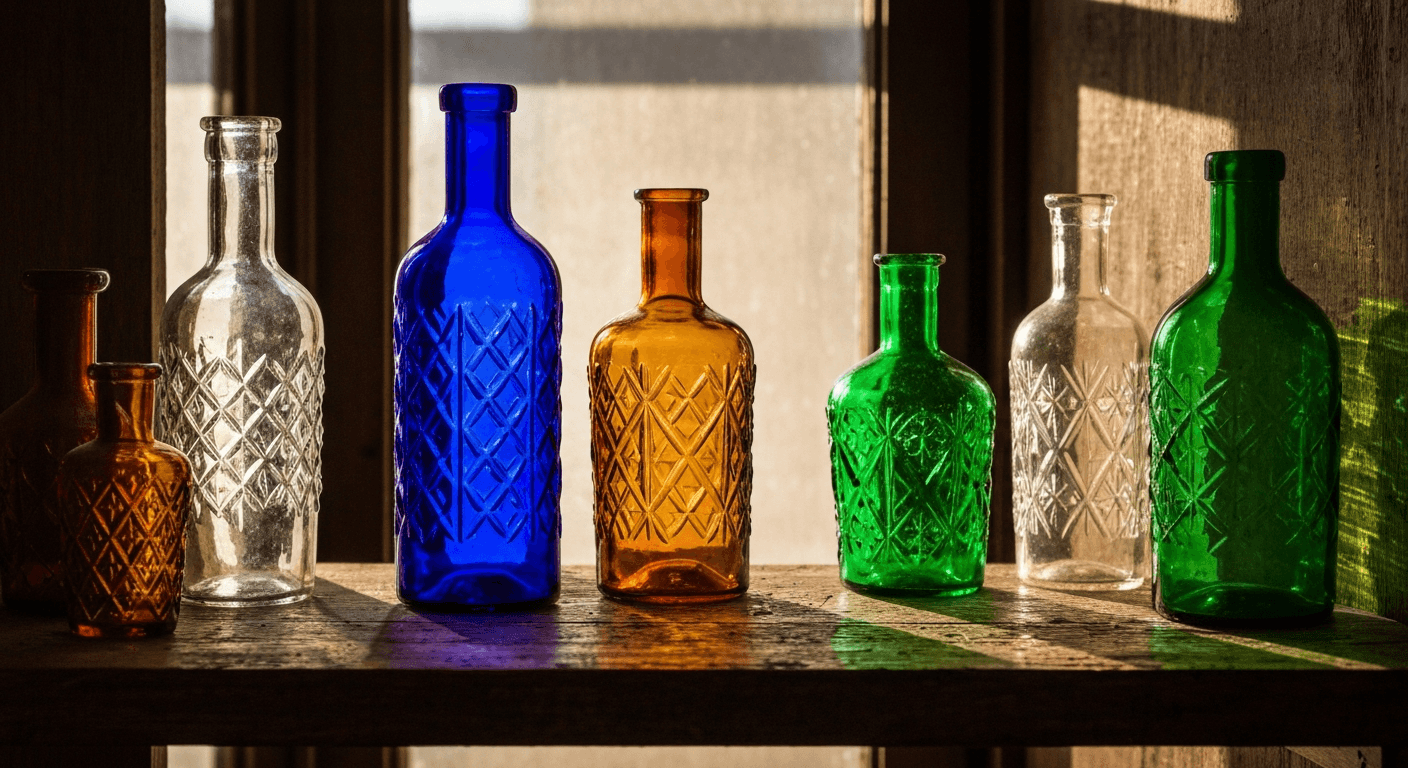
Antique bottle collecting is one of the oldest collecting hobbies in America, dating back to the 1800s. Bottles made before 1900 were hand-blown and each is unique. The glass colors, embossing, shapes, and pontil marks tell stories of American commerce, medicine, and culture. Rare examples of early American flasks, bitters bottles, and historical flasks routinely sell for thousands at auction.
The key value factors are: age (pre-1860 hand-blown bottles are most valuable), color (unusual colors like cobalt, puce, and teal command premiums), condition (chips and cracks drastically reduce value), rarity (low-production local bottles), and embossing (bottles with embossed names, designs, or historical imagery).
The 15 Most Valuable Antique Bottles
1. General Washington / Eagle Historical Flask. $20,000 to $100,000+
Early American historical flasks (1820s–1850s) featuring images of George Washington, eagles, and patriotic symbols are among the most valuable bottles. A pint-sized GI-14 Washington/Eagle flask in an unusual color like deep sapphire blue can bring $50,000 to $100,000.common aqua examples: $200–$1,000.
2. Drake’s Plantation Bitters (6-Log Cabin). $500 to $50,000
These cabin-shaped bitters bottles from the 1860s are iconic.common amber examples: $100–$300. Rare colors like puce (reddish-purple): $5,000–$20,000. The extremely rare medium blue example sold for $50,000+. The embossed “S T DRAKE’S 1860 PLANTATION X BITTERS” is one of the most recognized in bottle collecting.
3. Cobalt Blue Poison Bottles. $50 to $5,000
Victorian-era poison bottles were made in distinctive colors and shapes to prevent accidental ingestion. Cobalt blue skull-and-crossbones bottles are the most dramatic.common small cobalt poisons: $50–$150. Large, ornate, or figural poison bottles: $500–$5,000. The coffin-shaped poison bottle is particularly sought after.
4. Saratoga-Type Mineral Water Bottles. $100 to $15,000
Cylindrical bottles from Saratoga Springs, NY mineral water companies (1840s–1880s) in quart and pint sizes.common olive or amber: $100–$300. Rare colors like teal, emerald green, or cobalt: $2,000–$15,000. The “Congress & Empire Spring” and “Hathorn Spring” are among the most collected.
5. Figured Flasks (Cornucopia, Sunburst, Masonic). $200 to $30,000
Early American blown glass flasks with molded designs including cornucopias, sunbursts, and Masonic symbols.common patterns in aqua: $200–$500. Rare patterns in unusual colors: $5,000–$30,000. The GIV-1 Masonic/Eagle flask in deep amethyst has sold for over $20,000.
6. Dr. Townsend’s Sarsaparilla. $100 to $10,000
Square-bodied patent medicine bottles from the 1840s–1870s.common aqua or olive examples: $100–$300. Iron pontil examples in unusual colors like teal or cobalt: $2,000–$10,000. Dr. Townsend’s is one of the most famous patent medicine brands.
7. Target Ball Bottles. $200 to $8,000
Glass balls used for shooting practice before clay pigeons were invented (1870s–1890s). These spherical bottles were meant to be destroyed, making intact survivors rare.common amber or blue: $200–$500. Rare colors or embossed examples: $2,000–$8,000. Bogardus, Ira Paine, and N.B. Glass Works are desirable makers.
8. Hutchinson Soda Bottles. $20 to $5,000
Early soda bottles (1879–1912) using the Hutchinson wire stopper closure.common examples from large cities: $20–$50. Small-town bottles with local merchant names: $100–$500. Rare bottles from small Western towns: $1,000–$5,000. Colored Hutchinson bottles (cobalt, amber, green) are more valuable than clear or aqua.
9. Ink Bottles (Umbrella, Teakettle, Figural). $50 to $10,000
Decorative ink bottles from the 1840s–1890s. Umbrella inks (8-sided) in common colors: $50–$200. Teakettle-shaped inks: $100–$500. Rare figural inks in unusual colors: $1,000–$10,000. The Carter’s Cathedral ink bottle in cobalt blue is a top collector piece.
10. Whiskey Bottles (Pre-Prohibition). $50 to $20,000
Hand-blown whiskey bottles from before Prohibition (1920) are collectible, especially those with embossed distillery names.common cylinder fifths: $50–$200. Rare Western whiskey bottles with embossed names: $1,000–$10,000. The “A.M. Bininger” barrel-shaped whiskey in amber has sold for $15,000+.
11. Milk Bottles (Painted Label). $5 to $500
Embossed and painted-label milk bottles from local dairies (1880s–1960s).common embossed bottles: $5–$20. Painted-label “pyro” bottles with colorful dairy graphics: $20–$100. War-era slogan bottles or bottles with Black Americana graphics: $100–$500.
12. Barber Bottles. $100 to $3,000
Ornate glass bottles used in barbershops to hold hair tonic, bay rum, and witch hazel (1880s–1920s). Hand-painted, enamel-decorated examples: $200–$1,000. Art glass barber bottles by makers like Hobbs, Brockunier: $500–$3,000.common clear or pressed glass: $100–$200.
13. Fruit Jars (Mason, Lightning, Wax Sealers). $5 to $10,000
Early canning jars from the 1850s–1920s.common Ball and Mason jars: $5–$20. Colored jars (amber, cobalt, black): $100–$2,000. Rare makers like Willoughby Stopple or Lafayette: $1,000–$10,000. The upside-down Ball error jar is a popular find at $50–$200.
14. Bitters Bottles (Figural). $200 to $30,000
Figural bitters bottles shaped like barrels, fish, pigs, ears of corn, and cabins are art glass collectibles.common amber barrel bitters: $200–$500. Rare figural shapes in unusual colors: $5,000–$30,000. The Fish Bitters in medium blue-green is legendary.
15. Fire Grenades. $100 to $3,000
Glass globes filled with fire-extinguishing chemicals, meant to be thrown at fires (1870s–1910s). Cobalt blue Harden’s Star grenades: $200–$500. Amber or green examples: $300–$1,000. Rare colors or makers: $1,000–$3,000.
How to Identify Valuable Bottles
- Check the base for a pontil mark. An open or iron pontil (rough scar on the base) indicates the bottle was hand-blown, typically pre-1860, and is more valuable.
- Look at the seam lines. Mold seams that stop below the lip indicate a hand-finished bottle (pre-1910). Seams running over the lip indicate machine-made (post-1910, generally less valuable).
- Identify the color in natural light. Hold the bottle up to sunlight. Many bottles that appear black are actually deep olive, amber, or forest green. Unusual colors are worth more.
- Read all embossing. Look for names, cities, patent dates, and product descriptions. Local and regional bottles from small towns are often scarcer and more valuable than national brands.
- Check for damage carefully. Chips on the lip, cracks, and heavy staining reduce value by 50–80%. Minor wear is acceptable for very rare bottles.
Found old bottles? Upload a photo to our free AI valuation tool and get an instant estimate based on type, color, age, and condition.

Shop & Compare Prices
See current listings and recently sold items on eBay