Last updated: September 2026
How Much Are Vintage Signs Worth?
Vintage advertising signs. From porcelain enamel gas station signs to neon beer signs and tin tobacco advertisements. Are among the most visually striking and valuable collectibles. Our AI identifies your sign's brand, material, era, and condition to provide an accurate market valuation. Whether it's a classic Coca-Cola porcelain sign or an old neon bar sign, find out what it's worth.
Get the free app for unlimited scans


Compare real prices
See what vintage signs are listed for right now
Affiliate link: we earn a commission if you buy, at no extra cost to you.
What do you want to value?
Get the free app for unlimited scans
Why Knowing Your Vintage Signs Value Matters
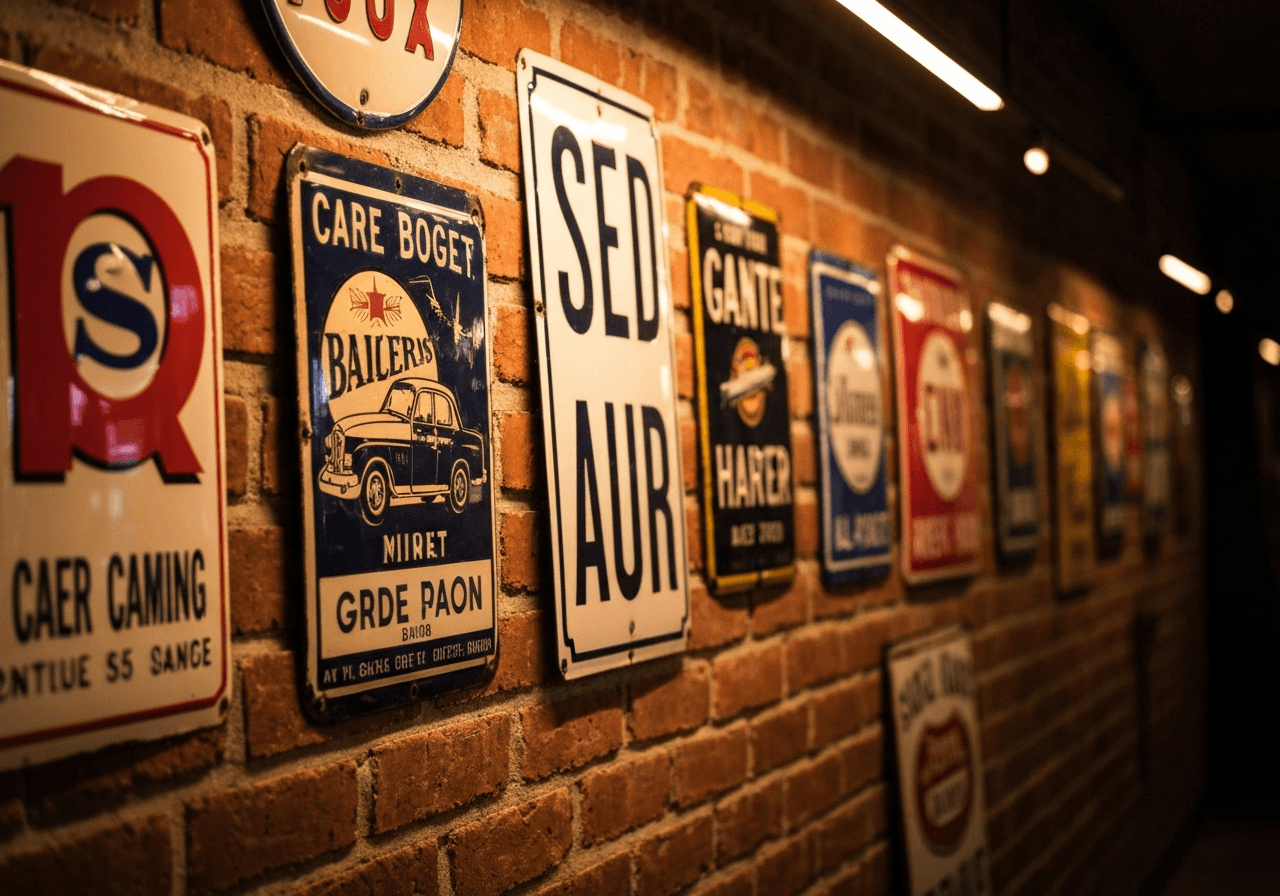
Vintage signs combine Americana nostalgia with interior design appeal, creating demand from both serious collectors and decorators. A double-sided porcelain Texaco sign from the 1930s can sell for $5,000-$20,000. Neon signs from iconic brands bring $500-$10,000+. Even common tin signs from the 1950s-60s are worth $50-$300. Many old signs survive in barns, garages, and basements where they've hung for decades. The condition and brand make an enormous difference. Knowing what you have before selling prevents letting a $5,000 sign go for $100 at a garage sale.
Key Factors That Affect Vintage Signs Value
Understanding what drives the price of vintage signs helps you get the most accurate valuation.
Material & Type
Porcelain enamel (most durable, highest value): $100-$100,000+. Neon signs (working): $200-$10,000+. Tin/embossed tin: $20-$5,000+. Cardboard/paper (framed, vintage): $20-$500. Reverse-painted glass: $100-$2,000+. Wooden signs: $50-$1,000+.
Brand & Subject
Most valuable brands: oil/gas (Texaco, Sinclair, Shell, Gulf) $200-$50,000+, soda (Coca-Cola, Pepsi, 7-Up) $100-$20,000+, automotive (Ford, Chevrolet, John Deere) $200-$30,000+, beer (Budweiser, neon brewery signs) $100-$5,000+, tobacco (Camel, Lucky Strike) $100-$5,000+.
Size & Visual Impact
Larger signs command higher prices. A 6-foot porcelain sign is worth 3-5x a 12-inch version of similar quality. Double-sided signs (designed to hang from a bracket) are worth more than single-sided. Die-cut signs (shaped to the brand image) command premiums. Neon signs with complex multi-color designs are most valuable.
Condition
Excellent (minor edge chips only): full value. Good (some fading, moderate chips): 60-80%. Fair (heavy chipping, rust, fading): 30-50%. Poor (major damage, holes, heavy rust): 10-25%. For neon signs, working condition is essential. Non-working neon loses 50%+ of value unless the design is exceptional.
Age & Authenticity
Pre-1940s signs are most valuable. 1940s-1960s: strong values. 1970s+: moderate values. Reproductions exist for most popular signs. Look for proper aging, mounting holes, and period-correct construction. Fantasy signs (modern creations in vintage style) have minimal collectible value.
Tips for Valuing Vintage Signs
Get the most accurate valuation by following these tips when photographing your vintage signs.
Note the material. Porcelain enamel has a glass-like coating that chips to reveal metal underneath
Check for neon tube condition. Working neon is worth significantly more
Photograph any brand names, logos, and text clearly
Look for mounting holes and brackets that indicate original use
Vintage Signs Market Insights
The vintage sign market is driven by the intersection of Americana collecting, man-cave/garage décor, and restaurant/bar design. Prices have been strong for quality porcelain and neon signs, with oil/gas and automotive signs showing the best appreciation. The market benefits from broad appeal. Signs are visual, displayable, and speak to shared cultural memories. Reproduction awareness is important, as many fake 'vintage' signs are sold online. Auction houses specializing in petroliana and advertising regularly achieve strong prices for authenticated pieces.
Find Out What Your Vintage Signs Are Worth
Upload a photo now and get a free AI-powered valuation in seconds. No sign-up required.
Vintage Signs Valuation FAQ
What vintage signs are worth the most?
Large porcelain gas/oil signs (Texaco, Sinclair): $5,000-$50,000+. Early Coca-Cola porcelain signs: $2,000-$20,000+. Neon automotive dealer signs: $1,000-$10,000+. The most valuable sign ever sold was a Musgo Gasoline porcelain sign for $310,000. Even common vintage tin signs bring $50-$300.
How do I tell if a vintage sign is authentic?
Authentic porcelain signs have chips revealing metal substrate, proper age-related oxidation, period-correct fonts and colors, and evidence of original mounting. Reproductions often have overly perfect surfaces, incorrect weight, wrong fonts, and artificial aging. Check the back. Vintage signs show appropriate aging and patina.
Are neon signs valuable?
Yes. Vintage neon signs are highly collectible. Working neon beer signs: $200-$2,000+. Automotive neon: $500-$10,000+. Custom/one-of-a-kind neon: $300-$5,000+. Working condition is critical. Non-working neon loses significant value. Neon can often be restored by specialists.
Where can I sell vintage signs?
Specialty auction houses (Matthews Auctions, Morphy Auctions) achieve the best prices for high-value signs. eBay is the largest general marketplace. Antique advertising shows attract serious collectors. Local antique dealers handle mid-range pieces. For large or fragile signs, local sales avoid shipping challenges.
Should I restore a damaged vintage sign?
Generally, collectors prefer original condition with honest wear over restoration. Professional touch-up of minor chips is acceptable for some collectors but controversial for others. For neon signs, having them professionally repaired to working condition typically increases value. Never repaint a porcelain sign. It destroys authenticity and value.
Value anything, anytime
Unlimited valuations, saved history and full reports in the free app.