Last updated: September 2026
How Much Is My Typewriter Worth?
From early Underwood and Royal desktop typewriters to colorful Olivetti portables and rare pre-1900 machines, our AI identifies your typewriter's make, model, era, and condition to provide accurate market valuations. Whether you discovered a typewriter at a thrift store or inherited one from a relative, find out if you have a valuable collectible or usable writing machine.
Get the free app for unlimited scans


Compare real prices
See what typewriters are listed for right now
Affiliate link: we earn a commission if you buy, at no extra cost to you.
What do you want to value?
Get the free app for unlimited scans
Why Knowing Your Typewriters Value Matters
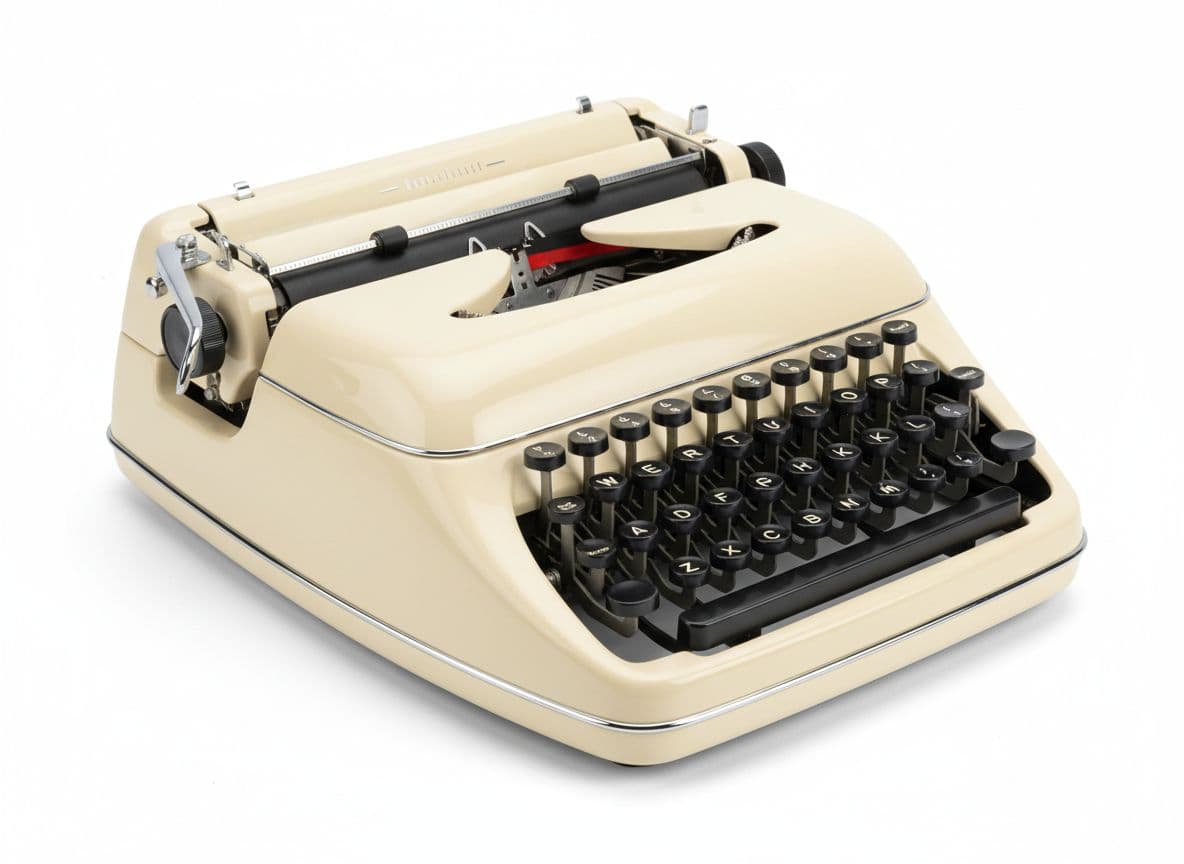
Typewriters have experienced a remarkable collecting renaissance, driven by writers seeking analog creative tools, hipster culture, and nostalgia. The market has grown dramatically since the mid-2010s, with certain models seeing 200-500% price increases. A Hermes 3000 in mint condition that sold for $50 in 2010 now commands $400-$800. Early typewriters from the 1880s-1900s can sell for $1,000-$50,000+ depending on rarity. Even common mid-century portables from the 1950s-70s have become desirable, with clean working examples selling for $100-$400. Many people have typewriters stored away without realizing the growing demand for these machines.
Key Factors That Affect Typewriters Value
Understanding what drives the price of typewriters helps you get the most accurate valuation.
Brand & Model
Certain brands are more desirable than others. Hermes (especially the 3000 and Baby), Olivetti (Lettera 32, Valentine), Royal (Quiet De Luxe), and Olympia (SM series) are among the most sought-after portable typewriters. Early machines by Sholes & Glidden, Hammond, and Blickensderfer are valuable antiques.
Age & Rarity
Pre-1900 typewriters are the most valuable to collectors, especially unusual designs that differ from the standard QWERTY layout. Index typewriters (without keyboards), early visible-print machines, and unique mechanisms command premiums. Even within common brands, early serial numbers indicate earlier production and higher value.
Working Condition
A typewriter that works smoothly - clean type, functioning ribbon advance, good key action, and working carriage return - is worth 2-3x more than a non-working one. Many typewriters need minor servicing (new ribbon, cleaning, lubrication) rather than major repair. Seized carriages and broken mechanisms significantly reduce value.
Color & Aesthetics
Colorful typewriters command premiums. The Olivetti Valentine (red) is worth $500-$1,500, while a similar-quality machine in beige might be $100-$200. Pastel-colored Royal portables from the 1950s, two-tone designs, and unusual color combinations are more valuable than standard black or gray models.
Completeness & Case
Original carrying cases, instruction manuals, cleaning brushes, and original ribbons add value. A typewriter in its original case is worth 20-40% more than the same machine without one. Original boxes and purchase paperwork are particularly desirable for collectors.
Tips for Valuing Typewriters
Get the most accurate valuation by following these tips when photographing your typewriters.
Photograph the typewriter from the front showing the keyboard and brand name
Include a top view showing the carriage and typebars
Type a few lines on paper and photograph the output to show print quality
Show the original case if you have one, and note any missing keys or parts
Typewriters Market Insights
The typewriter market has transformed from a niche hobby to a mainstream collectible category. The resurgence is driven by writers like Tom Hanks (a well-known collector), the creative community seeking distraction-free writing tools, and vintage aesthetics trending on social media. The most dramatic price increases have been for colorful 1960s-70s portables, particularly Olivetti and Royal models. The Olivetti Valentine, designed by Ettore Sottsass, has become a design icon worth $500-$1,500. Hermes typewriters from Switzerland are considered the gold standard for typing quality and consistently command strong prices. The market for antique (pre-1910) typewriters is smaller but serves dedicated collectors and museums. Standard electric typewriters from the 1970s-80s have limited collector interest and modest values.
Notable Typewriters Values
Real-world examples of what specific typewriters have sold for, so you can benchmark your own.
| Typewriter | Condition | Typical Value |
|---|---|---|
| Olivetti Valentine (red, portable) | Used, working | $150 - $400 |
| Hermes 3000 (Swiss portable) | Used, working | $200 - $500 |
| Royal Quiet De Luxe (portable) | Used, working | $50 - $175 |
| Underwood No. 5 (standard desktop) | Used, decorative | $40 - $150 |
| IBM Selectric II | Used, working | $75 - $250 |
| Olivetti Lettera 32 (portable) | Used, working | $80 - $220 |
| Torpedo 18 (German portable) | Used, working | $100 - $300 |
| Corona No. 3 Folding (pre-1930) | Used, working | $80 - $250 |
| Sholes & Glidden (1873-1878) | Museum / auction grade | $5,000 - $20,000+ |
Based on eBay sold listings, LiveAuctioneers auction records, and collector price guides (The Typewriter Exchange, TWDB references).
Find Out What Your Typewriters Are Worth
Upload a photo now and get a free AI-powered valuation in seconds. No sign-up required.
Typewriters Valuation FAQ
Are old typewriters worth money?
Many vintage typewriters have significant value today. Desirable portables from the 1950s-70s (Hermes 3000, Olivetti Lettera 32, Royal Quiet De Luxe) sell for $150-$800 in working condition. Antique typewriters from before 1910 can be worth $500-$50,000+ for rare models. Even common desktop typewriters from the 1940s-50s have modest value ($50-$150) if they work well.
What is the most valuable typewriter?
The most valuable typewriters are rare early machines. A 1st-generation Sholes & Glidden (1874) could be worth $100,000+. Hansen Writing Balls, early Blickensderfer models, and other pre-1900 machines with unusual mechanisms command $5,000-$50,000. Among more common typewriters, the Olivetti Valentine ($500-$1,500), Hermes 3000 ($300-$800), and colorful Royal portables ($200-$500) are the most valuable.
Does my typewriter need to work to be valuable?
Working typewriters are worth significantly more than non-working ones - typically 2-3x the price. However, many typewriter issues are repairable (stuck keys, dried ribbon, stiff carriage). Simple cleaning and a new ribbon can transform a 'non-working' typewriter into a working one. Truly broken machines (cracked frames, missing parts, seized mechanisms) have limited value unless they're rare antiques.
Where can I get my typewriter repaired?
Typewriter repair specialists are increasingly rare but can be found through the typewriter collector community. Online resources like The Typewriter Database and Phoenix Typewriter offer parts and guidance. Many common issues (stuck keys, ribbon replacement, cleaning) can be handled with basic YouTube tutorials and cleaning supplies. For valuable machines, seek an experienced professional.
Typewriters Price Guides
Value anything, anytime
Unlimited valuations, saved history and full reports in the free app.