Last updated: September 2026
How Much Is Your Mobility Scooter Worth?
Whether you have a Pride, Drive Medical, Golden Technologies, Hoveround, or any other brand of travel, mid-size, or heavy-duty mobility scooter, our AI analyzes the brand, model, battery health, weight capacity, and condition to provide an accurate resale valuation. No longer needed? Upgrading? Know what your mobility scooter is worth.
Get the free app for unlimited scans


Compare real prices
See what mobility scooters are listed for right now
Affiliate link: we earn a commission if you buy, at no extra cost to you.
What do you want to value?
Get the free app for unlimited scans
Why Knowing Your Mobility Scooters Value Matters
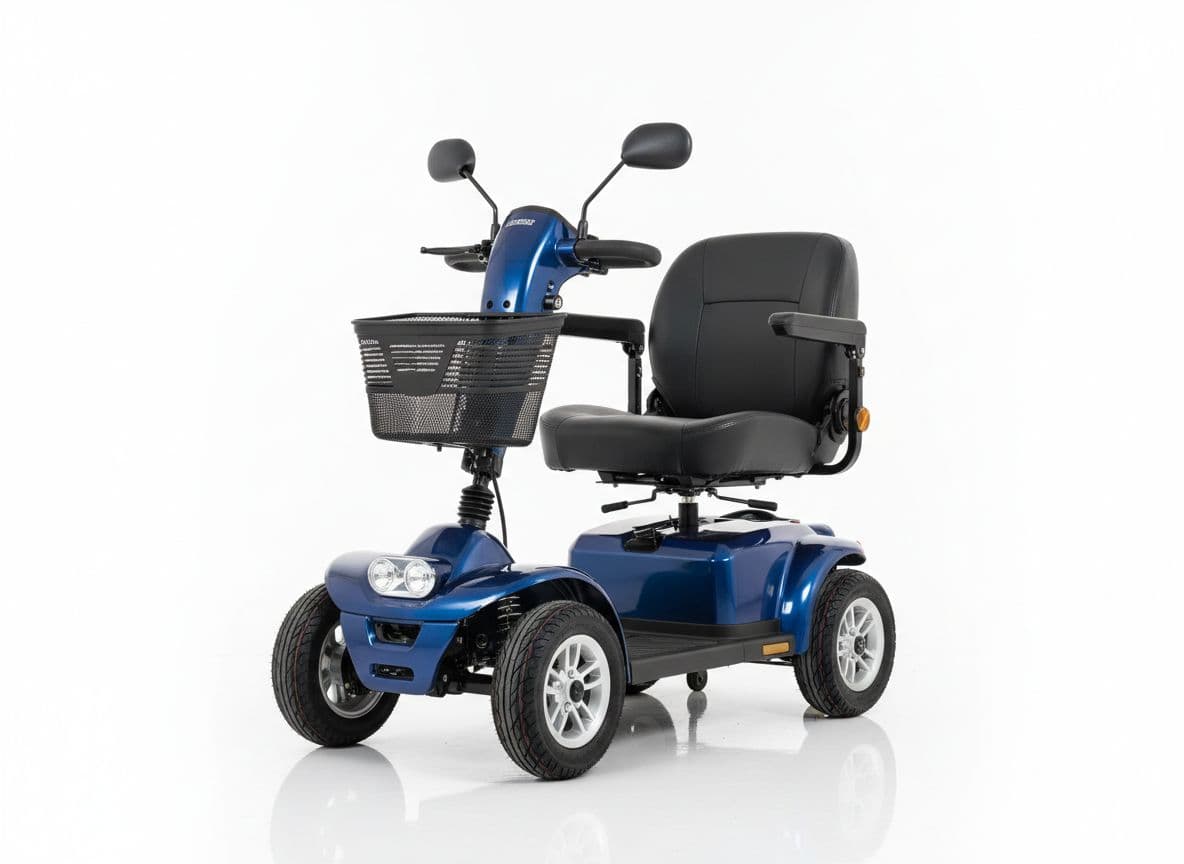
Mobility scooters are essential medical equipment that new can cost $800 for basic travel scooters to $5,000+ for heavy-duty, full-size models. Insurance and Medicare may cover a portion, but many users pay significant out-of-pocket costs. The used market is active because many people need mobility scooters temporarily (post-surgery recovery, visiting elderly parents) or permanently but cannot afford new. Unfortunately, mobility scooters also frequently become available when users pass away or their condition changes. Families often want to sell quickly and fairly. Used scooters typically sell for 30-50% of retail, with battery condition being the single most important factor after basic functionality. A scooter with fresh batteries is worth significantly more than one with weak or dead batteries, since replacement batteries cost $100-$400.
Key Factors That Affect Mobility Scooters Value
Understanding what drives the price of mobility scooters helps you get the most accurate valuation.
Type & Size
Travel/portable scooters (3-4 wheel, disassemble for transport) are the most popular and resalable. $200-$800 used. Mid-size scooters for daily use bring $400-$1,200. Heavy-duty/bariatric scooters (400+ lb capacity) serve a specialized market at $500-$2,000. Full-size luxury scooters with suspension, high-back seats, and long range command premium prices. Three-wheel models offer better maneuverability while four-wheel models provide more stability.
Brand & Quality
Pride Mobility (Go-Go, Victory, Pursuit lines) is the market leader and holds value best. Golden Technologies is the premium choice known for comfort and build quality. Drive Medical offers good value models with moderate resale. Hoveround has strong brand recognition from advertising. Lesser-known import brands depreciate faster. Brand matters because parts availability, dealer service networks, and perceived reliability drive buyer confidence.
Battery Health
Battery condition is the #1 value factor after basic functionality. New batteries in a used scooter add $100-$300 to the selling price. Weak batteries that don't hold a full charge reduce value by $150-$400. Dead batteries make the scooter essentially untestable, significantly reducing buyer confidence and price. Most scooters use sealed lead-acid batteries that last 1-3 years depending on use. Some newer models use lithium-ion batteries with longer life.
Weight Capacity & Range
Standard 250-300 lb capacity scooters serve the broadest market. Heavy-duty models rated 400-500 lb serve a specific need and hold value in that niche. Travel range per charge matters. 10-15 miles is standard, 20+ miles is desirable. Actual range depends heavily on battery health, terrain, and rider weight. Higher-capacity models with longer range command premiums.
Condition & Accessories
Seat condition (tears, wear, cushion compression) significantly affects perceived value. Tires (solid vs. pneumatic) should be in good condition. All controls, lights, and signals should function. Charger must be included. Replacements cost $50-$100. Accessories like baskets, cup holders, canopies, and oxygen tank holders add modest value. A clean, well-maintained scooter photographs better and sells faster.
Tips for Valuing Mobility Scooters
Get the most accurate valuation by following these tips when photographing your mobility scooters.
Demonstrate the scooter running. Show it driving forward, backward, and turning smoothly
Include the charger and show the battery gauge at full charge to prove battery health
Photograph the seat condition, tires, controls, and any accessories included
State the weight capacity, approximate range, and whether it disassembles for transport
Mobility Scooters Market Insights
Facebook Marketplace is the primary selling platform for used mobility scooters. Local pickup is essential since shipping is expensive and complicated. Craigslist and OfferUp are secondary options. Medical equipment resellers buy scooters at wholesale (20-30% of retail) and resell at 40-60%. Some charities and nonprofit organizations accept donated scooters and may provide tax receipts. The market is steady year-round with slight increases in spring and fall when mobility for outdoor activities is most valued. Many buyers are family members purchasing for elderly parents. They often search locally, want a working unit they can test, and are willing to pay fair prices for quality scooters with good batteries. Pricing transparency helps. Clearly stating the battery age and condition, weight capacity, and any issues builds trust.
Notable Mobility Scooters Values
Real-world examples of what specific mobility scooters have sold for, so you can benchmark your own.
| Mobility Scooter | Condition | Typical Value |
|---|---|---|
| Pride Mobility Go-Go Ultra X 3-Wheel | Used | $300 - $700 |
| Drive Medical Scout Compact Travel Power Scooter | Used | $200 - $500 |
| Pride Mobility Pursuit XL PMV5501 | Used | $600 - $1,200 |
| Golden Technologies Buzzaround Carry-On | Used | $250 - $600 |
| Invacare Lynx L-3 3-Wheel Scooter | Used - Poor Battery | $75 - $200 |
| Pride Mobility Wrangler 4-Wheel PMV500 | Used | $700 - $1,500 |
| TravelScoot Lightweight Scooter | Used | $900 - $1,800 |
| Pride Mobility Jazzy Passport (Power Chair) | Used | $500 - $1,100 |
| EWheels EW-36 3-Wheel Recreational Scooter | Used | $400 - $900 |
Based on eBay sold listings, Facebook Marketplace comps, and used medical equipment dealer pricing.
Find Out What Your Mobility Scooters Are Worth
Upload a photo now and get a free AI-powered valuation in seconds. No sign-up required.
Mobility Scooters Valuation FAQ
How much is a used mobility scooter worth?
Travel/portable scooters (Pride Go-Go, Drive Scout): $200-$600. Mid-size scooters (Pride Victory, Golden Companion): $400-$1,000. Full-size scooters (Pride Pursuit, Golden Patriot): $600-$1,500. Heavy-duty models (Pride Maxima, Golden Avenger): $800-$2,000. Battery health, age, and brand are the main value determinants.
How long do mobility scooter batteries last?
Sealed lead-acid batteries typically last 12-24 months with regular use, up to 36 months with light use and proper charging habits. Lithium-ion batteries last 3-5 years. Always keep batteries charged. Letting them fully discharge shortens lifespan dramatically. Replacement batteries cost $100-$400 depending on the scooter model. Battery age directly affects resale value.
Does Medicare cover used mobility scooters?
Medicare does not cover used or privately purchased mobility scooters. Medicare Part B covers new mobility scooters when prescribed by a doctor and obtained through a Medicare-approved supplier, typically covering 80% after the deductible. Many people buy used because they don't qualify for Medicare coverage or want to avoid the lengthy approval process. Medicaid coverage varies by state.
Where can I sell a mobility scooter?
Facebook Marketplace reaches the broadest local audience and is the most effective platform. Craigslist and OfferUp are alternatives. Medical equipment resellers offer quick sales at lower prices. Some scooter dealers accept trade-ins. Donating to charities (Goodwill, local disability organizations) provides a tax deduction. Church and community bulletin boards can reach local buyers. Always require local pickup due to shipping challenges.
Can I ship a mobility scooter?
Shipping is possible but expensive. $200-$500+ depending on size and distance. Travel scooters that disassemble into pieces can ship more affordably via UPS/FedEx. Full-size scooters require freight shipping. Most buyers prefer local pickup for this reason. If shipping, batteries may need to be shipped separately due to hazmat regulations for lead-acid batteries. Local sale is strongly recommended.
Value anything, anytime
Unlimited valuations, saved history and full reports in the free app.