Last updated: September 2026
How Much Are My Stamps Worth?
From rare Penny Blacks to modern commemoratives, our AI identifies your stamps and provides accurate market valuations. Whether you've inherited a collection or are a lifelong philatelist, get instant answers about your stamps' worth.
Get the free app for unlimited scans


Compare real prices
See what stamps are listed for right now
Affiliate link: we earn a commission if you buy, at no extra cost to you.
What do you want to value?
Get the free app for unlimited scans
Why Knowing Your Stamps Value Matters
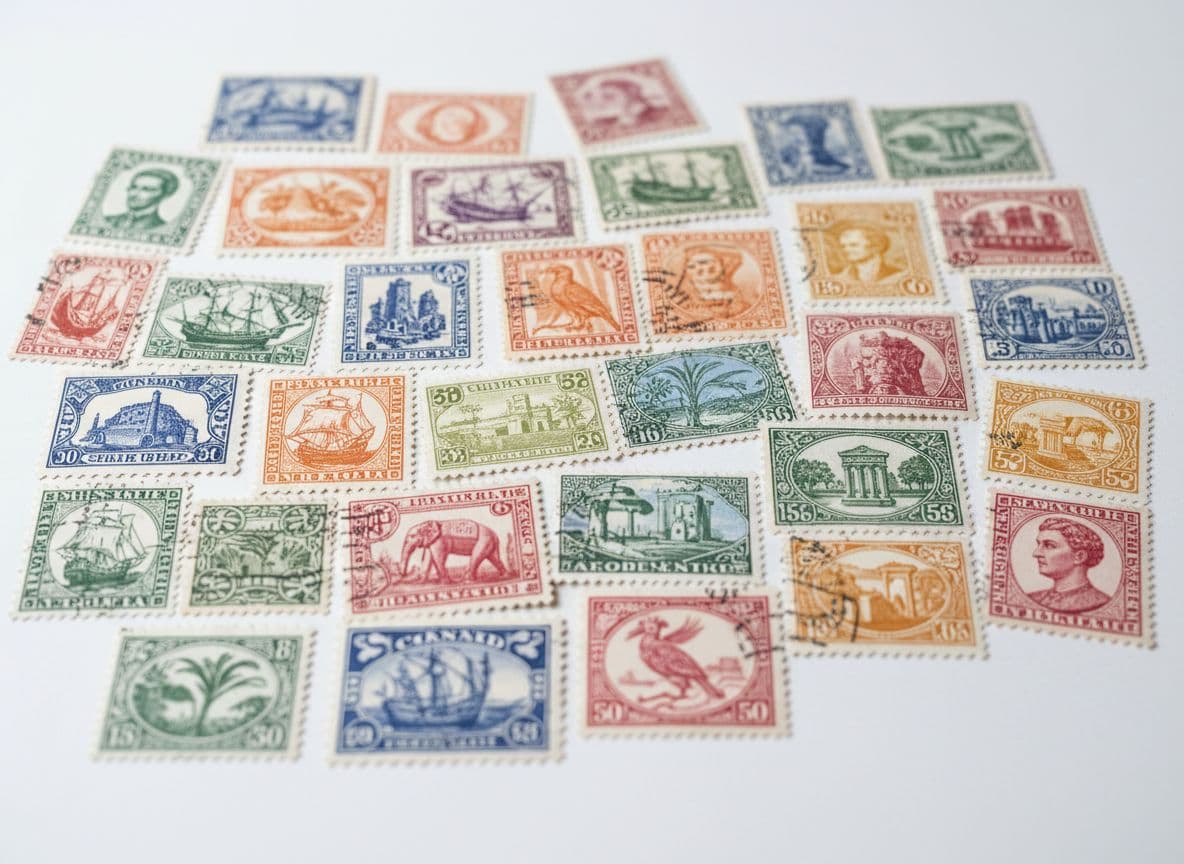
Stamp collecting was once the world's most popular hobby, and millions of collections still exist in homes worldwide. Many people inherit stamp collections without any knowledge of philately and have no idea whether they're holding a shoebox of common stamps worth $10 or a carefully curated collection worth thousands. The stamp market has contracted from its peak popularity, but rare stamps continue to command extraordinary prices at auction. The challenge is that 99% of stamps are worth very little, but the remaining 1% can be incredibly valuable. A quick AI scan helps you identify which stamps in your collection deserve closer attention and professional evaluation, potentially saving you from discarding something valuable.
Key Factors That Affect Stamps Value
Understanding what drives the price of stamps helps you get the most accurate valuation.
Rarity & Print Run
The number of stamps printed and how many survived determines rarity. Stamps with printing errors (inverted centers, color omissions, perforations shifts) are among the rarest and most valuable. Limited-issue commemoratives and stamps from defunct nations or territories can also be rare.
Condition & Centering
Stamp condition is graded from Superb to Poor. Centering (how well the design sits within the perforations) is crucial - a perfectly centered stamp can be worth 5-10x a poorly centered copy. For mint stamps, original gum condition matters: never hinged (NH) is most valuable, lightly hinged (LH) is next, and no gum (NG) is least valuable.
Used vs. Mint
Generally, mint (unused) stamps are more valuable than used (cancelled) ones. However, some rare stamps are actually more valuable used, especially if the cancellation is clean and dated, or if the stamp was only used on a specific mail route. Stamps on their original envelope ('on cover') can also command premiums.
Country & Period
Stamps from the classic period (1840-1900) of any country tend to be the most valuable. US, British Commonwealth, and Chinese stamps have the largest and most active collector markets. Stamps from countries that no longer exist (Confederate States, German States, British colonies) have dedicated collectors.
Errors & Varieties
Printing errors are the holy grail of stamp collecting. Inverted centers (like the famous Inverted Jenny), color errors, imperforates, and watermark varieties can make common stamps extraordinarily valuable. Even small plate flaws and re-entries are cataloged and collected.
Tips for Valuing Stamps
Get the most accurate valuation by following these tips when photographing your stamps.
Photograph stamps on a white or neutral background
Make sure the denomination, country, and design are clearly visible
Show the perforations and any cancellation marks
For mint stamps, show if the gum is original and intact
Stamps Market Insights
The stamp market has been in a long-term transition as the collector demographic ages. Prices for run-of-the-mill stamps have declined, but truly rare stamps continue to appreciate and set records. Chinese stamps from the Cultural Revolution era have seen dramatic price increases driven by wealthy Chinese collectors. US and British Commonwealth classics remain strong. Online platforms like HipStamp, eBay, and auction houses like Robert A. Siegel have made the market more accessible. For inherited collections, the most common scenario is a collection worth $50-$200 at a stamp shop, but occasionally collections contain hidden gems worth thousands.
Notable Stamps Values
Real-world examples of what specific stamps have sold for, so you can benchmark your own.
| Stamp | Condition | Typical Value |
|---|---|---|
| Inverted Jenny (1918, 24c airmail error) | Mint | $150,000 – $1.5M |
| British Guiana 1c Magenta (1856) | Used | $8M+ |
| US 19th-century classic (e.g. 1869 issues) | Used, sound | $50 – $2,000 |
| Common 20th-century US commemorative | Mint/used | $0.10 – $2 |
| Penny Black (1840, world's first stamp) | Used | $50 – $3,000 |
| Bulk worldwide collection (album) | Mixed | $20 – $300 |
| Error / misperf modern stamp | Mint | $25 – $800 |
Based on Scott catalogue values and auction realizations. Catalogue value is a ceiling; actual sales run well under it.
Find Out What Your Stamps Are Worth
Upload a photo now and get a free AI-powered valuation in seconds. No sign-up required.
Stamps Valuation FAQ
Are old stamps automatically valuable?
Not necessarily. While age is a factor, many old stamps were printed in huge quantities. Value depends on rarity, condition, errors, and demand. Some modern stamps with printing errors can be worth more than century-old common issues.
What stamps are worth the most?
The most valuable stamps include the British Guiana 1c Magenta, the Inverted Jenny, Penny Black, and various error stamps. Stamps with inverted centers, missing colors, or other printing errors can be extraordinarily valuable.
Should I remove stamps from envelopes?
Generally, no! Stamps on their original envelope (called 'on cover') can actually be more valuable, especially if they have interesting postmarks, rare destinations, or historical significance.
How do I get an inherited stamp collection valued?
Start with our AI tool to identify any potentially valuable stamps. Then look at the overall organization - a well-organized collection in albums with identified stamps is more likely to contain valuable pieces. For large or potentially valuable collections, the American Philatelic Society can refer you to qualified appraisers. Avoid selling to the first dealer you visit - get multiple offers.
Are postage stamps still being collected?
Yes, though the hobby has evolved. While fewer young people collect stamps, dedicated philatelists remain active and well-funded. Specialized areas like postal history, revenue stamps, and error stamps have passionate collectors. The market has shifted from quantity to quality, with collectors pursuing fewer but better examples.
Stamps Price Guides
Stamps Guides & Articles
Value anything, anytime
Unlimited valuations, saved history and full reports in the free app.