Last updated: September 2026
How Much Are Your Comic Books Worth?
From Golden Age keys to modern first appearances, comic books are one of the oldest and most established collectibles markets. Our AI identifies your comic book's title, issue number, publisher, and condition to estimate its value. Whether you found a box of old comics in the attic or you're checking the value of your collection, find out if you're sitting on a hidden treasure.
Get the free app for unlimited scans


Compare real prices
See what comic books are listed for right now
Affiliate link: we earn a commission if you buy, at no extra cost to you.
What do you want to value?
Get the free app for unlimited scans
Why Knowing Your Comic Books Value Matters
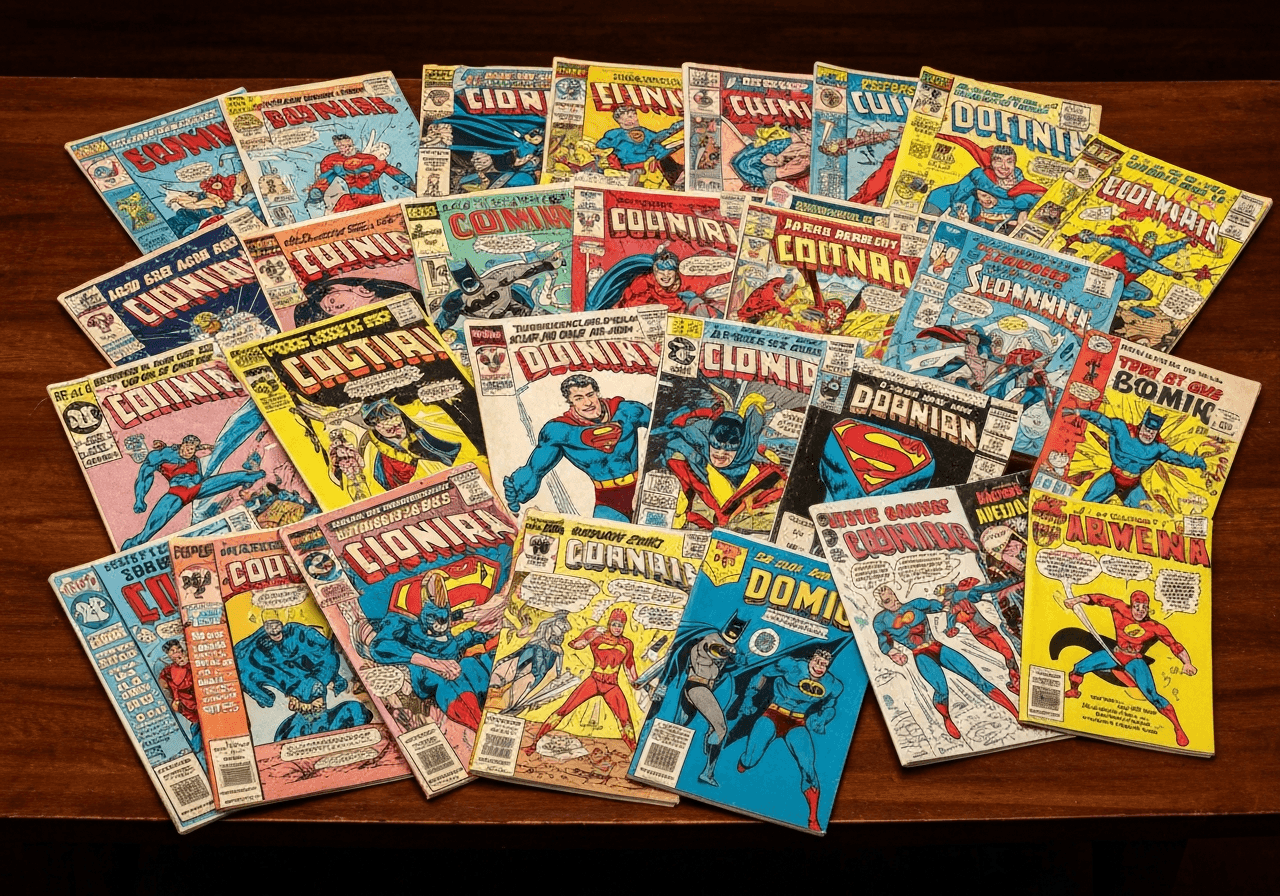
Comic books have produced some of the most spectacular collectible values in history. Action Comics #1 (first Superman, 1938) sold for $6 million. Amazing Fantasy #15 (first Spider-Man, 1962) has sold for $3.6 million. But the market isn't just about million-dollar keys. Thousands of comics are worth $50-$5,000, and even common comics from the right eras have value. First appearances of popular characters are the primary value drivers, and with Marvel and DC constantly adapting characters for film and TV, previously obscure first appearances can spike overnight. A comic featuring the first appearance of a character announced for a new movie can jump from $5 to $500 in weeks.
Key Factors That Affect Comic Books Value
Understanding what drives the price of comic books helps you get the most accurate valuation.
Key Issues & First Appearances
First appearances drive the comic market. Top keys: Action Comics #1 ($500K-$6M), Detective Comics #27 ($500K-$3M), Amazing Fantasy #15 ($100K-$3.6M), Incredible Hulk #181 ($2K-$30K), Giant-Size X-Men #1 ($1K-$10K), New Mutants #98 first Deadpool ($200-$2K). Modern keys: Ultimate Fallout #4 first Miles Morales ($100-$2K), Batman Adventures #12 first Harley Quinn ($200-$3K).
Condition & Grade
Comics are graded on a 0.5-10.0 scale. A CGC 9.8 (Near Mint/Mint) is typically worth 5-20x a CGC 5.0 (VG/FN) for key issues. For raw (ungraded) comics, condition factors include: spine stress, color-breaking creases, page quality (white vs tanned), cover gloss, and completeness. Professional grading (CGC, CBCS) adds significant market confidence.
Era & Publisher
Golden Age (1938-1956): generally most valuable, even non-key issues have value ($10-$100+). Silver Age (1956-1970): keys and first appearances are highly valuable. Bronze Age (1970-1985): selected keys are valuable, common issues worth $1-$10. Modern Age (1985+): only keys and first appearances command premiums; most are worth cover price or less.
Movie & TV Speculation
First appearances of characters featured in upcoming movies or TV shows can spike dramatically. Examples: Eternals #1 jumped from $20 to $200 when the movie was announced. Ms. Marvel #1 spiked when the Disney+ show was announced. Staying informed about upcoming adaptations can help you identify hidden value in your collection.
Variants & Signatures
Variant covers (limited print runs) can be worth multiples of standard covers. Signature Series comics (signed and authenticated by CGC/CBCS) command 20-50% premiums. Sketched covers by notable artists can be worth $100-$1,000+. First prints are almost always more valuable than later printings.
Tips for Valuing Comic Books
Get the most accurate valuation by following these tips when photographing your comic books.
Handle comics by the edges and store flat in bags with backing boards
Photograph the full front cover clearly. Issue number and title are essential for identification
Check for first appearances. Look up the issue number against key issue guides
Never fold, roll, or stack heavy items on comics. Condition is everything for value
Comic Books Market Insights
The comic book market is one of the most dynamic collectibles markets, driven by speculation around movie and TV adaptations, CGC census reports, and social media hype. Key issues have shown strong long-term appreciation, with Golden and Silver Age keys consistently outperforming most traditional investments. The CGC and CBCS grading services have brought transparency and liquidity to the market. Modern speculation can be volatile.comics that spike on movie announcements sometimes give back gains. But established keys have proven staying power. The market is increasingly accessible through online auction platforms, Instagram dealers, and comic shop networks.
Find Out What Your Comic Books Are Worth
Upload a photo now and get a free AI-powered valuation in seconds. No sign-up required.
Comic Books Valuation FAQ
How do I know if my comic is valuable?
Check if it's a key issue (first appearance of a major character), from the Golden or Silver Age (pre-1970), or a notable variant. Our AI identifies key issues from a photo. For quick reference: comics from the 1980s-present are rarely valuable unless they're first appearances or limited variants. Golden Age comics (1938-1956) almost always have some value regardless of character.
Should I get my comics graded?
If our AI or your research suggests a comic is worth $100+ in high grade, professional grading (CGC or CBCS, $25-$65 per book) is worthwhile. Grading authenticates, preserves, and standardizes the condition. Graded comics typically sell for 20-50% more than equivalent raw copies. For comics under $50 in value, grading fees may exceed the value added.
Are comics from the 1990s worth anything?
Most 1990s comics were massively overproduced and are worth $0.25-$2. However, several keys from the 90s are valuable: New Mutants #98 (first Deadpool, $200-$2,000), Batman Adventures #12 (first Harley Quinn, $200-$3,000), Spawn #1 ($10-$50 in 9.8), Bone #1 ($100-$500+). The key is first appearances and limited print titles like Bone, Strangers in Paradise, and early Image Comics.
I found a box of old comics. What should I do?
First, handle them carefully. Look through for comics from the 1930s-1960s (these are most likely to have significant value). Check for famous characters on covers (Superman, Batman, Spider-Man, X-Men). Look up any issue numbers that seem notable. Photograph the most promising ones for AI appraisal. For large collections potentially worth $1,000+, consider a professional appraisal.
Where is the best place to sell valuable comics?
For comics worth $500+: Heritage Auctions, ComicConnect, or ComicLink achieve the best prices but charge seller fees (10-15%). For $50-$500: eBay has the largest buyer pool, or sell to dealers at comic conventions. For common comics: sell in lots on eBay or to local comic shops. Facebook groups dedicated to comic trading are also increasingly popular.
Value anything, anytime
Unlimited valuations, saved history and full reports in the free app.