Last updated: September 2026
How Much Are My Maps & Globes Worth?
From 16th-century hand-colored maps and antique terrestrial globes to vintage USGS topographic maps and decorative cartographic prints, our AI identifies your maps and globes by cartographer, era, region, and condition to provide accurate market valuations. Whether you found a map in an old book or inherited a globe collection, discover their true worth.
Get the free app for unlimited scans


Compare real prices
See what maps & globes are listed for right now
Affiliate link: we earn a commission if you buy, at no extra cost to you.
What do you want to value?
Get the free app for unlimited scans
Why Knowing Your Maps & Globes Value Matters
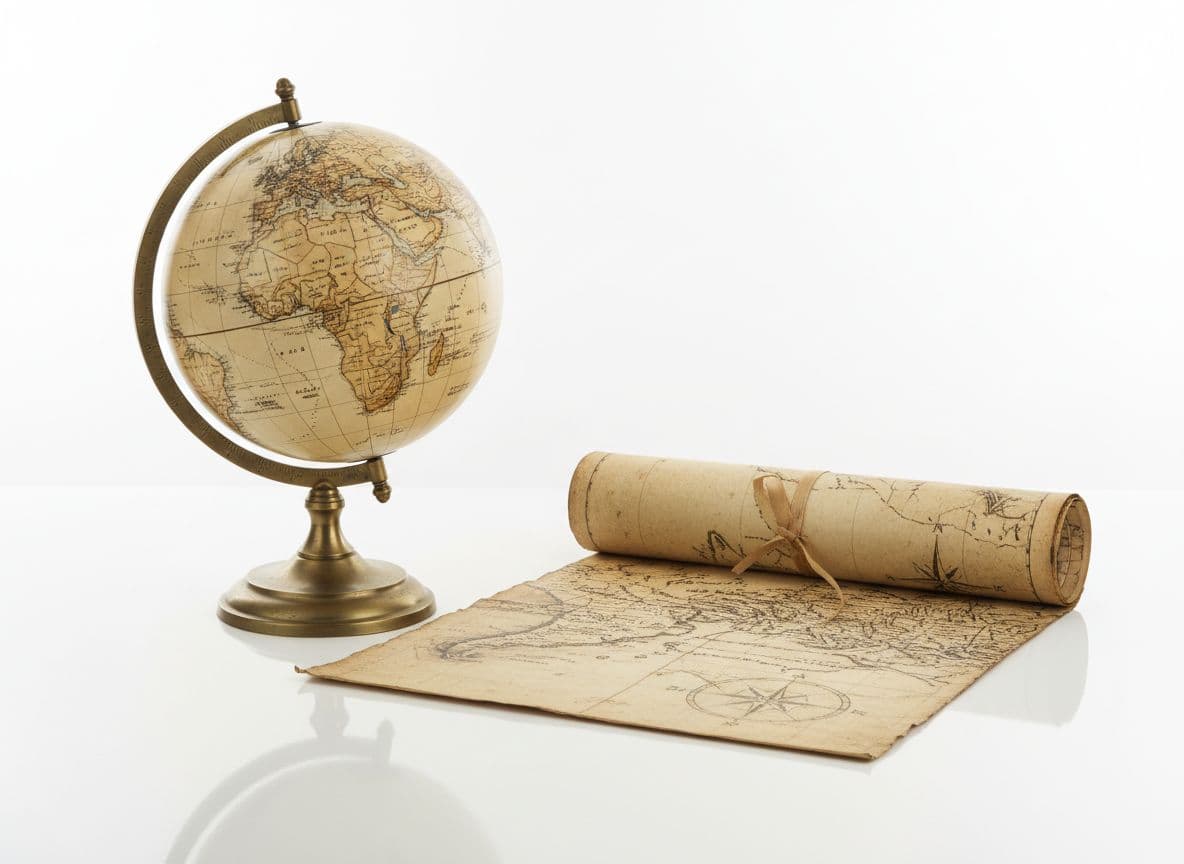
Antique maps and globes are collected for their beauty, historical significance, and investment potential. A rare 16th-century world map can sell for $100,000-$1,000,000+, and even 18th-19th century maps regularly command $100-$10,000. Antique globes from notable makers like Rand McNally, Weber Costello, and Johnston are decorative collectibles worth $500-$10,000+. Many people find old maps tucked into books, framed on walls, or stored in drawers without realizing their potential value. Maps of early American territories, exploration routes, and city plans are particularly sought after. Understanding what you have prevents discarding or donating something valuable.
Key Factors That Affect Maps & Globes Value
Understanding what drives the price of maps & globes helps you get the most accurate valuation.
Cartographer & Publisher
Maps by renowned cartographers command premium prices. Early cartographers like Ortelius, Mercator, Blaeu, and Speed produced maps that are highly collected. Later publishers like Mitchell, Colton, and Johnson produced attractive maps that are more affordable but still valuable. The cartographer's reputation significantly influences value.
Age & Historical Period
Older maps are generally more valuable, with 16th-17th century maps being the most sought after. Maps showing territories before they were fully explored or established have particular appeal. Maps predating major historical events (American Revolution, Civil War, Gold Rush) carry historical premiums.
Region & Subject
Maps of certain regions are more valuable than others. Early American maps, maps showing California as an island, maps of Africa during the colonial period, and sea charts of major trade routes are highly collectible. City plans, battle maps, and maps showing specific historical events also have strong markets.
Condition & Color
Original hand-coloring is more valuable than later coloring or uncolored examples. Clean, bright maps with strong impressions command premiums. Foxing (brown spots), tears, staining, and trimmed margins reduce value. Professionally conserved maps can recover some value, but original condition is always preferred.
Size & Presentation
Large wall maps and multi-sheet maps are more impressive and valuable than small page maps. Maps in original frames or bound in atlases retain context. Loose maps from disbound atlases are common in the market. Globe pairs (terrestrial and celestial) are more valuable than singles.
Tips for Valuing Maps & Globes
Get the most accurate valuation by following these tips when photographing your maps & globes.
Photograph the full map flat with even lighting, capturing all borders and text
Include close-ups of the cartouche (decorative title area) and any text identifying the maker
Show any damage, staining, foxing, or repairs in detail
For globes, photograph from multiple angles showing the overall condition and any maker labels
Maps & Globes Market Insights
The antique map market is established and international, with specialized dealers and auction houses serving a knowledgeable collector base. Sotheby's, Christie's, and specialized map auctions by firms like Old World Auctions handle significant sales. The market for 16th-17th century maps remains strong, driven by their scarcity and artistic quality. American maps from the 18th-19th century are in steady demand, particularly maps showing the westward expansion. Decorative antique maps have a broader market among interior designers and casual buyers. The globe market has grown as these items have become popular decorative objects, pushing prices for quality antique globes upward. Digital mapping has not diminished interest in antique maps - if anything, appreciation for the artistry of hand-drawn cartography has grown.
Notable Maps & Globes Values
Real-world examples of what specific maps & globes have sold for, so you can benchmark your own.
| Maps & Globe | Condition | Typical Value |
|---|---|---|
| Ortelius 'Theatrum Orbis Terrarum' Single Sheet Map | Good (original coloring) | $800 - $3,500 |
| Mercator-Hondius Atlas Map (single folio leaf) | Good | $300 - $1,200 |
| John Speed County Map of England (single sheet) | Good | $200 - $900 |
| Antique Celestial or Terrestrial Pocket Globe (3-inch) | Fair to Good | $1,500 - $8,000 |
| Rand McNally or Mitchell 19th-Century US State Map | Good | $30 - $150 |
| Matthäus Seutter or Homann Heirs European Map | Good (hand-colored) | $200 - $1,000 |
| Large Floor-Standing Library Globe (12-18 inch, 1900-1940) | Good, original stand | $400 - $2,500 |
| Ptolemy 'Geographia' World Map (facsimile edition, 15th-16th c. reprint) | Good | $500 - $4,000 |
| WWII-Era Military Aeronautical Chart (US Army Air Forces) | Used, intact | $20 - $80 |
Based on auction records (Christie's, Swann Galleries, Bonhams), eBay sold listings, and dealer price guides from major antiquarian map dealers.
Find Out What Your Maps & Globes Are Worth
Upload a photo now and get a free AI-powered valuation in seconds. No sign-up required.
Maps & Globes Valuation FAQ
How do I tell if my old map is valuable?
Key indicators of value include: age (older is generally better), the cartographer's name, the region depicted, and whether it has original hand-coloring. Maps printed before 1800 are more likely to be valuable. Look for the publisher's name, date, and any text in the margins. Our AI can identify the map's origin, maker, and approximate value from photos.
What makes an antique globe valuable?
Globe value depends on the maker, age, condition, and size. Globes from before 1900 are the most valuable, especially from makers like Newton, Betts, and Bardin. Size matters - floor-standing globes command higher prices than desk models. Condition is critical - torn, faded, or warped gores (the paper segments) reduce value significantly. Matching pairs of terrestrial and celestial globes are worth more than singles.
Is my framed old map an original or a reproduction?
Look at the paper - original antique maps are on laid paper (with visible chain lines when held to light) or early wove paper. Modern reproductions use smooth, uniform paper. Original maps show printing impression (you can feel the indentation from the printing plate). Examine with a magnifying glass - original engravings show clean lines, while reproductions show dot patterns from photographic reproduction.
Where can I sell antique maps?
Specialized antique map dealers offer the most knowledgeable evaluation and fair prices. Online auction platforms like eBay work for mid-range maps. For high-value maps ($1,000+), specialty auction houses like Old World Auctions, Sotheby's, and Christie's provide access to serious collectors. Map fairs and antiquarian book fairs are also good venues. Always get multiple opinions on value before selling.
Maps & Globes Price Guides
Value anything, anytime
Unlimited valuations, saved history and full reports in the free app.