Last updated: September 2026
How Much Is My Pottery Worth?
From American art pottery by Roseville and Rookwood to studio pottery by noted ceramicists and antique stoneware crocks, our AI identifies your pottery's maker, pattern, and era to provide accurate market valuations. Whether you have a single vase or a full collection, discover the true worth of your ceramic treasures instantly.
Get the free app for unlimited scans


Compare real prices
See what pottery are listed for right now
Affiliate link: we earn a commission if you buy, at no extra cost to you.
What do you want to value?
Get the free app for unlimited scans
Why Knowing Your Pottery Value Matters
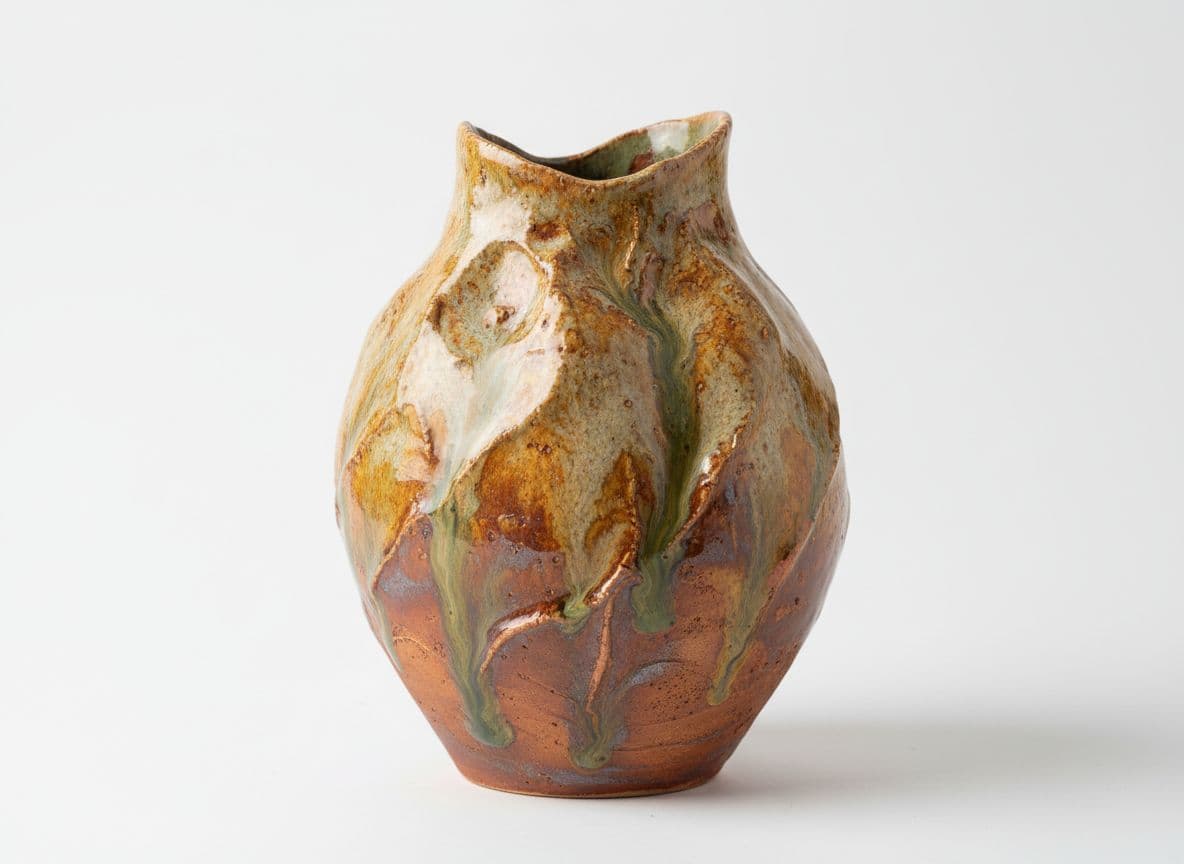
Art pottery is a vibrant collecting category where values range from a few dollars to six figures. A rare Rookwood vase can sell for $50,000-$300,000+, and even common Roseville and McCoy pieces hold $50-$500 values. The market for studio pottery by notable ceramicists like George Ohr, Peter Voulkos, and Lucie Rie has seen dramatic appreciation. Many people inherit pottery collections or find pieces at estate sales without recognizing makers' marks or understanding the market. A seemingly ordinary vase sitting on a shelf could be a valuable piece of American or studio art pottery worth hundreds or thousands of dollars.
Key Factors That Affect Pottery Value
Understanding what drives the price of pottery helps you get the most accurate valuation.
Maker & Pottery
American art pottery from Rookwood, Roseville, Weller, Grueby, and Newcomb College are among the most collected. Studio pottery by recognized ceramicists (George Ohr, Peter Voulkos, Shoji Hamada, Bernard Leach) commands art-level prices. European makers like Moorcroft, Royal Doulton, and Martin Brothers also have strong markets.
Pattern & Glaze
Certain patterns within a maker's production are far more valuable than others. Roseville's Sunflower, Blackberry, and Jonquil patterns are more sought after than common patterns. Unusual glazes, experimental finishes, and artist-decorated pieces command premiums.
Size & Form
Larger pieces are generally more valuable than smaller ones. Floor vases, jardinières, and large bowls bring premium prices. Unusual forms like wall pockets, candlesticks, and figural pieces have dedicated collectors. Standard production vases in common sizes are the most affordable.
Condition
Pottery condition is critical. Chips, cracks, repairs, and glaze damage significantly reduce value. A perfect piece might be worth $500, while the same piece with a small chip could be $100-200. However, very rare or early pieces retain value even with condition issues. Professional restoration can help but should always be disclosed.
Artist & Period
For Rookwood and other art potteries, artist-decorated pieces (signed by the decorator) are more valuable than production pieces. Earlier production periods are generally more valued. Pieces from an artist's prime period or from a pottery's early years command premiums.
Tips for Valuing Pottery
Get the most accurate valuation by following these tips when photographing your pottery.
Photograph any marks, stamps, or signatures on the bottom of the piece
Show the full piece from multiple angles to capture the form and glaze
Include close-ups of any damage, repairs, or glaze imperfections
For decorated pieces, photograph the decoration in detail with good lighting
Pottery Market Insights
The art pottery market remains strong for quality pieces from recognized makers. Rookwood is the crown jewel of American art pottery, with exceptional pieces regularly selling for five and six figures at auction. Roseville has a broad collector base, with prices ranging from $50 for common pieces to $5,000+ for rare forms and patterns. The studio pottery market has grown significantly as ceramics are increasingly viewed as fine art, with museum exhibitions driving interest. Mid-century studio pottery from American and Japanese artists has seen particular appreciation. The market for American stoneware (decorated crocks, jugs, and jars from the 1800s) is strong, with cobalt-decorated pieces being the most sought after.common production pottery from brands like Hull and Haeger has more modest values.
Notable Pottery Values
Real-world examples of what specific pottery have sold for, so you can benchmark your own.
| Pottery | Condition | Typical Value |
|---|---|---|
| Rookwood Standard Glaze Vase (artist-signed, pre-1900) | Good - Excellent | $400 - $2,500 |
| Roseville Pottery Pinecone Pattern Vase | No chips or repairs | $80 - $600 |
| McCoy Pottery Cookie Jar (vintage, 1940s-1960s) | Good | $30 - $200 |
| Weller Pottery Hudson Glaze Vase (artist-signed) | Excellent | $300 - $1,800 |
| Rookwood Iris Glaze Vase (ca. 1900-1910, named decorator) | Excellent, no damage | $1,500 - $8,000+ |
| Studio Pottery Vase by Peter Voulkos or equivalent mid-century master | Authenticated | $5,000 - $50,000+ |
| Van Briggle Pottery Vase (early Colorado Springs period, pre-1912) | Good, no restoration | $200 - $1,500 |
| Hull Pottery Little Red Riding Hood Cookie Jar | No crazing or chips | $150 - $500 |
| Red Wing Pottery Spongeware Crock (antique, salt-glazed) | Intact, legible mark | $50 - $400 |
Based on eBay sold listings, major auction house records (Treadway, Rago, Skinner), and established pottery price guides.
Find Out What Your Pottery Are Worth
Upload a photo now and get a free AI-powered valuation in seconds. No sign-up required.
Pottery Valuation FAQ
How do I identify who made my pottery?
Turn the piece over and look for marks on the bottom. Most art potteries stamped, impressed, or painted their marks. Roseville typically has an impressed or raised mark with the pattern name and size number. Rookwood uses a flame mark with date letters. McCoy and Weller have their own distinctive marks. Our AI can identify most pottery marks from photos.
Is Roseville pottery valuable?
Roseville pottery ranges widely in value.common pieces in production patterns like Clematis or Magnolia might sell for $30-$75, while rare patterns like Sunflower, Blackberry, and Jonquil can be worth $500-$5,000+. Jardinières, floor vases, and unusual forms command the highest prices. Condition is critical - chips and cracks significantly reduce Roseville values.
What is the most valuable pottery?
The most valuable American art pottery includes Rookwood (up to $300,000+ for exceptional pieces), Newcomb College ($1,000-$100,000), and Grueby ($500-$50,000). In studio pottery, works by George Ohr ($5,000-$100,000+), Peter Voulkos ($10,000-$500,000), and Lucie Rie ($5,000-$500,000) command art-market prices. Chinese and Japanese antique ceramics can reach millions.
Does a crack or chip ruin pottery value?
Damage significantly reduces value for common pieces - often by 50-80%. However, for rare or exceptional pieces, collectors accept condition issues. A rare Rookwood vase with a hairline crack might still be worth $1,000+ if perfect examples sell for $10,000. Professional restoration can improve appearance but should always be disclosed, and repaired pieces are worth less than perfect ones.
Pottery Price Guides

Value anything, anytime
Unlimited valuations, saved history and full reports in the free app.