Last updated: September 2026
How Much Are My Books Worth?
From first edition Harry Potters to antique leather-bound volumes, our AI evaluates your books based on edition, condition, rarity, and current collector demand. Find out if that old book on your shelf is a hidden treasure.
Get the free app for unlimited scans


Compare real prices
See what books are listed for right now
Affiliate link: we earn a commission if you buy, at no extra cost to you.
What do you want to value?
Get the free app for unlimited scans
Why Knowing Your Books Value Matters
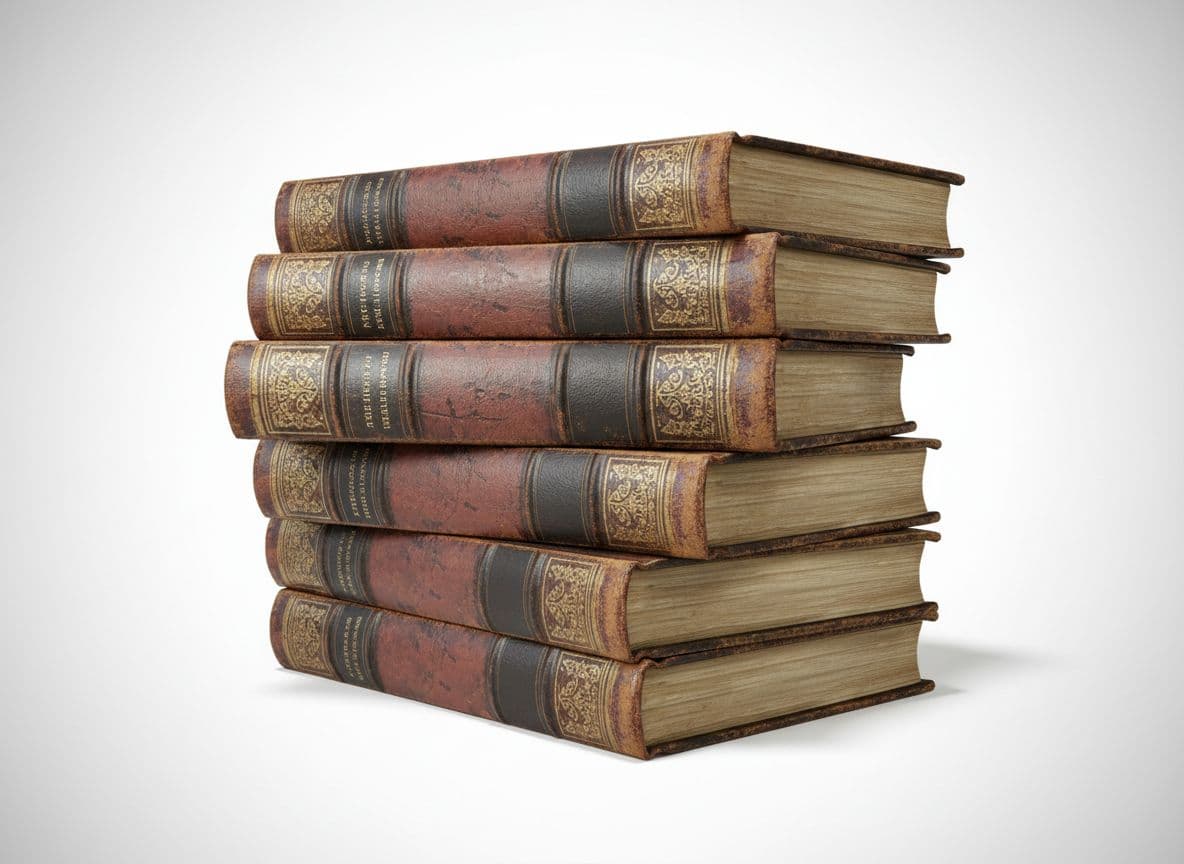
Books are the most common collectible that people overlook. Every household has bookshelves, and mixed among the paperback novels could be a first edition worth thousands. The book collecting market rewards knowledge - a first edition of 'Harry Potter and the Philosopher's Stone' (1997, Bloomsbury) has sold for over $80,000. Even modern first editions of popular authors like Cormac McCarthy, Stephen King, or Toni Morrison can be worth hundreds. Old books aren't necessarily valuable (a 150-year-old Bible might be worth $10), but the right old book in the right condition can be extraordinary. Before clearing out bookshelves for a donation run or estate sale, scanning key books through our AI can reveal hidden treasures.
Key Factors That Affect Books Value
Understanding what drives the price of books helps you get the most accurate valuation.
Edition & Printing
First editions of the first printing are what collectors want. The copyright page contains clues: 'First Edition' statement, number lines starting with '1', or publisher-specific indicators. Book club editions (often indicated by a blind stamp or no price on dust jacket) are worth much less than trade editions.
Dust Jacket Presence
For books published after 1920, the dust jacket is often worth more than the book itself. A first edition without its dust jacket might be worth $100, while the same book with a clean jacket could be $1,000+. Jacket condition (tears, fading, price-clipping) directly impacts value.
Author Significance
Books by Nobel Prize winners, Pulitzer Prize winners, and authors with enduring cultural impact command the highest prices. First novels, breakthrough works, and association copies (inscribed to notable people) are particularly valuable. Signed copies add 2-10x premium depending on the author.
Condition
Book condition uses specific terms: Fine (like new), Near Fine, Very Good, Good, Fair, Poor. Foxing (brown spots), water stains, torn pages, broken spines, and writing/highlighting inside all reduce value. For antiquarian books (pre-1800), standards are more lenient given their age.
Rarity & Demand
A book's value is ultimately supply vs. demand. Small first print runs of now-famous books create scarcity. Books that were controversial and destroyed, books printed during wartime, and books from publishers that went bankrupt can be rare. But rarity without demand doesn't equal value - an obscure 1800s farming manual might be rare but unwanted.
Tips for Valuing Books
Get the most accurate valuation by following these tips when photographing your books.
Photograph the title page and copyright page (these determine edition)
Show the dust jacket condition if present
Include any author signatures or inscriptions
Photograph the spine and binding condition
Books Market Insights
The rare book market is served by platforms like AbeBooks, Biblio, and specialized auction houses like Heritage and Swann. Modern first editions have been a growing segment, with books from the 1960s-2000s appreciating steadily. Science fiction and fantasy first editions have seen particularly strong growth driven by media adaptations. Signed books remain popular, with dedicated signings at bookstores creating instant collectibles. The antiquarian market (pre-1900) is stable but niche, with the strongest demand for illustrated books, early printed books, and works of scientific or historical significance.
Notable Books Values
Real-world examples of what specific books have sold for, so you can benchmark your own.
| Book | Condition | Typical Value |
|---|---|---|
| Harry Potter and the Philosopher's Stone (1st UK Edition, 1st Print) | Fine/Near Fine | $40,000 - $120,000+ |
| The Great Gatsby by F. Scott Fitzgerald (1st Edition, 1925) | Good to Very Good | $15,000 - $80,000+ |
| To Kill a Mockingbird by Harper Lee (1st Edition, 1960) | Very Good | $8,000 - $30,000+ |
| Signed Copy - Any Major Modern Author (King, Grisham, Rowling) | Authenticated Signed | $50 - $1,500 |
| On the Road by Jack Kerouac (1st Edition, 1957) | Good | $2,000 - $10,000+ |
| Vintage Penguin or Pelican Paperback (1930s-1960s) | Good | $5 - $80 |
| The Hobbit by J.R.R. Tolkien (1st Edition, 1937) | Good | $40,000 - $200,000+ |
| Modern First Edition Literary Novel (signed, post-2000) | Near Fine in Dust Jacket | $20 - $300 |
| Common Used Hardcover Bestseller (post-1990) | Used | $1 - $10 |
Based on eBay sold listings, Heritage Auctions records, AbeBooks price history, and rare book dealer catalogs.
Find Out What Your Books Are Worth
Upload a photo now and get a free AI-powered valuation in seconds. No sign-up required.
Books Valuation FAQ
How do I know if I have a first edition?
Check the copyright page for 'First Edition' or 'First Printing' statements, a number line starting with '1', or publisher-specific indicators. Our AI can help identify first editions from photos of the copyright page.
What books are most valuable?
First editions of classics (Hemingway, Fitzgerald, Tolkien), early Harry Potter printings, signed copies by important authors, and books with historical significance command the highest prices. Condition and dust jacket presence are critical.
Does a dust jacket really matter?
Yes, enormously. A first edition book with its original dust jacket can be worth 5-10x more than the same book without one. The jacket's condition is equally important.
Are old Bibles and encyclopedias valuable?
Most old Bibles and encyclopedia sets have very little monetary value, even if they're 100+ years old, because they were produced in enormous quantities. Exceptions include pre-1700 Bibles, illustrated Bibles with notable woodcuts or engravings, and Bibles with significant historical associations. Mass-produced encyclopedias from the 1900s are essentially unsellable.
How do I tell if my book is signed by the author?
Look on the title page or half-title page (the page before the title page). Author signatures are typically in pen or marker. Be cautious of printed signatures that look like handwriting - these are autopen or facsimile signatures found in book club and special editions. Genuine inscriptions that include a personal message and date are more valuable than a signature alone.
Books Price Guides
Books Guides & Articles
Value anything, anytime
Unlimited valuations, saved history and full reports in the free app.