December 18, 2025 · Updated March 2026
Old Books Worth Money: How to Know If Your Book Is Valuable
Are Old Books Automatically Valuable?
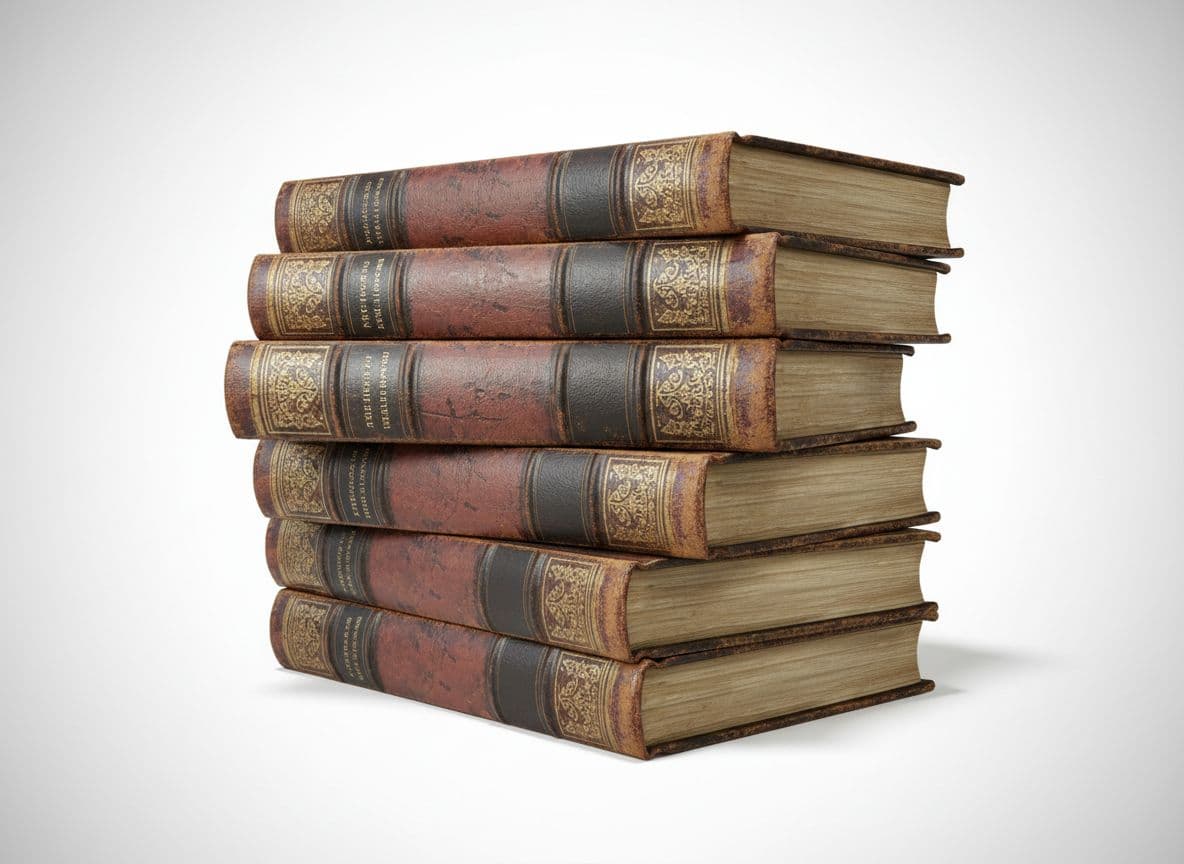
One of the most common misconceptions in the collectibles world is that old books are automatically valuable. The truth is that most old books, even those from the 1800s, are worth very little. Age alone does not determine value. Millions of Bibles, encyclopedias, textbooks, and popular novels were printed in massive quantities and survive in abundance today. A family Bible from 1880 in typical condition is usually worth $10 to $30, despite being over 140 years old.
However, certain old books are genuinely worth thousands or even millions of dollars. The factors that create value are scarcity (first editions, limited print runs, suppressed editions), condition (dust jacket, binding, pages), cultural significance (literary classics, groundbreaking works), and demand (active collector interest). Understanding these factors is essential for identifying the rare gems among ordinary old books.
What Makes a Book Valuable?
First Edition, First Printing
The single most important factor in book value is whether it is a first edition and, more specifically, a first printing (also called first impression) of the first edition. A first edition is the initial publication of a book. The first printing is the very first batch of copies produced within that first edition. Subsequent printings may have corrections, different dust jackets, or minor changes that make them less desirable to collectors.
How to identify a first edition varies by publisher.common indicators include:
- Number line: A sequence of numbers on the copyright page (e.g., “1 2 3 4 5 6 7 8 9 10”). If the number “1” is present, it is typically a first printing. Some publishers count down from 10.
- “First Edition” stated: Many publishers explicitly print “First Edition” or “First Published” on the copyright page.
- Publisher-specific practices: Each publisher has its own system. Resources like “A Pocket Guide to the Identification of First Editions” by Bill McBride document these practices for hundreds of publishers.
Condition
Book condition is graded on a scale from Poor to Fine (or Mint). The dust jacket (the paper cover that wraps around a hardcover book) is often the most important condition factor. A first edition with a perfect dust jacket can be worth 5 to 20 times more than the same book without one.
- Fine: As new, with no defects. Dust jacket bright and unclipped.
- Near Fine: Close to Fine, with very minor signs of age or handling.
- Very Good: Shows some wear but no major defects. Dust jacket may have minor chips or fading.
- Good: Average used condition.complete but with visible wear, foxing, or soiling.
- Fair/Poor: Significant damage, missing pages, or major defects. Value is minimal for most titles at this level.
Signed Copies
A book signed by the author is almost always worth more than an unsigned copy. The premium depends on the author’s fame and how frequently they signed books. A signed first edition of a major literary work can be worth 2 to 10 times more than an unsigned copy. Inscribed copies (signed with a personal dedication) are generally worth less than simple signatures unless the inscription is to a notable person.
The Most Valuable Books in the World
1. Shakespeare First Folio (1623). $3,000,000 to $10,000,000
The First Folio, containing 36 of Shakespeare’s plays (18 of which had never been published before), is the most valuable printed book in the English language. About 750 copies were printed, and approximately 235 survive. A complete copy in good condition sold for $9.98 million at Christie’s in 2020.
2. Harry Potter and the Philosopher’s Stone. First Edition (1997). $50,000 to $500,000
The first edition Harry Potter is one of the most sought-after modern first editions. Bloomsbury printed only 500 copies of the first UK edition (200 went to libraries). A hardcover first edition first printing in Fine condition with dust jacket sold for $471,000 at Heritage Auctions in 2021. Even the US first edition (Scholastic, 1998) in Fine condition sells for $5,000 to $15,000.
3. The Great Gatsby. First Edition (1925). $150,000 to $400,000
F. Scott Fitzgerald’s masterpiece was printed in a first edition run of approximately 20,870 copies by Charles Scribner’s Sons. A first edition with the original dust jacket in Fine condition can sell for $300,000 to $400,000. Without the dust jacket, the value drops to $5,000 to $15,000, demonstrating the enormous importance of the jacket.
4. To Kill a Mockingbird. First Edition (1960). $25,000 to $100,000
Harper Lee’s Pulitzer Prize-winning novel was published by J.B. Lippincott in a first edition first printing of approximately 5,000 copies. A signed first edition with dust jacket in Near Fine condition sold for $112,000 in 2015. Unsigned first editions with jacket range from $25,000 to $50,000.
5. The Catcher in the Rye. First Edition (1951). $20,000 to $75,000
J.D. Salinger’s debut novel, published by Little, Brown and Company. First edition first printings are identified by “First Edition” stated on the copyright page and the author’s photograph on the rear dust jacket panel. With dust jacket in Very Good to Fine condition, expect $30,000 to $75,000.
6. The Hobbit. First Edition (1937). $65,000 to $210,000
J.R.R. Tolkien’s first published novel was printed in a first edition of only 1,500 copies by George Allen & Unwin. A first edition with dust jacket in Very Good condition sold for $210,000 in 2015. Without the jacket, values range from $15,000 to $65,000.
7. 1984. First Edition (1949). $10,000 to $50,000
George Orwell’s dystopian masterpiece was published by Secker & Warburg in a first edition first printing. The dust jacket for the first edition is distinctive, with red lettering on a green background. With jacket in Very Good condition, expect $25,000 to $50,000. Without jacket, $2,000 to $5,000.
Books That Are NOT as Valuable as People Think
Many people believe they have valuable books based on common misconceptions. Here are books that are frequently overvalued:
- Family Bibles (1800s–1900s): Extremely common. Most are worth $10 to $30 unless they contain important genealogical records or are from the 16th/17th century.
- Encyclopedia sets (Britannica, World Book): Almost impossible to sell. Most are worth $0 to $20 for the complete set.
- Reader’s Digest Condensed Books: Worth $0 to $1. Produced in enormous quantities with no collector demand.
- Book club editions: Book-of-the-Month Club and other book club editions are not true first editions and have minimal value (usually $1 to $10).
- Later printings of popular novels: A 10th printing of a bestseller, even if old, is worth very little. The first printing is what matters.
Valuable Books Price Guide
| Title | Author | Year | 1st Ed. with Dust Jacket | 1st Ed. without Dust Jacket |
|---|---|---|---|---|
| Harry Potter and the Philosopher’s Stone | J.K. Rowling | 1997 | $50,000–$500,000 | $20,000–$50,000 |
| The Great Gatsby | F. Scott Fitzgerald | 1925 | $150,000–$400,000 | $5,000–$15,000 |
| To Kill a Mockingbird | Harper Lee | 1960 | $25,000–$100,000 | $3,000–$8,000 |
| The Catcher in the Rye | J.D. Salinger | 1951 | $30,000–$75,000 | $2,000–$5,000 |
| The Hobbit | J.R.R. Tolkien | 1937 | $65,000–$210,000 | $15,000–$65,000 |
| 1984 | George Orwell | 1949 | $25,000–$50,000 | $2,000–$5,000 |
| The Sun Also Rises | Ernest Hemingway | 1926 | $100,000–$300,000 | $5,000–$15,000 |
| On the Road | Jack Kerouac | 1957 | $50,000–$100,000 | $3,000–$8,000 |
| Casino Royale | Ian Fleming | 1953 | $50,000–$150,000 | $5,000–$15,000 |
| Charlotte’s Web | E.B. White | 1952 | $10,000–$25,000 | $1,000–$3,000 |
How to Research Your Old Books
- Identify the edition and printing. Check the copyright page for edition statements and number lines. Use publisher-specific guides to confirm first printing status.
- Search completed sales. AbeBooks.com, Biblio.com, and ViaLibri.net allow you to search dealer inventories. For actual sold prices, check auction records on LiveAuctioneers, Heritage Auctions, and Christie’s/Sotheby’s past results.
- Assess condition honestly. Be realistic about flaws. Note any foxing (brown spots), tears, chips to the dust jacket, broken hinges, ex-library markings, or inscriptions.
- Check for book club editions. Book club editions are often confused with first editions. They are typically smaller, lighter, and lack a price on the dust jacket flap. The absence of a price on the inside front flap is often a telltale sign of a book club edition.
- Consider professional appraisal for potentially valuable finds. The Antiquarian Booksellers’ Association of America (ABAA) has a directory of reputable dealers who can appraise books. Many offer free preliminary assessments via email with photographs.
Where to Sell Valuable Books
- Rare book dealers: ABAA member dealers buy high-quality first editions. They typically offer 40% to 60% of retail value but provide a quick and reliable sale.
- Auction houses: Heritage Auctions, Sotheby’s, and Christie’s handle rare books. Best for items worth $5,000 or more.
- AbeBooks/Biblio: You can list books for sale through these platforms if you create a dealer account.
- eBay: Good for mid-range books ($50 to $5,000). Provide clear photographs and detailed condition descriptions.
Think you might have valuable old books? Upload a photo to our free AI valuation tool and get an instant estimate. Our tool analyzes edition, condition, and title to help you identify books that might be worth a closer look.

Shop & Compare Prices
See current listings and recently sold items on eBay