Last updated: September 2026
How Much Are Stamps Worth?
Check current market values, learn what affects pricing, and get tips for buying and selling.
← All Stamps valuationsWhat do you want to value?
Get the free app for unlimited scans


Rare Stamps Price Guide
Current market values based on recent sales data and market trends.
| Item | Condition | Price Range |
|---|---|---|
| US C3a Inverted Jenny (1918) | VF, Used | $200,000 - $500,000 |
| US 1c Z Grill (1868) | Fine, Used | $1,000,000+ |
| British Guiana 1c Magenta (1856) | Unique | $8,300,000 |
| US 1847 5c Franklin (#1) | VF, Used | $500 - $1,500 |
| US 1847 10c Washington (#2) | Fine, Used | $800 - $2,000 |
| US 1893 Columbian Issue $5 (#245) | Fine, MH | $2,000 - $3,500 |
| US 1901 Pan-American Invert 1c (#294a) | VF | $15,000 - $25,000 |
| US 1918 24c Curtiss Jenny (Normal, C3) | MNH | $100 - $200 |
| Common US Commemorative (1940s-1990s) | MNH | $0.05 - $0.50 |
| US Forever Stamps (Unused) | Mint | Face Value |
What Determines Rare Stamps Value
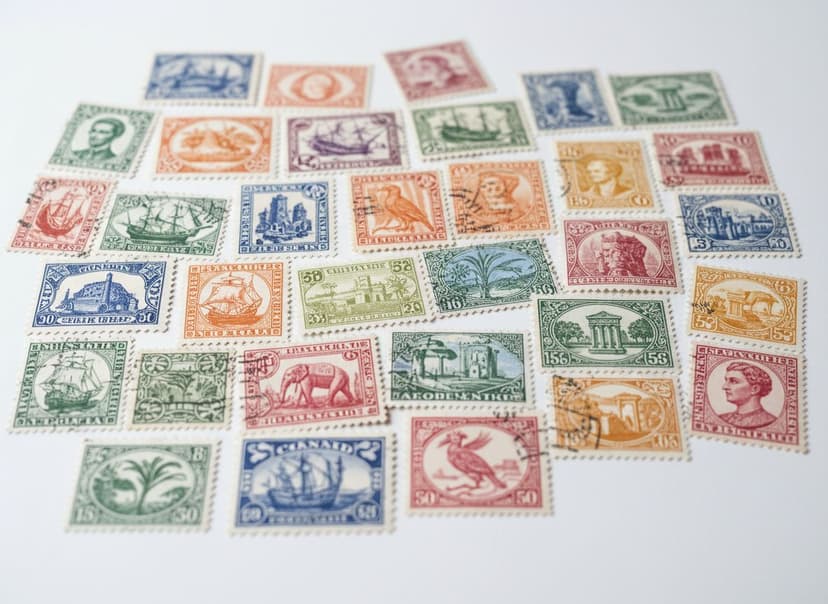
Stamp collecting (philately) is one of the oldest collecting hobbies, with a market that spans from penny stamps to pieces worth millions. The British Guiana 1c Magenta. The world's rarest stamp. Sold for $8.3 million in 2021. While the stamp market has matured and common stamps from the mid-20th century onward have limited value, rare stamps from the 1840s-1930s, printing errors, inverted designs, and first issues from various countries remain highly collectible. The US stamp market is dominated by classic issues like the Inverted Jenny, early Washington-Franklin issues, and Confederate postmaster provisionals. Condition grading by services like PSE (Professional Stamp Experts) has brought more transparency and standardization to the market.
Stamp values are driven by rarity (print quantities, survival rates, and known census counts), condition (centering, gum condition for unused stamps, cancellation quality for used stamps, and absence of thins, tears, or creases), printing errors (inverts, color errors, missing perforations), historical significance (first issues, wartime provisionals), and country of origin. For US stamps, centering is critical. A perfectly centered stamp can be worth 5-10x more than an off-center example of the same issue. The Professional Stamp Experts (PSE) grading scale from 0-100 has standardized condition assessment. Never-hinged (MNH) stamps command premiums over hinged (MH) examples. Most stamps from the 1940s onward were produced in such quantities that they have minimal collector value.
Buying & Selling Tips
Buying
Use the Scott Catalog as the standard reference for US stamp identification and baseline values. Catalog values represent retail replacement cost, not dealer buying price.
Buy PSE-graded stamps for high-value purchases. The encapsulated grade provides certainty about condition and authenticity.
Focus on pre-1930 US stamps for value. The vast majority of stamps produced after 1935 have little to no premium over face value.
Examine stamps under magnification for thins (thin spots in paper), reperforation (trimmed and re-perforated to improve centering), and regumming (new gum applied to appear unused).
Join the American Philatelic Society (APS) for access to expertization services, insurance programs, and a sales network.
Selling
Get valuable stamps expertized by the Philatelic Foundation or PSE before selling. A certificate of authenticity significantly increases buyer confidence and price.
Sell through specialized stamp auction houses (Robert A. Siegel, Heritage Auctions, Daniel F. Kelleher) for rare material. They have qualified buyer networks.
Common stamps are best sold in bulk collections or lots on eBay. Individually listing $1-$5 stamps is not cost-effective.
Do not remove stamps from covers (envelopes). Stamps on original mail can be worth more as postal history than as individual stamps.
Photograph stamps with proper lighting to show centering, color, and any faults. Include a millimeter ruler for scale.
Rare Stamps FAQ
Are my old stamps worth anything?
It depends entirely on the stamps. Pre-1930 US stamps in good condition can range from $1 to millions. However, most stamps from the 1940s-2000s were produced in enormous quantities and are worth face value or less. Foreign stamps follow similar patterns. Early issues (pre-1920) from most countries have value, while modern issues rarely do. The best approach is to have a collection appraised by an APS dealer or compare specific stamps to Scott Catalog values.
What is the most valuable stamp in the world?
The British Guiana 1c Magenta (1856) is the world's most valuable stamp, selling for $8.3 million in 2021. Only one example is known to exist. For US stamps, the 1868 1c Z Grill is among the rarest with only 2 known copies, valued at over $1 million. The 1918 Inverted Jenny ($200,000-$500,000) is the most famous US stamp error.
What does MNH mean for stamps?
MNH stands for 'Mint, Never Hinged'. Meaning the stamp has full original gum with no trace of a hinge ever being applied. This is the highest gum condition grade. MH (Mint, Hinged) means a stamp was once mounted using a hinge, leaving a remnant or disturbance in the gum. MNH stamps typically sell for 50-200% more than MH examples of the same stamp, and the premium increases for scarcer issues.
Should I soak stamps off envelopes?
Generally no. Stamps on original covers (envelopes) with clear postmarks, addresses, and postal markings can be worth more as 'postal history' than as individual stamps. This is especially true for pre-1900 covers, first-day covers, and covers with unusual postmarks or routes. If the envelope is damaged or the stamp is common, soaking is acceptable. When in doubt, keep the stamp on its cover until an expert can assess it.
Got Rare Stamps to Value?
Upload a photo and get a free AI-powered valuation in seconds. No sign-up required.