Last updated: September 2026
How Much Do Solar Panels Cost?
Going solar is one of the smartest home investments you can make, but understanding the true cost. And the true savings. Requires accurate numbers. Our calculator factors in your monthly electric bill, usable roof area, panel type, battery storage needs, and state-specific incentives to estimate your total installation cost, available tax credits, and projected payback period.
Get the free app for unlimited scans


Solar Panel Cost Value Calculator
Fill in the details below for an accurate estimate
Why Knowing Your Solar Panel Cost Value Matters
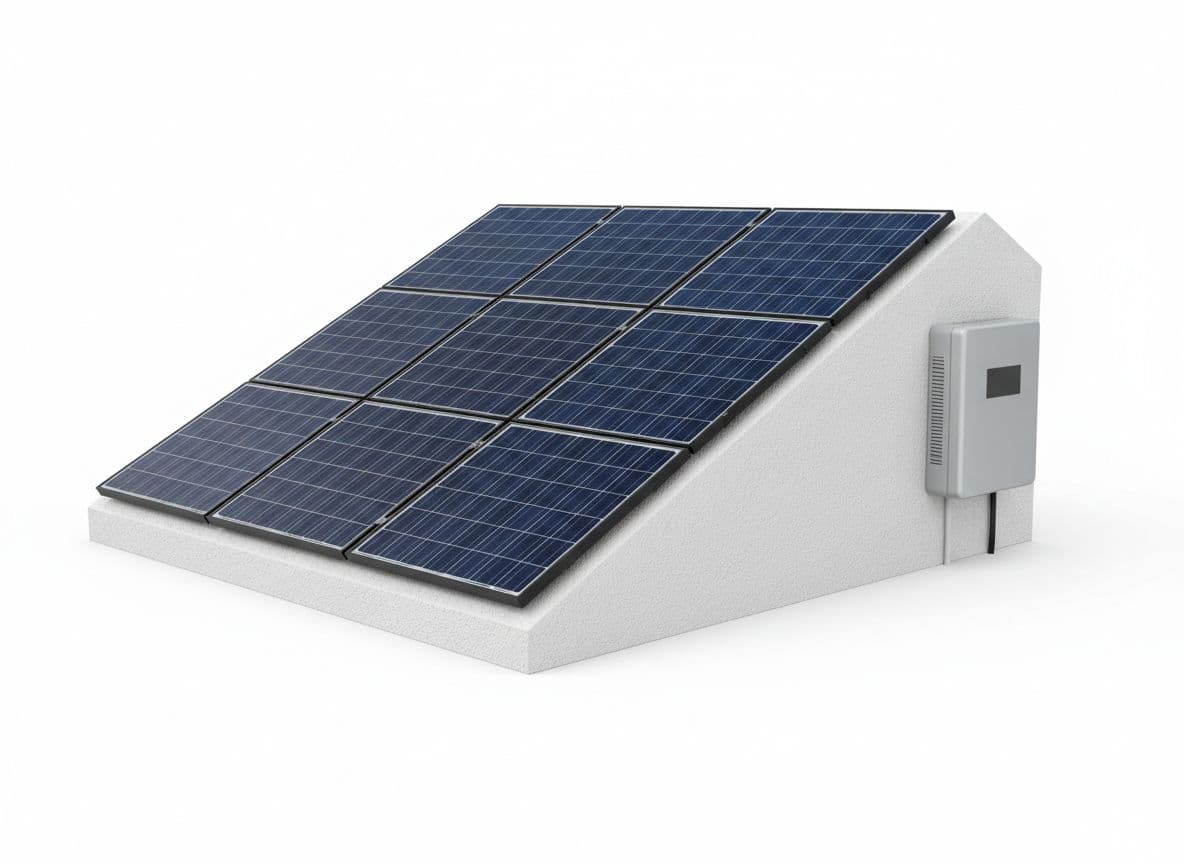
The average residential solar panel system in the US costs $15,000-$35,000 before incentives, or $10,000-$25,000 after the federal Investment Tax Credit (ITC) of 30%. A typical 8 kW system costs approximately $22,000-$26,000 before incentives and $15,000-$18,000 after the 30% federal tax credit. Monthly savings on electricity bills average $100-$200 per month, producing a payback period of 6-12 years depending on your electricity rate, sun exposure, and local incentives. After payback, you're essentially getting free electricity for the remaining 15-20 years of the system's 25-30 year lifespan. Representing $30,000-$60,000+ in lifetime savings. However, costs vary dramatically by state, installer, panel brand, and roof conditions. Some homeowners have been quoted $40,000+ for systems that should cost $20,000-$25,000, while others discover their roof orientation or shading makes solar impractical. Our calculator gives you a realistic baseline so you can evaluate quotes from installers with confidence.
Key Factors That Affect Solar Panel Cost Value
Understanding what drives the price of solar panel cost helps you get the most accurate valuation.
System Size & Energy Needs
System size is determined by your electricity consumption and roof capacity. The average US home uses 10,500 kWh/year and needs a 7-9 kW system. Each kW of solar capacity costs $2.50-$3.50 installed (before incentives). A small system (4-6 kW) for a modest home or partial offset costs $10,000-$18,000. A typical system (7-10 kW) costs $17,500-$30,000. A large system (10-15 kW) for high-consumption homes costs $25,000-$45,000. These costs include panels, inverters, racking, wiring, permits, and installation labor.
Panel Type & Efficiency
Standard monocrystalline panels (20-22% efficiency) from brands like Canadian Solar, Trina, and Hanwha Q Cells cost $0.80-$1.20/watt and are the best value for most installations. Premium monocrystalline panels (22-24% efficiency) from SunPower, REC, and Panasonic cost $1.20-$1.80/watt and produce more power per square foot. Ideal for smaller roofs. Thin-film panels ($0.60-$1.00/watt) are less efficient (15-18%) and require more roof space but perform better in hot climates and partial shade. Panel efficiency matters most when roof space is limited.
Battery Storage
Adding battery storage (Tesla Powerwall, Enphase IQ, LG RESU) increases system cost by $8,000-$16,000 per battery unit. A single battery (~13.5 kWh) provides 8-12 hours of backup for essential loads and costs $10,000-$14,000 installed. Two or more batteries ($18,000-$28,000+) can power a whole home during outages. Batteries are most valuable in areas with time-of-use electricity pricing (California, Arizona, Hawaii), frequent power outages, or where net metering policies are unfavorable. The federal 30% ITC applies to batteries installed with solar, reducing the effective cost significantly.
Roof Condition & Orientation
Your roof's condition and orientation directly impact both cost and system performance. South-facing roofs produce the most energy (100% of rated capacity), west-facing produces 80-85%, and east-facing produces 75-80%. North-facing roofs are generally not recommended for solar. Roof pitch of 15-40 degrees is ideal. If your roof needs replacement within 5-10 years, it's best to re-roof before installing solar ($8,000-$15,000) rather than removing and reinstalling panels later ($2,000-$5,000).complex roofs with multiple planes, skylights, and penetrations increase installation costs by $500-$2,000.
Incentives & Financing
The federal ITC provides a 30% tax credit on the total system cost (including battery), reducing a $25,000 system to an effective cost of $17,500. Many states offer additional incentives: state tax credits ($1,000-$5,000), solar renewable energy credits (SRECs, worth $1,000-$10,000+ over the system's life in NJ, MA, DC, MD), property tax exemptions, and sales tax exemptions. Utility rebates ($500-$2,500) are available in some areas. Financing options include solar loans (3-7%, 10-25 year terms), solar leases ($0 down, fixed monthly payment), and power purchase agreements (PPAs, buy solar electricity at a reduced rate). Cash purchases provide the best ROI but solar loans are nearly as cost-effective.
Tips for Valuing Solar Panel Cost
Get the most accurate estimate by following these tips when evaluating your solar panel cost.
Get at least three quotes from different solar installers (including at least one local company). prices can vary 20-40% for the same system size, and national brands often charge more than qualified local installers
Verify your roof's remaining lifespan before installing solar. If your roof needs replacement within 10 years, re-roof first to avoid the $2,000-$5,000 cost of removing and reinstalling panels later
Prioritize cash purchase or solar loan over leases/PPAs. Ownership (cash or loan) lets you claim the 30% federal tax credit and any state incentives, which leases and PPAs transfer to the installer
Check your state's net metering policy before sizing your system. In states with strong net metering (1:1 credit), a system that offsets 100% of usage is ideal, but in states with reduced export rates, pairing solar with battery storage maximizes savings
Solar Panel Cost Market Insights
The US residential solar market has grown dramatically, with approximately 4 million homes now having rooftop solar and installations growing at 20-30% annually. The cost of solar panels has dropped 70% over the past decade, from approximately $7.00/watt in 2010 to $2.50-$3.50/watt today (before incentives). The 30% federal ITC was extended through 2032, providing long-term policy certainty for homeowners considering solar. The biggest market disruptor has been the shift in net metering policies. California's NEM 3.0 (effective April 2023) reduced the value of exported solar energy by 75%, dramatically increasing the importance of battery storage and self-consumption. Other states are following California's lead, making batteries an increasingly essential component. Tesla, Sunrun, and SunPower are the largest national installers, but local/regional installers often provide better pricing (10-25% less) and more personalized service. The battery storage market is booming, with Tesla Powerwall, Enphase IQ, and Franklin WH competing for market share. Solar panel efficiency continues to improve, with premium panels now exceeding 23% efficiency, meaning smaller systems can produce more power than ever before.
Notable Solar Panel Cost Values
Real-world examples of what specific solar panel cost have sold for, so you can benchmark your own.
| Solar Panel Cost | Condition | Typical Value |
|---|---|---|
| Small Residential System (3-4 kW) | Installed | $7,000 - $12,000 |
| Average Residential System (6-8 kW) | Installed | $14,000 - $22,000 |
| Large Residential System (10-12 kW) | Installed | $24,000 - $34,000 |
| Federal Solar Tax Credit (30% ITC) | Credit Applied | $2,100 - $10,200 |
| Single Tier-1 Panel (400-440W) | New | $200 - $400 |
| Battery Storage Add-On (Tesla Powerwall 3) | Installed | $12,000 - $16,000 |
| Small Commercial Rooftop System (25-50 kW) | Installed | $50,000 - $110,000 |
| Ground-Mount Residential Array (8-10 kW) | Installed | $20,000 - $30,000 |
| Solar Panel Removal and Reinstall (Re-Roof) | Service | $1,500 - $6,000 |
Based on installer quotes, EnergySage marketplace data, NREL cost benchmarks, and U.S. DOE published averages; before-incentive figures unless noted.
Find Out What Your Solar Panel Cost Are Worth
Upload a photo now and get a free AI-powered valuation in seconds. No sign-up required.
Solar Panel Cost Valuation FAQ
How much do solar panels cost for a typical home?
A typical residential solar panel system (7-9 kW) costs $17,500-$27,000 before incentives. After the 30% federal tax credit, the out-of-pocket cost drops to $12,250-$18,900. With additional state incentives and rebates, the effective cost can be as low as $10,000-$15,000 in states with strong solar programs (CA, NJ, MA, NY, CO). A system this size produces 9,000-12,000 kWh/year, offsetting 80-100% of the average household's electricity consumption and saving $1,200-$2,400/year on electric bills. The payback period is typically 7-12 years, after which electricity is essentially free for the remaining 15-20 year system life.
Are solar panels worth it in 2026?
Yes, solar panels remain an excellent investment in 2026 for most homeowners. The 30% federal ITC is available through 2032, panel costs have stabilized at historic lows, and electricity rates continue rising (3-5% annually on average). The average solar panel system produces a 10-15% annual return on investment, outperforming most traditional investments. Solar is most worth it if: your electricity rate is $0.12/kWh or higher, your roof gets good sun exposure (south or west-facing with minimal shade), your state has strong net metering policies, and you plan to stay in your home for 7+ years. Solar is less advantageous if your electricity rate is very low, your roof is heavily shaded, or you're planning to move soon (though solar does increase home value by 3-4%).
Should I buy or lease solar panels?
Buying (cash or loan) is almost always better financially than leasing or a PPA. When you buy, you own the system, claim the 30% federal tax credit ($5,000-$8,000 on a typical system), keep all state incentives and SRECs, and build equity. A solar loan with 0-20% down and 3-7% interest provides most of the same financial benefits as a cash purchase. Leases and PPAs require $0 down and provide immediate savings (10-20% on your electric bill), but the leasing company keeps all tax credits and incentives, you typically save less over 25 years ($15,000-$25,000 less than owning), and leases can complicate home sales. Leasing makes sense if you can't claim the tax credit (insufficient tax liability), don't want any upfront cost, or don't plan to stay in your home long.
How long do solar panels last?
Modern solar panels are warrantied for 25-30 years and typically last 30-40 years with degradation of only 0.3-0.5% per year. After 25 years, a quality panel still produces 85-90% of its original output. Inverters have shorter lifespans: string inverters last 10-15 years ($1,500-$3,000 to replace), while microinverters and power optimizers (Enphase, SolarEdge) are warrantied for 25 years. Batteries (Tesla Powerwall, Enphase IQ) are warrantied for 10-15 years with 70-80% capacity retention. Total maintenance costs over 25 years are minimal. Occasional cleaning ($150-$300 per cleaning) and one inverter replacement if using a string inverter. There are no moving parts to wear out, making solar one of the lowest-maintenance home improvements.
Do solar panels increase home value?
Yes, solar panels increase home value by an average of 3-4%, or approximately $15,000-$25,000 for a typical system according to multiple studies (Zillow, NREL, Lawrence Berkeley National Lab). The value premium is highest in markets with high electricity rates and strong solar adoption. Important caveat: only owned solar systems add value. Leased systems can actually complicate sales because the buyer must qualify for and agree to assume the lease. Homes with solar sell faster on average (20% faster in active solar markets). The value premium is greatest for newer systems with long remaining warranty periods and in states with favorable net metering policies.
Value anything, anytime
Unlimited valuations, saved history and full reports in the free app.