Last updated: September 2026
How Much Does a Bathroom Remodel Cost?
Bathroom remodeling is the second most popular home renovation project, and costs can vary enormously depending on scope and material choices. Our calculator factors in your bathroom type (half bath to master bathroom), remodel scope, key features like walk-in showers or freestanding tubs, tile work extent, and location to provide a realistic cost estimate before you start collecting contractor quotes.
Get the free app for unlimited scans


Bathroom Remodel Cost Value Calculator
Fill in the details below for an accurate estimate
Why Knowing Your Bathroom Remodel Cost Value Matters
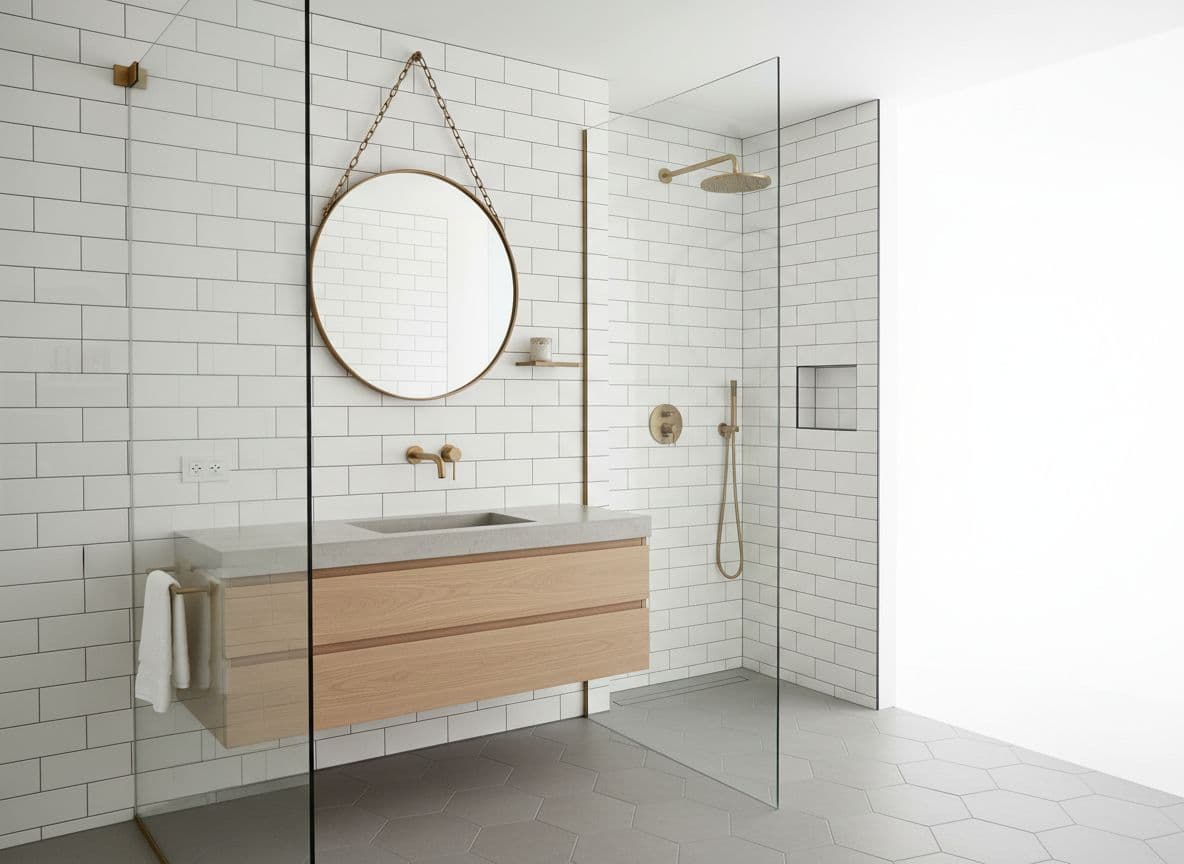
Bathroom remodels cost anywhere from $3,000 for a cosmetic update to $75,000+ for a luxury master bathroom renovation. The national average bathroom remodel costs $12,000-$25,000 for a mid-range renovation of a standard full bathroom. Half bath (powder room) remodels are the most affordable at $3,000-$10,000, while master bathroom renovations typically run $20,000-$50,000+. The ROI on bathroom remodels averages 60-70% at resale, making it one of the better home improvement investments. Buyers consistently rank updated bathrooms among the top features they look for. However, costs can spiral quickly without a clear budget: moving plumbing adds $2,000-$7,000, custom tile work costs $15-$50/sqft (vs. $5-$15/sqft for basic tile), and premium fixtures like a freestanding soaking tub ($1,000-$5,000) or frameless glass shower enclosure ($1,500-$5,000) add up fast. Understanding realistic costs for your specific project helps you set priorities, avoid over-improving, and negotiate effectively with contractors.
Key Factors That Affect Bathroom Remodel Cost Value
Understanding what drives the price of bathroom remodel cost helps you get the most accurate valuation.
Bathroom Size & Type
The bathroom type determines baseline scope and cost. A half bath/powder room (toilet and sink only) remodel costs $3,000-$10,000 and is the simplest project. A small full bath (5x8 ft) remodel runs $8,000-$20,000. A standard full bath (8x10 ft) costs $12,000-$30,000. A master bathroom (10x12+ ft with double vanity, separate shower and tub) runs $20,000-$50,000+. Larger bathrooms require more tile, flooring, lighting, and labor, but the per-square-foot cost actually decreases as size increases because fixed costs (plumbing, electrical, fixtures) are spread over more area.
Remodel Scope
Scope is the biggest cost driver. A cosmetic update (new paint, hardware, light fixtures, mirror, accessories) costs $2,000-$5,000 and can be completed in 1-2 days. A mid-range remodel (new vanity, toilet, tub/shower, tile floor, partial wall tile) costs $10,000-$25,000 and takes 2-4 weeks. A high-end renovation (gut to studs, reconfigure layout, premium fixtures, floor-to-ceiling tile, heated floors, custom shower) costs $25,000-$75,000+ and takes 4-8 weeks. Moving plumbing (relocating the toilet, shower, or sink) is one of the fastest ways to escalate costs, adding $1,500-$5,000 per fixture moved.
Key Features & Fixtures
Your feature choices significantly impact budget. Tub-to-shower conversion costs $3,000-$8,000 and is one of the most popular remodel projects. A walk-in shower with frameless glass enclosure costs $4,000-$10,000. Freestanding soaking tubs range from $1,000-$5,000 for the tub alone plus $500-$1,500 for installation and plumbing. Double vanities cost $1,500-$6,000 installed. Heated tile floors add $500-$2,500. Toilets range from $200 (basic) to $2,000+ (smart toilet with bidet, heated seat, auto-flush). High-end fixtures from brands like Kohler, Toto, and Grohe cost 3-5x more than builder-grade alternatives.
Tile Work
Tile is often the most visually impactful and most expensive element of a bathroom remodel. Floor-only tile costs $1,000-$3,000 for a standard bathroom. Partial wall tiling (tub surround or shower walls to 48 inches) costs $2,000-$5,000. Floor-to-ceiling tiling in a standard bathroom costs $4,000-$12,000+. Tile material costs range from $2-$8/sqft for basic ceramic, $5-$15/sqft for porcelain, $10-$30/sqft for natural stone (marble, travertine), and $15-$50/sqft for designer or handmade tiles. Labor for tile installation runs $5-$15/sqft and increases for complex patterns (herringbone, hexagonal, mosaic) and large-format tiles that require precision leveling.
Labor & Location
Labor accounts for approximately 40-50% of a bathroom remodel budget. In major metros (NYC, LA, SF, Boston, Chicago), skilled bathroom renovation labor runs $60-$120/hour, while in mid-cost and lower-cost areas it's $35-$70/hour. A mid-range bathroom remodel requires 100-250 labor hours across multiple trades: general contractor/project manager, plumber, electrician, tile setter, carpenter, and painter. General contractor fees (15-25% of total project cost) cover project management, scheduling, and coordination. Permits ($100-$500) are typically required for plumbing and electrical modifications. The most expensive labor markets can add 30-50% to project costs compared to national averages.
Tips for Valuing Bathroom Remodel Cost
Get the most accurate estimate by following these tips when evaluating your bathroom remodel cost.
Keep existing plumbing locations if possible. Moving a toilet, shower, or sink adds $1,500-$5,000 per fixture and is the fastest way to blow your bathroom renovation budget
Splurge on tile and save on fixtures. Dramatic tile work creates the biggest visual impact and lasts the longest, while faucets and showerheads can be upgraded affordably anytime ($100-$400 each)
Consider a cosmetic refresh before committing to a full remodel. New paint, updated hardware, a modern mirror, and a new light fixture ($1,000-$3,000 total) can transform a bathroom's appearance without the disruption of a full renovation
Budget 10-15% contingency for unexpected issues. Water damage behind walls, outdated plumbing or electrical, and mold are common surprises when opening up bathroom walls, especially in homes built before 1990
Bathroom Remodel Cost Market Insights
Bathroom remodeling is a $50+ billion annual market in the US, making it the second-largest home improvement category after kitchens. Current design trends include: walk-in showers replacing bathtubs (especially in primary bathrooms), large-format tiles with minimal grout lines, floating vanities, matte black and brushed gold fixtures, and spa-inspired features like rain showerheads, steam showers, and heated floors. The smart bathroom trend is growing, with Wi-Fi-connected toilets (Toto Washlet, Kohler Veil), digital shower controls, and smart mirrors with built-in lighting and defogging gaining popularity. Material-wise, quartz countertops have overtaken granite for vanity tops, luxury vinyl plank (LVP) waterproof flooring is gaining share from ceramic tile in budget renovations, and large-format porcelain tiles (24x48 and larger) are replacing smaller tiles for a modern, seamless look. Labor availability remains the biggest challenge. Experienced tile setters and plumbers are in short supply, with wait times of 4-8 weeks for quality contractors in many markets. Budget-wise, the biggest trend is the growth of 'cosmetic refresh' remodels ($3,000-$8,000) using peel-and-stick tiles, painted cabinets, and updated fixtures to achieve dramatic visual transformations without the time and cost of a full renovation.
Notable Bathroom Remodel Cost Values
Real-world examples of what specific bathroom remodel cost have sold for, so you can benchmark your own.
| Bathroom Remodel Cost | Condition | Typical Value |
|---|---|---|
| Half-Bath (Powder Room) Refresh | Cosmetic Only | $500 - $3,000 |
| Full Guest Bath - Budget Remodel | Entry-Level | $3,000 - $8,000 |
| Full Guest Bath - Mid-Range Remodel | Standard Finish | $8,000 - $15,000 |
| Master Bath - Mid-Range Remodel | Standard Finish | $12,000 - $25,000 |
| Master Bath - High-End Remodel | Premium Finish | $25,000 - $50,000 |
| Luxury Master Bath with Layout Change | Custom / Luxury | $50,000 - $100,000+ |
| Walk-In Shower Conversion (tub removal) | Mid-Range | $3,500 - $10,000 |
| Freestanding Soaking Tub Installation | Standard | $1,500 - $6,000 |
| Full Primary Bath - Whole-House Renovation Context | High-End | $30,000 - $75,000 |
Based on contractor cost data from HomeAdvisor, Angi, Remodeling Magazine Cost vs. Value reports, and NAHB survey averages.
Find Out What Your Bathroom Remodel Cost Are Worth
Upload a photo now and get a free AI-powered valuation in seconds. No sign-up required.
Bathroom Remodel Cost Valuation FAQ
How much does a bathroom remodel cost on average?
The national average bathroom remodel costs $12,000-$25,000 for a mid-range renovation of a standard full bathroom. Here's the breakdown by scope: Cosmetic update (paint, hardware, fixtures, mirror): $2,000-$5,000. Mid-range remodel (new vanity, toilet, tub/shower, tile floor, partial wall tile): $10,000-$25,000. High-end renovation (gut renovation, premium fixtures, floor-to-ceiling tile, custom shower, heated floors): $25,000-$50,000+. Master bathroom renovations with luxury features typically cost $30,000-$75,000. Half bath/powder room remodels run $3,000-$10,000. Add 20-40% for high-cost metro areas like NYC, SF, and LA.
How long does a bathroom remodel take?
Timeline depends on scope: A cosmetic update (paint, hardware, light fixtures) takes 2-5 days. A mid-range remodel (new vanity, tile, toilet, tub/shower replacement) takes 2-4 weeks. A full gut renovation (tear down to studs, relocate plumbing, custom tile, new everything) takes 4-8 weeks. These timelines assume materials are ordered and available before construction begins. Tile, vanities, and specialty fixtures can take 2-6 weeks for delivery, which should be factored into planning. During construction, the bathroom will be completely unusable for 1-3 weeks for a mid-range remodel and 3-6 weeks for a gut renovation. If you have only one bathroom, plan for temporary facilities or coordinate the schedule to minimize disruption.
What bathroom upgrades add the most home value?
The highest-ROI bathroom upgrades are: (1) Updating an outdated bathroom to a modern design (new vanity, tile, fixtures). 60-70% ROI and often necessary to sell a home at market value. (2) Adding a bathroom where one doesn't exist. Adding a half bath can increase home value by $10,000-$20,000 at a cost of $5,000-$15,000. (3) Tub-to-shower conversion in the master bath. Walk-in showers are the #1 requested feature by home buyers. (4) Double vanity in the master bath. Couples strongly prefer two sinks and will pay a premium for homes that have them. (5) Updated tile work. Modern, clean tile is the first thing buyers notice. Avoid over-improving: a $50,000 master bathroom in a $300,000 home won't recoup its cost, but a $15,000 update will pay for itself at resale.
Should I hire a general contractor or manage the bathroom remodel myself?
For a mid-range or full bathroom remodel, hiring a general contractor (GC) is usually worth the 15-25% management fee. Bathrooms require coordination of 4-6 trades (demo, plumbing, electrical, tile, carpentry, painting) in a specific sequence. Mistakes in sequencing can add weeks and thousands of dollars. A GC provides project management, trade scheduling, quality control, and warranty coverage. Self-managing subcontractors can save $3,000-$8,000 on a mid-range project but requires construction knowledge, flexible schedule (you need to be available when issues arise), and the ability to hire and manage individual plumbers, electricians, and tile setters. For cosmetic updates (paint, hardware, fixtures, mirror), DIY is straightforward and saves the most money. The middle ground. Hiring a bathroom designer ($500-$2,000) for the plan and a GC for execution. Is popular for achieving a professional result without designing it yourself.
What are the hidden costs in a bathroom remodel?
The most common hidden costs that surprise homeowners: (1) Water damage behind walls ($500-$3,000 for repair and mold remediation). very common in bathrooms with old tile surrounds or leaky shower pans. (2) Plumbing updates ($500-$2,000). older galvanized or polybutylene pipes often need replacing once exposed. (3) Electrical upgrades ($500-$2,000). bringing wiring up to current code (GFCI outlets, proper ventilation fan, adequate circuits). (4) Subfloor repair or replacement ($500-$1,500). common around toilets and tub areas with water damage. (5) Permit fees ($100-$500) and inspection delays. (6) Temporary storage and alternative bathroom arrangements. (7) Design changes mid-project. Changing tile, fixtures, or layout after work has begun is extremely expensive. Budget 10-15% contingency on top of your quoted price to cover these surprises.
Value anything, anytime
Unlimited valuations, saved history and full reports in the free app.