Last updated: September 2026
How Much Does It Cost to Build a Deck?
A new deck costs $15-$50+ per square foot installed in 2026, depending on the material and complexity. A typical 300 sq ft deck runs $4,500-$15,000+.composite decking costs more upfront but requires less maintenance. Enter your details for a personalized estimate.
Get the free app for unlimited scans


Deck Building Value Calculator
Fill in the details below for an accurate estimate
Why Knowing Your Deck Building Value Matters
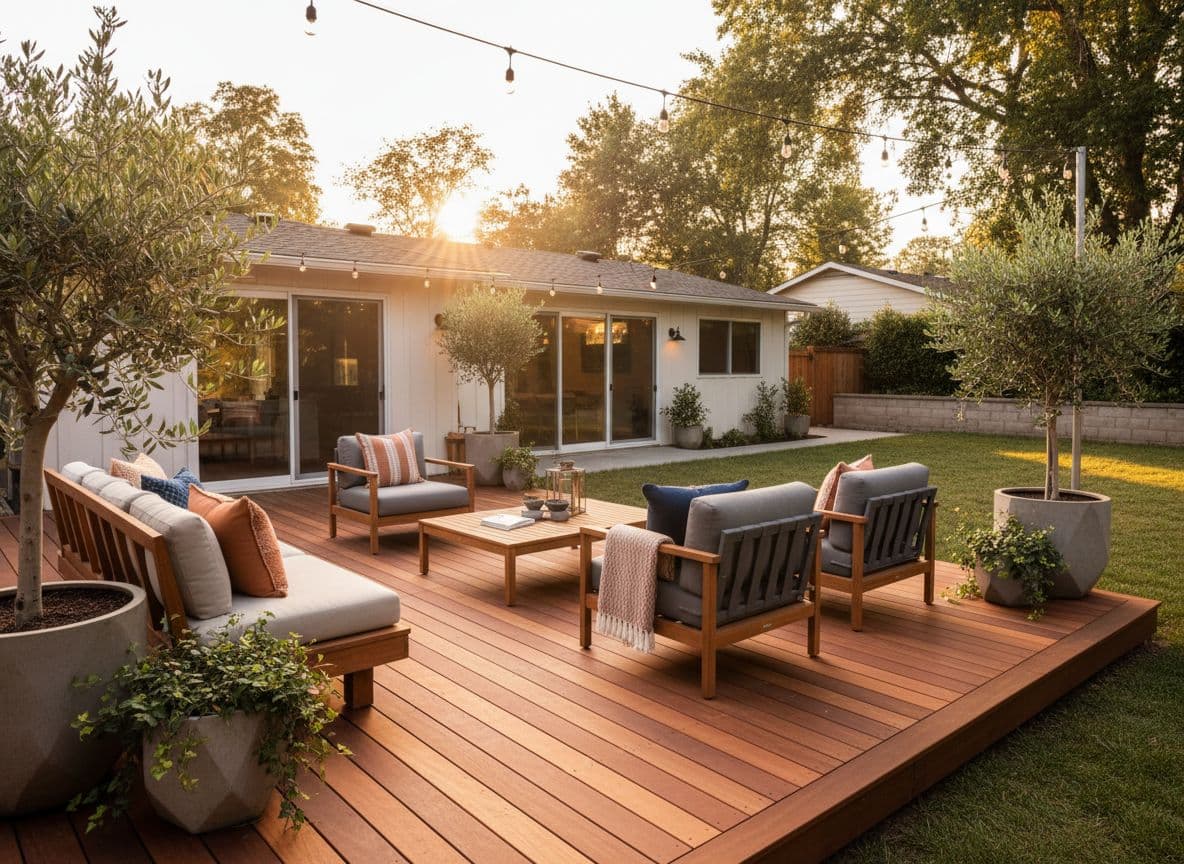
A deck is one of the highest-ROI home improvement projects, recovering 65-80% of costs at resale. But pricing varies dramatically. The same 300 sq ft deck could cost $5,000 in pressure-treated wood or $18,000 in premium composite with custom features. Material choice, deck height, railing style, and local labor rates all affect pricing. Getting accurate estimates before hiring a contractor helps you budget appropriately and avoid overpaying.
Key Factors That Affect Deck Building Value
Understanding what drives the price of deck building helps you get the most accurate valuation.
Decking Material
Pressure-treated wood: $15-$25/sq ft installed. Most affordable, requires staining every 2-3 years. Cedar/redwood: $25-$35/sq ft. Naturally rot-resistant, beautiful, moderate maintenance.composite (Trex, TimberTech): $25-$50/sq ft. Low maintenance, 25-year warranty. PVC: $30-$55/sq ft. Zero moisture absorption, most expensive.
Deck Size & Layout
Average deck is 200-500 sq ft. Simple rectangle: lowest cost. L-shapes, curves, and multi-level designs add 20-50% to labor costs. Built-in seating, planters, and stairs add $500-$3,000+ each. Larger decks benefit from economies of scale on materials.
Height & Foundation
Ground-level decks (under 2 feet) are cheapest. Simple footings or blocks. Elevated decks (3-8 feet) require posts, beams, and more complex foundations. Second-story decks need engineered plans and heavier structural support, adding $5,000-$15,000 to costs.
Railings & Features
Wood railings: $20-$35/linear ft.composite: $30-$60/linear ft. Cable: $60-$100/linear ft. Glass: $80-$150/linear ft. Built-in lighting: $500-$2,000. Pergola: $2,000-$8,000. These features can double the total project cost.
Labor & Location
Labor typically accounts for 50-60% of total deck cost. Rates vary by region. $40-$80/hour for deck builders. Permits ($200-$500) are required in most areas. Urban areas and high-cost-of-living regions charge 20-40% more than rural areas.
Tips for Valuing Deck Building
Get the most accurate estimate by following these tips when evaluating your deck building.
Get at least 3 quotes from licensed, insured deck builders
Compare total cost of ownership.composite costs more upfront but saves on staining/sealing over 20+ years
Check if you need a building permit. Most decks over 200 sq ft or 30 inches high require one
Ask about warranty coverage on both materials and labor
Deck Building Market Insights
Composite decking has overtaken wood as the most popular choice for new decks due to lower lifetime maintenance costs. Trex and TimberTech dominate the composite market. Lumber prices have stabilized after the 2021-2022 spikes but remain above pre-pandemic levels. The trend toward outdoor living spaces has increased demand for premium deck features. Kitchens, fire pits, and multi-level designs. Most contractors are booking 4-8 weeks out in peak season (spring-summer).
Find Out What Your Deck Building Are Worth
Upload a photo now and get a free AI-powered valuation in seconds. No sign-up required.
Deck Building Valuation FAQ
How much does a 12x12 deck cost?
A 144 sq ft deck costs $2,200-$3,600 in pressure-treated wood, $3,600-$7,200 in composite, or $4,300-$8,000 in PVC. Add $1,500-$4,000 for railings, stairs, and permits. Total: $4,000-$12,000 depending on material and features.
Is composite decking worth the extra cost?
For most homeowners, yes.composite costs 40-80% more upfront but requires no staining, sealing, or sanding. Over 20 years, composite typically costs less than wood when you factor in maintenance. It also comes with 25-year warranties and maintains its appearance better.
How long does it take to build a deck?
A simple 200-300 sq ft ground-level deck takes 2-4 days. Elevated decks take 5-10 days.complex multi-level decks with features can take 2-3 weeks. Planning, permits, and material ordering add 2-6 weeks before construction begins.
Do I need a permit to build a deck?
Most jurisdictions require permits for decks over 200 sq ft or 30 inches above grade. Permits cost $200-$500 and require plans showing foundation, structural details, and railing specifications. Building without a permit can result in fines and complications when selling your home.
What adds the most value to a deck?
Built-in lighting, quality railings, and a well-designed layout add the most resale value.composite or hardwood materials appraise higher than pressure-treated wood. Covered areas (pergolas) and outdoor kitchen features are increasingly valued by homebuyers.
Value anything, anytime
Unlimited valuations, saved history and full reports in the free app.