Last updated: September 2026
How Much Does a New HVAC System Cost?
HVAC replacement is one of the most common and expensive home repairs, costing $5,000-$25,000+ depending on system type and home size. A central AC unit costs $3,500-$8,000, a furnace $2,500-$7,500, and a complete system (AC + furnace) $7,000-$15,000. Heat pumps, increasingly popular for their efficiency, range from $4,000-$12,000. Our calculator provides personalized estimates based on your home size, system type, efficiency rating, and location.
Get the free app for unlimited scans


HVAC System Value Calculator
Fill in the details below for an accurate estimate
Why Knowing Your HVAC System Value Matters
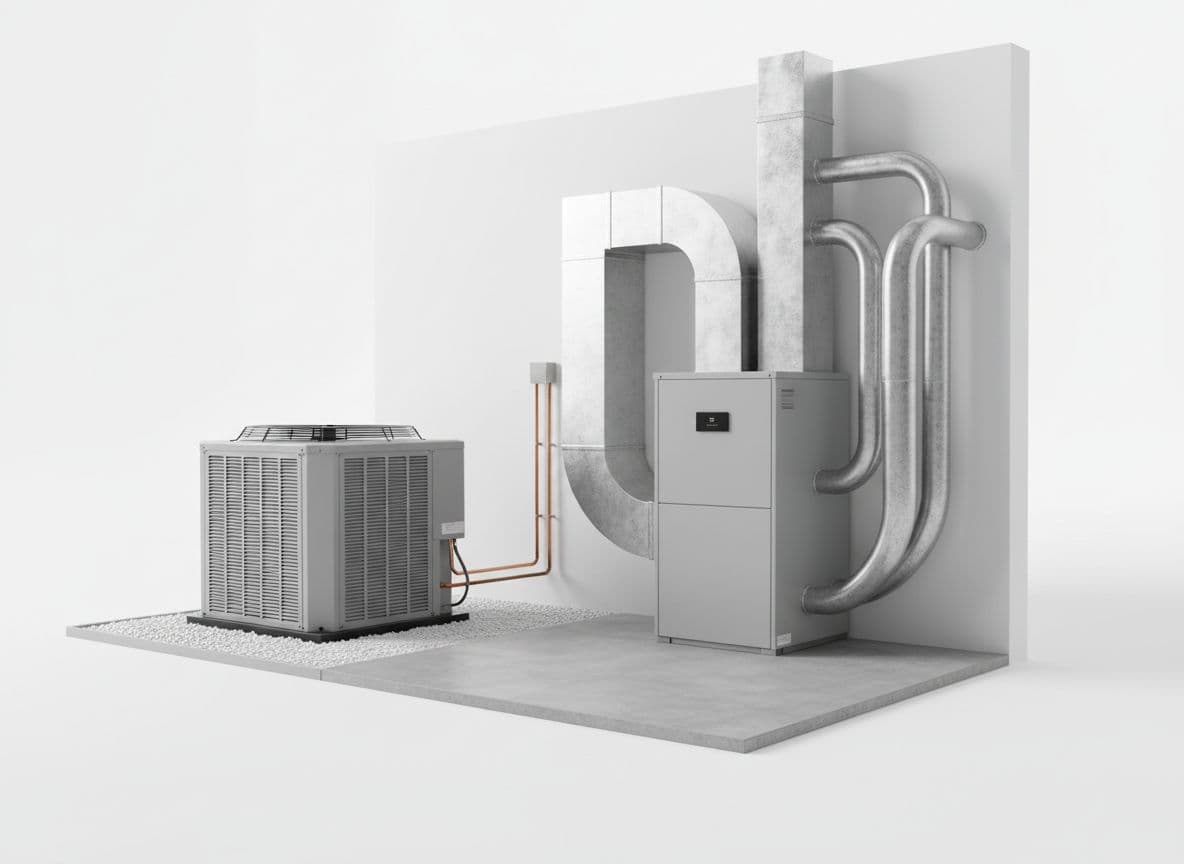
Your HVAC system accounts for 40-60% of your home's energy costs, making it the single most impactful factor in your utility bills. Choosing the right system size and efficiency rating can save $500-$2,000+ per year in energy costs. An oversized system wastes energy and causes comfort issues, while an undersized one can't keep up with demand. Understanding the true costs. Including long-term energy savings and available rebates. Helps you make the best investment for your home and budget.
Key Factors That Affect HVAC System Value
Understanding what drives the price of hvac system helps you get the most accurate valuation.
System Type
Central AC unit only: $3,500-$8,000 installed. Gas furnace only: $2,500-$7,500. AC + Furnace combo: $7,000-$15,000. Air-source heat pump: $4,000-$12,000. Geothermal heat pump: $15,000-$35,000. Ductless mini-split (single zone): $3,000-$5,000. Multi-zone mini-split: $6,000-$18,000. Heat pumps are increasingly popular because they handle both heating and cooling, potentially replacing both AC and furnace.
Home Size & System Capacity
HVAC systems are sized in tons (cooling) or BTUs (heating). A 1,200 sq ft home typically needs a 2-2.5 ton system, while a 2,500 sq ft home needs 3.5-5 tons. Larger capacity systems cost more. Each additional ton adds $500-$1,500 to equipment cost. Proper sizing through a Manual J load calculation ($100-$300) is essential; don't let contractors simply size based on square footage.
Efficiency Rating
Higher efficiency costs more upfront but saves on energy bills. AC efficiency is measured in SEER2: minimum code is 14-15 SEER2 ($3,500-$5,000), mid-range is 16-18 SEER2 ($5,000-$7,000), and premium is 20+ SEER2 ($7,000-$10,000+). Furnace efficiency (AFUE): 80% standard ($2,500-$4,000), 96%+ high-efficiency ($3,500-$7,000). A 20 SEER2 system can cut cooling costs 30-40% vs. a 14 SEER2 system.
Ductwork & Installation Complexity
Existing ductwork in good condition keeps costs down. Ductwork modifications add $1,000-$5,000.complete new duct system installation costs $3,000-$10,000. Ductless systems eliminate this cost entirely. Other installation factors: attic vs. basement vs. closet unit placement, electrical panel upgrades ($500-$2,000 if needed for heat pumps), and gas line work ($500-$1,500).
Tips for Valuing HVAC System
Get the most accurate estimate by following these tips when evaluating your hvac system.
Get 3+ quotes from licensed, insured HVAC contractors. Prices vary 30-50% between contractors for the same equipment. Ask for itemized quotes showing equipment, labor, and materials separately.
Check for rebates and tax credits before purchasing. The federal Inflation Reduction Act offers up to $2,000 tax credit for heat pumps, and many utilities offer $500-$2,000 in rebates for high-efficiency systems.
Don't automatically choose the cheapest quote. Installation quality matters enormously for system longevity and efficiency. Ask about warranty terms, workmanship guarantees, and company reputation.
Consider a heat pump if you're in a moderate climate. Modern cold-climate heat pumps work efficiently down to -15°F and handle both heating and cooling, potentially eliminating the need for a separate furnace.
HVAC System Market Insights
The HVAC industry is undergoing a major transition toward heat pumps and electrification, driven by the Inflation Reduction Act's tax credits and state-level incentives. Heat pump sales have grown 30%+ since 2022. Refrigerant regulations are transitioning from R-410A to R-454B (lower global warming potential), which will increase equipment costs slightly in 2025-2026. SEER2 efficiency standards (implemented 2023) raised minimum efficiency requirements. Supply chain issues have largely resolved, but skilled HVAC technician shortages continue to keep labor costs elevated. Spring and fall are the best times to get competitive quotes. Summer and winter are peak emergency replacement seasons with less negotiating leverage.
Notable HVAC System Values
Real-world examples of what specific hvac system have sold for, so you can benchmark your own.
| HVAC System | Condition | Typical Value |
|---|---|---|
| Central Air Conditioner (3-ton, mid-tier) | New Installation | $3,500 - $7,500 |
| Gas Furnace (80,000 BTU, 80% AFUE) | New Installation | $2,500 - $5,500 |
| Gas Furnace (96% AFUE, high-efficiency) | New Installation | $4,500 - $9,000 |
| Central AC + Gas Furnace (split system, 2.5-ton) | Full Replacement | $6,000 - $14,000 |
| Air-Source Heat Pump (3-ton, 16 SEER) | New Installation | $4,500 - $10,000 |
| Ductless Mini-Split (single zone, 12,000 BTU) | New Installation | $1,500 - $4,500 |
| Ductless Mini-Split (multi-zone, 4-zone system) | New Installation | $5,000 - $14,000 |
| Ductwork Replacement (full home, 2,000 sq ft) | Full Replacement | $3,000 - $10,000 |
| Geothermal Heat Pump (whole home) | New Installation | $15,000 - $35,000 |
Based on contractor invoices, HomeAdvisor/Angi cost data, AHRI-certified equipment pricing, and regional labor surveys.
Find Out What Your HVAC System Are Worth
Upload a photo now and get a free AI-powered valuation in seconds. No sign-up required.
HVAC System Valuation FAQ
How much does it cost to replace a central AC and furnace?
A complete HVAC system replacement (central AC + gas furnace) typically costs $7,000-$15,000 installed, depending on: system size (2-5 tons), efficiency rating (14-20+ SEER2 for AC, 80-98% AFUE for furnace), brand (budget brands like Goodman/Amana: $7,000-$10,000; mid-range like Carrier/Trane: $9,000-$13,000; premium like Lennox/Daikin: $12,000-$18,000), and installation complexity. Add $1,000-$5,000 for ductwork modifications if needed. Prices include removal of old equipment, installation, thermostat, permits, and startup.
How long does an HVAC system last?
Average HVAC system lifespans: Central air conditioner: 15-20 years. Gas furnace: 15-25 years. Heat pump: 12-15 years (works harder than AC since it provides both heating and cooling). Ductless mini-split: 15-20 years. Geothermal heat pump: 20-25 years (ground loops last 50+ years). These are averages. Regular maintenance (annual tune-ups, filter changes) can extend life by 3-5 years, while neglect shortens it. Signs it's time to replace: frequent repairs, rising energy bills, uneven temperatures, R-22 refrigerant (discontinued), and age over 15 years.
Is a heat pump worth it vs. traditional AC and furnace?
Heat pumps are worth considering for most homes, especially with current incentives. Pros: Handle both heating and cooling in one system, 2-3x more energy efficient for heating than gas furnaces, qualify for up to $2,000 federal tax credit, lower carbon footprint, and no combustion/carbon monoxide risk. Cons: Higher upfront cost ($4,000-$12,000 vs. $3,500-$8,000 for AC alone), may need supplemental heating in extreme cold (below -10°F for standard models), and higher electricity bills offset by lower/no gas bills. In moderate climates (USDA zones 4-8), a heat pump typically saves $500-$1,500/year vs. AC + gas furnace. Payback period: 5-10 years with incentives.
Value anything, anytime
Unlimited valuations, saved history and full reports in the free app.