Last updated: September 2026
How Much Is Your Pressure Washer Worth?
Whether you have a Honda, Simpson, Karcher, Ryobi, Generac, or any other brand of gas or electric pressure washer, our AI analyzes the brand, PSI rating, GPM, engine/motor type, and condition to provide an accurate resale valuation. Upgrading your equipment? Selling a business? Know what your pressure washer is worth.
Get the free app for unlimited scans


Compare real prices
See what pressure washers are listed for right now
Affiliate link: we earn a commission if you buy, at no extra cost to you.
What do you want to value?
Get the free app for unlimited scans
Why Knowing Your Pressure Washers Value Matters
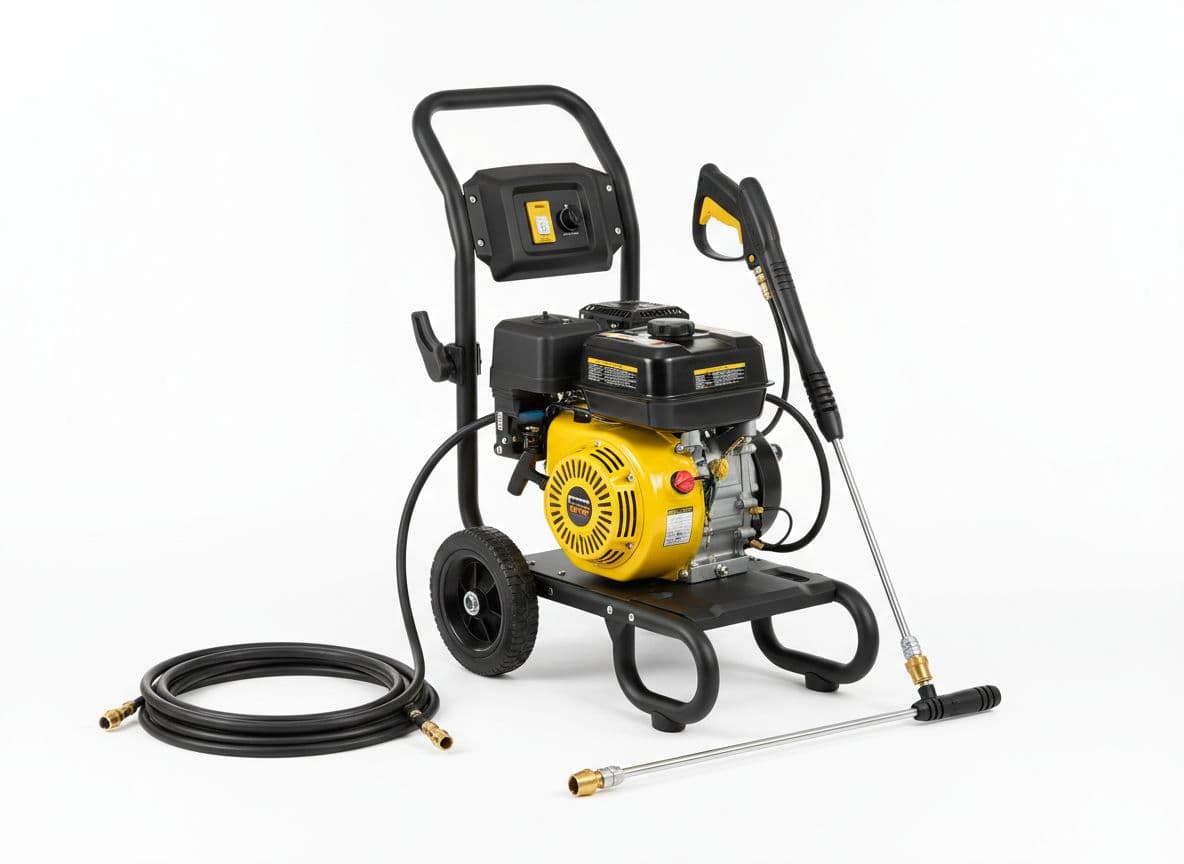
Pressure washers range from $100 electric consumer models to $5,000+ commercial hot water units, creating a diverse resale market. Gas pressure washers with Honda or commercial-grade engines hold value best because engine reliability is the primary concern for buyers. Used pressure washers typically sell for 30-55% of retail depending on age, brand, and condition. The market is driven by homeowners needing seasonal cleaning (decks, driveways, siding), contractors adding capacity, and small business owners starting pressure washing side hustles. A growing trend fueled by social media cleaning videos. Electric models have grown in popularity for ease of use but depreciate faster than gas models. The key selling point is that the machine starts easily and produces rated pressure. A pressure washer that doesn't start or has weak pressure is essentially worthless.
Key Factors That Affect Pressure Washers Value
Understanding what drives the price of pressure washers helps you get the most accurate valuation.
PSI & GPM Rating
Cleaning power is measured by PSI (pressure) × GPM (water flow) = cleaning units. Consumer electric models (1,300-2,000 PSI): $30-$100 used. Consumer gas models (2,500-3,200 PSI): $100-$300. Semi-pro gas models (3,200-4,000 PSI): $200-$500.commercial gas models (4,000+ PSI): $500-$2,000+. Hot water commercial units: $1,500-$5,000. Higher PSI and GPM models serve wider applications and hold value better.
Engine & Pump Brand
Honda GX engines are the gold standard. They command 30-50% premiums over comparable units with other engines. Briggs & Stratton and Kohler are reliable mid-tier engines. Brand-specific engines (Generac, Ryobi) are adequate but less valued. The pump is equally important: AR (Annovi Reverberi), CAT, and General pumps are commercial-grade and add significant value. Consumer-grade axial cam pumps are cheaper to replace and less valued. Triplex pumps indicate commercial quality.
Gas vs. Electric
Gas pressure washers hold value better due to higher power and portability. No cord required. Electric models depreciate faster but have growing demand for residential use. Battery-powered pressure washers (Ego, DeWalt, Ryobi) are the newest segment. Recent models hold value well. Electric models are lighter, quieter, and require less maintenance, appealing to casual homeowner use. Gas models serve the professional and serious homeowner markets.
Condition & Runtime
Easy starting is the #1 buyer concern. A gas pressure washer that doesn't start on 1-2 pulls has significantly reduced value. Pump condition determines pressure output. Worn pumps lose pressure and pulsate. Hose, wand, and nozzle condition matter. Replacements cost $30-$100. Visible oil leaks, rust, or corrosion reduce value. A recently serviced unit (oil change, pump oil, new spark plug) demonstrates care and commands higher prices.
Accessories & Completeness
A complete setup sells faster: machine, high-pressure hose, spray gun, wand, and nozzle set. Surface cleaners ($50-$150 value) significantly increase appeal for driveway/deck cleaning. Downstream injectors and chemical tanks add value for the cleaning business market. Extra nozzles (0°, 15°, 25°, 40°, soap) should be included.commercial units with hose reels, trailer mounts, or chemical injection systems command premiums.
Tips for Valuing Pressure Washers
Get the most accurate valuation by following these tips when photographing your pressure washers.
Start the pressure washer and demonstrate it producing full pressure. A running video is the most convincing selling tool
Show the engine/pump nameplates with brand, model, PSI, and GPM ratings visible
Include all accessories: hose, gun, wand, nozzles, and any extras like surface cleaners
Note the engine hours if available, and describe any recent maintenance performed
Pressure Washers Market Insights
The pressure washer market is seasonal. Prices peak in March-June when homeowners tackle spring cleaning projects. Late summer and fall see moderate demand. Winter prices drop 20-30%. Facebook Marketplace and Craigslist are the primary selling platforms. These are heavy machines that benefit from local sales. The pressure washing business boom (fueled by YouTube and TikTok satisfying cleaning videos) has created strong demand for commercial and semi-pro used equipment. Many new entrepreneurs start with used equipment to minimize startup costs. Pawn shops buy pressure washers but at 30-40% of market value. Big box stores run seasonal sales that create price ceilings. A new Ryobi 2,300 PSI electric washer on sale for $180 limits what a used one can bring.
Notable Pressure Washers Values
Real-world examples of what specific pressure washers have sold for, so you can benchmark your own.
| Pressure Washer | Condition | Typical Value |
|---|---|---|
| Sun Joe SPX3000 Electric Pressure Washer (2030 PSI) | Used | $60 - $110 |
| Ryobi RY142300 Electric Pressure Washer (2300 PSI) | Used | $80 - $140 |
| Greenworks 1800 PSI Electric Pressure Washer | Used | $40 - $80 |
| Simpson Cleaning MS60763-S MegaShot (3200 PSI, Honda GC190) | Used | $200 - $350 |
| Karcher K5 Premium Electric Pressure Washer (2000 PSI) | Used | $100 - $180 |
| Pressure Pro 4000 PSI / 4 GPM Belt-Drive Gas (Honda GX390) | Used | $600 - $1,100 |
| Mi-T-M 3500 PSI Cold Water Gas Pressure Washer | Used | $350 - $600 |
| Generac SpeedWash 3200 PSI Gas Pressure Washer | Used | $150 - $280 |
| Hotsy 1000 Series Hot Water Pressure Washer (1500-2000 PSI) | Used | $800 - $2,500+ |
Based on eBay sold listings, Craigslist/Facebook Marketplace comps, and contractor equipment resale records.
Find Out What Your Pressure Washers Are Worth
Upload a photo now and get a free AI-powered valuation in seconds. No sign-up required.
Pressure Washers Valuation FAQ
How much is a used pressure washer worth?
Electric consumer models (Ryobi, Sun Joe, Karcher): $30-$100. Gas consumer models (Ryobi, Craftsman, Generac 2,500-3,000 PSI): $100-$250. Gas mid-range with Honda engine (Simpson, Powershot): $200-$500.commercial gas models (4,000+ PSI, triplex pump): $500-$2,000. Hot water commercial units: $1,500-$5,000. Engine brand, PSI, and condition determine the specific value.
Is it worth fixing a pressure washer?
For gas models with Honda engines: most repairs are worthwhile since the engine alone is worth $200-$400.common pump repairs ($50-$150) are worthwhile on commercial units. Carburetor cleaning ($20-$50 DIY) fixes most starting issues. For consumer electric models under $200 new: repairs over $75 are rarely worthwhile. Buying new is often cheaper. Pump replacement ($100-$300) is only worthwhile on commercial units.
How long does a pressure washer last?
Consumer electric: 100-200 hours of use (3-5 years of typical homeowner use). Consumer gas with axial pump: 200-500 hours.commercial gas with triplex pump and Honda engine: 1,000-3,000+ hours with pump maintenance. The pump typically wears out before the engine on quality gas models. Regular pump oil changes and winterization extend life significantly.
What is the best brand of pressure washer for resale?
Honda-powered Simpson and Powershot models hold the best resale value in the consumer/semi-pro market. For commercial units, units with CAT or General pumps and Honda GX engines command premiums. Karcher holds value in the European market. Ryobi and Greenworks electric models sell well on the used market due to brand recognition. Avoid off-brand import units if resale value matters.
Gas or electric pressure washer. Which is better?
Gas is better for: power (2,500-4,000+ PSI), portability, commercial use, and large projects. Electric is better for: convenience, quiet operation, small spaces, and light-duty cleaning (cars, patios, furniture). Gas holds resale value better. Electric is easier to maintain. Battery-powered models are improving rapidly but still can't match gas for heavy-duty work. Choose based on your primary use case.
Value anything, anytime
Unlimited valuations, saved history and full reports in the free app.