Last updated: September 2026
How Much Is Your Lawnmower Worth?
Whether you have a Honda, John Deere, Husqvarna, Toro, Craftsman, or any other brand of push mower, self-propelled mower, riding mower, or zero-turn mower, our AI analyzes the type, brand, age, and condition to provide an accurate resale valuation. Upgrading equipment? Moving to a smaller property? Know what your mower is worth.
Get the free app for unlimited scans


Compare real prices
See what lawnmowers are listed for right now
Affiliate link: we earn a commission if you buy, at no extra cost to you.
What do you want to value?
Get the free app for unlimited scans
Why Knowing Your Lawnmowers Value Matters
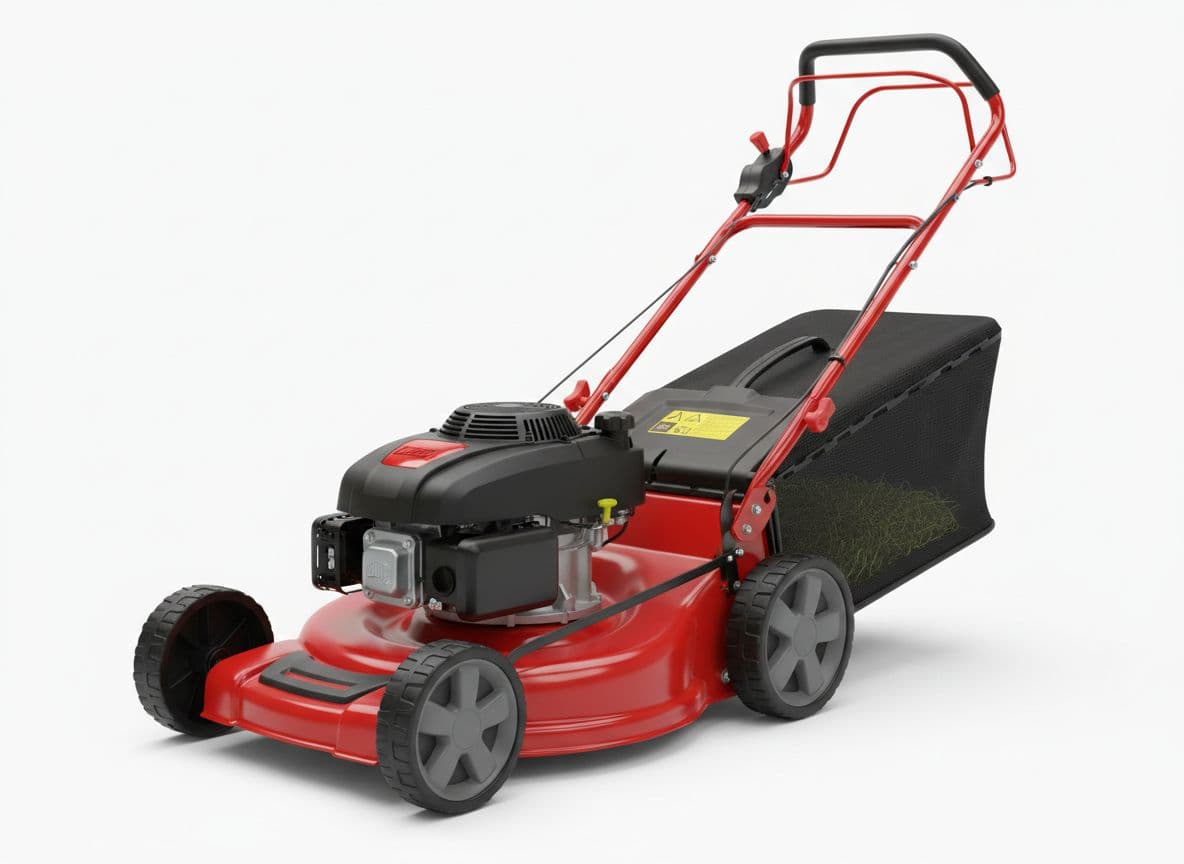
Lawnmowers are essential equipment for most American homeowners, and the used market is active because new mowers are increasingly expensive. Quality push mowers cost $300-$700, self-propelled models $400-$900, riding mowers $2,000-$5,000, and commercial zero-turns $6,000-$15,000+. Many buyers prefer used mowers to save 40-60% over new prices. Honda push mowers are the gold standard, holding 50-65% of retail value for years due to legendary engine reliability. John Deere and Husqvarna riding mowers hold value well among homeowners and hobby farmers.commercial mowers from Scag, Exmark, and Hustler have strong resale because landscaping businesses routinely buy used equipment to build or expand their fleets. The key factors are brand reputation, engine hours (for riding mowers), and whether the mower starts and runs properly.
Key Factors That Affect Lawnmowers Value
Understanding what drives the price of lawnmowers helps you get the most accurate valuation.
Type & Size
Zero-turn mowers hold the highest absolute values ($2,000-$8,000 used for commercial models). Riding mowers/lawn tractors bring $500-$2,500 used. Self-propelled walk-behind mowers sell for $150-$500. Push mowers are the most affordable at $50-$250 used.commercial walk-behind mowers (36-54 inch) serve the landscaping market at $500-$2,000. Battery-powered mowers are a growing segment with strong demand for recent models.
Brand & Engine
Honda engines are universally respected. Honda mowers command 30-50% premiums. John Deere riding mowers hold strong value (40-55% of retail). Husqvarna, Toro, and Ariens are strong mid-tier brands. Craftsman and Troy-Bilt are solid budget options with moderate resale.commercial brands (Scag, Exmark, Wright, Ferris) hold exceptional value in the pro market. Briggs & Stratton engines are reliable but common, while Kawasaki and Kohler commercial engines add value.
Age & Engine Hours
For push mowers, age and visible wear determine value. 1-3 year old mowers hold 40-60% of retail. For riding mowers, engine hours are the key metric: under 200 hours is low use, 200-500 is moderate, 500+ is high use.commercial mowers can handle 1,500-3,000+ hours with maintenance. Year model affects parts availability and technology features. Electric mowers depreciate based on battery health rather than engine hours.
Condition & Maintenance
A mower that starts on the first pull and cuts evenly is worth full market value.common issues. Hard starting, uneven cut, vibration, smoking. Reduce value 30-50%. Deck condition (rust, dents, belt wear) matters for appearance and function. Tire condition on riding mowers affects value. Recent maintenance (oil change, blade sharpening, air filter, spark plug) adds perceived value. A clean mower sells for 10-20% more than a dirty one.
Deck Size & Features
Deck width determines the mower's efficiency and target buyer. 21-inch push mowers are the standard. 42-46 inch riding mower decks serve most residential lawns. 48-54 inch decks for larger properties. 60-72 inch commercial decks for professional use. Features like mulching capability, bagging systems, electric start, cruise control, and hour meters add value. Hydrostatic transmission commands a premium over gear-drive on riding mowers.
Tips for Valuing Lawnmowers
Get the most accurate valuation by following these tips when photographing your lawnmowers.
Start the mower and record a short video showing it running smoothly. This is the #1 thing buyers want to see
Clean the mower thoroughly. Power wash the deck and wipe down the engine before photographing
Show the hour meter reading (riding mowers) and include maintenance history if available
Photograph the deck underside to show blade and deck condition. This demonstrates transparency
Lawnmowers Market Insights
The used lawnmower market is highly seasonal. Prices peak in March-May as mowing season begins and drop 30-40% in October-December. Selling in early spring yields the best prices. Facebook Marketplace is the dominant selling platform, followed by Craigslist and OfferUp. Tractor and equipment dealers take riding mowers as trade-ins.commercial landscaping equipment has a separate market. Dealer auctions, industry forums, and Facebook groups dedicated to commercial mowing equipment. The battery-powered mower segment is growing rapidly. Used Ego, Ryobi, and Greenworks mowers sell well as buyers try electric without full retail investment. Honda push mower resale is remarkably strong. 5-year-old Honda HRX models routinely sell for $300-$400 (original retail $500-$700). The biggest buyer segments are new homeowners, budget-conscious families, and landscaping startups building equipment inventories.
Notable Lawnmowers Values
Real-world examples of what specific lawnmowers have sold for, so you can benchmark your own.
| Lawnmower | Condition | Typical Value |
|---|---|---|
| Honda HRX217 Self-Propelled Push Mower | Used - Good | $250 - $450 |
| Craftsman T210 Riding Mower (42-in) | Used - Fair | $600 - $1,000 |
| John Deere X350 Lawn Tractor (42-in) | Used - Good | $1,500 - $2,800 |
| Husqvarna Z254 Zero-Turn Rider (54-in) | Used - Good | $1,800 - $3,200 |
| Toro TimeCutter MX5000 Zero-Turn (50-in) | Used - Good | $1,500 - $2,800 |
| Scag Patriot Zero-Turn (52-in) | Used - Good | $3,500 - $6,000 |
| Ego Power+ LM2135SP Self-Propelled (21-in) | Used - Good | $200 - $380 |
| Snapper SP80 High-Wheel Self-Propelled | Used - Fair to Good | $80 - $180 |
| Ferris IS 700Z Zero-Turn (61-in) | Used - Good | $5,000 - $9,500 |
Based on eBay sold listings, Facebook Marketplace, Craigslist comps, and dealer used-equipment pricing across major brands.
Find Out What Your Lawnmowers Are Worth
Upload a photo now and get a free AI-powered valuation in seconds. No sign-up required.
Lawnmowers Valuation FAQ
How much is a used riding mower worth?
Entry-level riding mowers (Craftsman, Troy-Bilt, 42-inch): $400-$1,000. Mid-range lawn tractors (John Deere 100 series, Husqvarna): $800-$2,000. Premium garden tractors (John Deere X series, Kubota): $1,500-$4,000.commercial zero-turns (Scag, Exmark): $2,000-$8,000. Age, hours, and condition determine the specific price within each range.
When is the best time to buy or sell a lawnmower?
Sell in March-May for the highest prices. Buyers are preparing for mowing season and motivated to buy. Buy in October-December for the best deals. Sellers are clearing equipment before winter storage. Mid-summer (July-August) is moderate for both buying and selling. End-of-season dealer clearance sales in September-October create competition for used sellers.
How many hours does a riding mower last?
Residential riding mowers typically last 800-1,500 hours with regular maintenance.commercial zero-turns are built for 2,000-4,000+ hours. John Deere and Husqvarna residential mowers tend toward the higher end. Proper maintenance (regular oil changes, air filter replacement, blade sharpening, belt replacement) extends life significantly. Engine failure is the most common end-of-life event. Kawasaki and Kohler commercial engines are the most durable.
Are Honda mowers worth the premium?
Yes. Honda push mowers are widely considered the best consumer mowers made. Their engines are extremely reliable, often lasting 15-20+ years. Honda mowers also hold resale value better than any other brand. A well-maintained Honda HRX can sell for 50-65% of retail after 5 years. The higher purchase price is offset by longevity, reliability, and resale value. For riding mowers, John Deere fills the equivalent premium-reliability role.
Is it worth fixing an old lawnmower?
For push mowers: if the repair costs less than $100 and the mower is a quality brand, repair is worthwhile.common fixable issues include carburetor cleaning ($20-$50), blade replacement ($15-$30), and pull cord replacement ($10-$20). For riding mowers: engine or transmission repairs over $500 may exceed the mower's value for older models. Always compare repair cost to replacement cost and the mower's current market value.
Value anything, anytime
Unlimited valuations, saved history and full reports in the free app.