Last updated: September 2026
How Much Should I Pay in Rent?
Our rent estimate calculator helps you determine fair market rent for any property based on location, type, size, and layout. Whether you're apartment hunting, negotiating a lease renewal, or a landlord setting rental rates, this tool provides data-informed rent estimates based on comparable rental listings and current market conditions in your area.
Get the free app for unlimited scans


Rent Estimate Value Calculator
Fill in the details below for an accurate estimate
Why Knowing Your Rent Estimate Value Matters
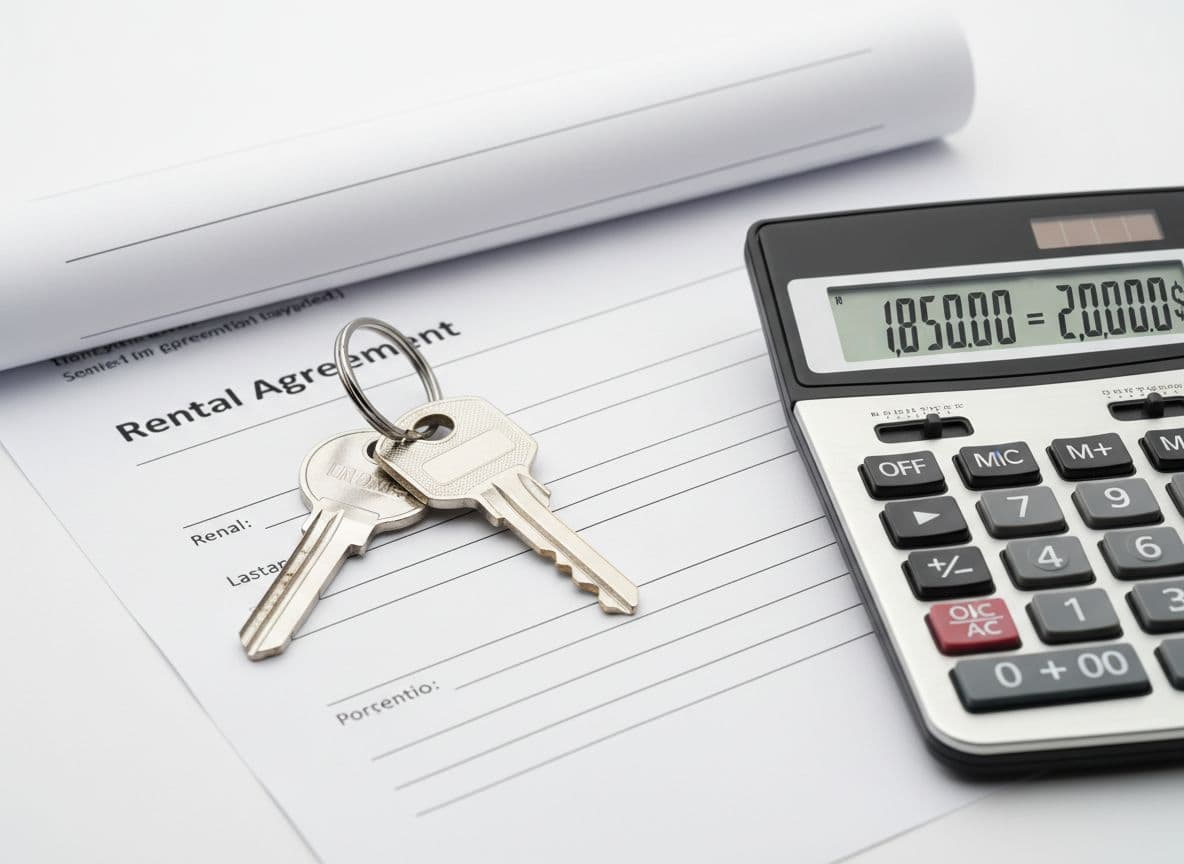
Rent is the single largest monthly expense for most Americans, with the national median rent reaching approximately $1,850 per month in 2025. Overpaying by even $200 per month costs you $2,400 annually. Money that could go toward savings, investments, or paying down debt. In competitive markets like New York City, San Francisco, and Miami, median one-bedroom rents exceed $2,500-$3,500 per month, making accurate rent estimation even more critical. On the flip side, landlords who underprice their rentals by $150/month leave $1,800 per year on the table per unit. Fair market rent varies dramatically by neighborhood. A two-bedroom apartment might rent for $1,400 in one ZIP code and $2,200 just five miles away. Knowing the accurate rent range for your specific property type and location empowers you to negotiate confidently and avoid overpaying.
Key Factors That Affect Rent Estimate Value
Understanding what drives the price of rent estimate helps you get the most accurate valuation.
Location & Neighborhood
Location is the dominant factor in rental pricing. The same 2-bedroom apartment can rent for $1,200 in a smaller city and $4,000 in Manhattan or San Francisco. Within a single metro area, rents can vary 40-60% based on neighborhood desirability, walkability, proximity to transit, and school district quality. Urban cores and trendy neighborhoods command 20-40% premiums over suburban locations in the same metro.
Property Type
Property type significantly impacts rent. Single-family houses typically rent for 15-30% more than comparable apartments due to yard space, privacy, and parking. Condos often include amenities (gym, pool, concierge) that justify 10-20% higher rents. Studios and micro-apartments rent for 30-50% less than one-bedrooms in the same building, though the per-square-foot rate is often higher.
Bedrooms & Bathrooms
Each additional bedroom typically adds 20-35% to monthly rent. A one-bedroom at $1,500 becomes roughly $1,900-$2,000 for a two-bedroom and $2,300-$2,600 for a three-bedroom in the same building. An extra full bathroom adds approximately 5-10% to rent. Studio apartments average 25-40% less than one-bedrooms, making them popular for budget-conscious renters.
Square Footage & Layout
Larger units command higher total rent, though the per-sqft premium decreases with size. In most markets, rent runs $1.00-$3.00 per square foot per month depending on location. A well-laid-out 750 sqft apartment with efficient use of space can feel comparable to a poorly designed 900 sqft unit. Open floor plans, in-unit laundry, and updated kitchens can add $100-$300/month in rental premium.
Market Conditions & Seasonality
Rental markets fluctuate seasonally, with summer months (May-August) commanding 5-15% higher rents due to peak moving season. Vacancy rates directly impact pricing. Markets below 5% vacancy favor landlords, while above 8% gives renters negotiating power. Remote work trends have flattened some urban-suburban rent gaps, with mid-size cities like Nashville, Charlotte, and Boise seeing 20-40% rent increases since 2020.
Tips for Valuing Rent Estimate
Get the most accurate estimate by following these tips when evaluating your rent estimate.
Enter your specific city name or ZIP code rather than a broad metro area, as rents can vary 30-50% between neighborhoods just a few miles apart
Select the correct property type since houses typically rent for 15-30% more than apartments with similar bedroom counts
Be accurate with bedroom count. The difference between a 1-bedroom and 2-bedroom can be $400-$800/month in most markets
Include square footage if available, as this refines the estimate significantly. A 600 sqft one-bedroom is valued very differently than an 850 sqft one-bedroom
Rent Estimate Market Insights
The U.S. rental market has moderated after sharp post-pandemic increases, with national rent growth slowing to 2-4% annually in 2025 after double-digit spikes in 2021-2022. However, rental affordability remains stretched.approximately 50% of renters are cost-burdened, spending more than 30% of income on housing. New apartment construction has increased supply in Sun Belt markets, putting downward pressure on rents in cities like Austin, Phoenix, and Atlanta where significant building occurred. Meanwhile, supply-constrained coastal markets (NYC, Boston, San Jose) continue to see rent increases of 3-6% annually. The rise of build-to-rent single-family communities is creating a new rental tier, with average rents of $2,000-$2,800 for 3-bedroom homes in suburban markets.
Notable Rent Estimate Values
Real-world examples of what specific rent estimate have sold for, so you can benchmark your own.
| Rent Estimate | Condition | Typical Value |
|---|---|---|
| Studio Apartment, Austin TX | Market Rate | $1,200 - $1,600 |
| 1BR/1BA Apartment, Phoenix AZ | Market Rate | $1,100 - $1,500 |
| 2BR/1BA House, Cleveland OH | Market Rate | $850 - $1,200 |
| 2BR/2BA Condo, Miami FL | Market Rate | $2,400 - $3,200 |
| 3BR/2BA Single-Family Home, Dallas TX | Market Rate | $1,900 - $2,600 |
| 1BR/1BA Apartment, San Francisco CA | Market Rate | $2,800 - $3,800 |
| 3BR/2BA House, Columbus OH | Market Rate | $1,400 - $1,900 |
| 2BR/2BA Apartment, Denver CO | Market Rate | $1,800 - $2,400 |
| Studio, New York City NY (Manhattan) | Market Rate | $2,500 - $3,500 |
Based on aggregated rental market data from Zillow Rent Index, Apartments.com listings, and Redfin rental estimates across major US metros.
Find Out What Your Rent Estimate Are Worth
Upload a photo now and get a free AI-powered valuation in seconds. No sign-up required.
Rent Estimate Valuation FAQ
How much of my income should go to rent?
The standard guideline is the 30% rule. Spend no more than 30% of gross monthly income on rent. So if you earn $5,000/month, aim for rent at $1,500 or less. However, this rule is increasingly unrealistic in expensive cities where many renters spend 35-45% of income on housing. A more practical approach is ensuring rent plus all housing costs (utilities, renter's insurance, parking) don't exceed 35-40% of take-home pay, while still leaving enough for savings, debt payments, and daily expenses. Some financial advisors now suggest the 50/30/20 framework: 50% of income to needs (including rent), 30% to wants, and 20% to savings.
Is it cheaper to rent a house or an apartment?
Apartments are typically 15-30% cheaper than houses with similar bedroom counts in the same area. However, when splitting with roommates, renting a house can be more cost-effective per person. A 3-bedroom house at $2,400 split three ways ($800 each) is often cheaper than three separate studio apartments at $1,100 each. Apartments often include amenities (trash, water, maintenance) in the rent, while house renters typically pay for lawn care, some utilities, and minor maintenance separately. The total cost comparison should include all housing-related expenses, not just base rent.
When is the cheapest time to rent?
The cheapest months to sign a lease are typically December through February, when rental demand drops 15-25% compared to summer peak season. Landlords are more willing to negotiate on price, offer move-in specials, or waive fees during winter months to avoid vacancies. The most expensive time is May through August, when demand surges from job relocations, college students, and families wanting to move before school starts. If your lease is flexible, signing in January or February can save $50-$200/month compared to the same unit leased in June.
How do I negotiate lower rent?
Successful rent negotiation starts with research. Know the fair market rent for comparable units in your area using tools like this calculator. Present competing listings at lower prices as leverage. Offer value to the landlord: a longer lease term (18-24 months), paying several months upfront, or agreeing to handle minor maintenance can justify 3-8% rent reductions. Time your negotiation for off-peak months or when a unit has been vacant for 30+ days. Existing tenants have leverage at renewal since landlord turnover costs ($2,000-$5,000 per unit) make modest rent reductions worthwhile compared to finding a new tenant.
What is fair market rent and how is it determined?
Fair market rent (FMR) is the estimated cost of renting a moderately-priced unit in a specific area. HUD publishes annual FMR figures used for housing voucher programs, based on the 40th percentile of rental costs for standard-quality units. Market rent is determined by supply and demand.comparable recently-leased units in the same neighborhood set the benchmark. Key factors include location, unit size, condition, amenities, and current vacancy rates. Online rent estimators aggregate listing data and recent lease transactions to approximate FMR for specific property characteristics. For the most accurate picture, compare at least 5-10 similar listings in your target neighborhood.
Value anything, anytime
Unlimited valuations, saved history and full reports in the free app.