Last updated: September 2026
How Much Is My Record Player Worth?
Whether you have a vintage Technics 1200, a classic Thorens turntable, a mid-century console stereo, or a high-end audiophile deck, our AI analyzes the brand, model, and condition to provide an accurate market valuation. From inherited hi-fi equipment to DJ turntables, get the right price before selling.
Get the free app for unlimited scans


Compare real prices
See what record players are listed for right now
Affiliate link: we earn a commission if you buy, at no extra cost to you.
What do you want to value?
Get the free app for unlimited scans
Why Knowing Your Record Players Value Matters
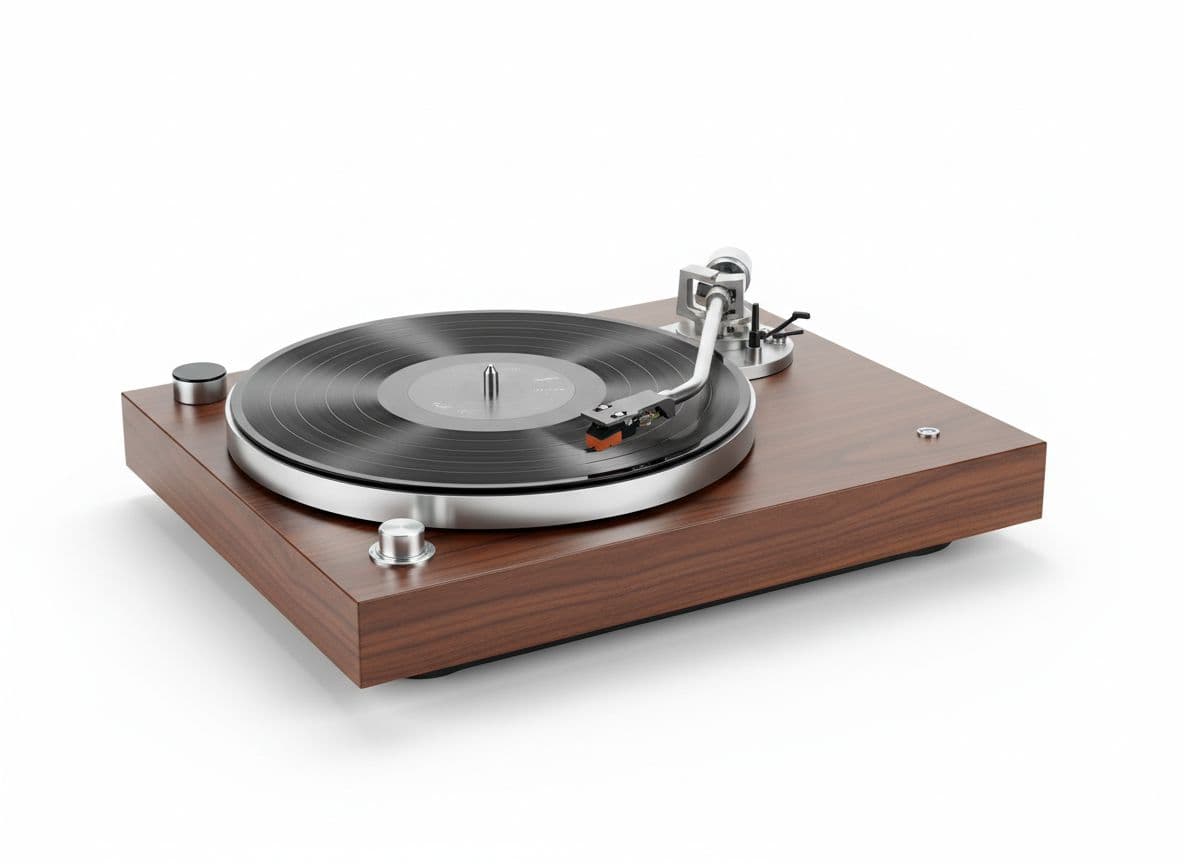
The vinyl revival has transformed the turntable market. Record players that sat in attics and basements for decades are now actively sought by audiophiles, DJs, and casual listeners alike. A Technics SL-1200 that sold for $400 new in the 1990s now commands $600-$1,200+ used. Vintage turntables from Thorens, Rega, Linn, and Dual that were considered outdated in the CD era are now prized for their warm analog sound. However, not all old turntables are valuable. The market clearly distinguishes between quality vintage decks and cheap all-in-one units. A high-quality turntable with a worn stylus, damaged cartridge, or speed issues is worth far less than a properly functioning one. Understanding what you have, what it needs, and what it is worth in today's market prevents you from selling a gem for pennies or overpricing a common unit. Many estate and inheritance situations involve vintage stereo equipment where heirs have no frame of reference for value.
Key Factors That Affect Record Players Value
Understanding what drives the price of record players helps you get the most accurate valuation.
Brand & Model
Technics SL-1200 and SL-1210 series are the most sought-after turntables, valued at $500-$2,000+ depending on variant. Thorens TD-124, TD-160, and TD-166 are audiophile favorites. Rega Planar series, Linn LP12, and VPI models hold strong value. Pioneer PL-series and Marantz TT-series have a solid following. Budget brands (Crosley, Jensen, Victrola modern) have minimal resale value. Vintage console stereos with turntables have more furniture value than audio value.
Condition & Functionality
A fully functional turntable that plays at correct speed with no wow, flutter, or motor noise is worth dramatically more than a non-functional unit. Platter condition, bearing smoothness, tonearm movement, and dust cover condition (uncracked, clear hinges) all affect value. Cosmetic condition of the plinth (body) matters. Scratches, chips, and veneer damage reduce value. Working pitch control and strobe light on Technics models add value.
Cartridge & Stylus
The cartridge and stylus (needle) can significantly affect a turntable's value. A turntable equipped with a quality cartridge (Ortofon 2M, Shure M97, Audio-Technica VM740ML) is worth $50-$200+ more. Original vintage cartridges in good condition (Shure V15, Stanton 681, Empire) are collectible themselves. A worn or missing stylus reduces value, as replacement costs range from $20 to $500+ depending on the cartridge type.
Drive Type & Features
Direct-drive turntables (Technics, Pioneer, Denon) are preferred by DJs and generally command higher prices. Belt-drive turntables (Thorens, Rega, Pro-Ject) are preferred by audiophiles. Manual turntables are considered higher quality than fully automatic models. Features like adjustable counterweight, anti-skate, removable headshell, and 78 RPM capability add value for certain buyers. Built-in phono preamps are convenient but not necessarily a value-add for audiophiles.
Vintage vs. Modern & Rarity
Certain vintage turntables have achieved cult status and command premium prices. The Technics SL-1200MK2, Thorens TD-124, Garrard 301/401, and Linn Sondek LP12 are iconic. Limited production models, special editions, and turntables from discontinued brands (Micro Seiki, Lenco, EMT) are highly collectible. Modern high-end turntables from VPI, Clearaudio, and Rega retain value well in the audiophile market.
Tips for Valuing Record Players
Get the most accurate valuation by following these tips when photographing your record players.
Photograph the turntable from above showing the platter, tonearm, cartridge, and dust cover in the open position
Include close-ups of the brand badge, model number, and any controls (speed selector, pitch slider, power switch)
Show the cartridge and headshell area. The cartridge model significantly affects the total value
Photograph the dust cover separately showing its clarity and hinge condition. Cracked covers reduce value noticeably
Record Players Market Insights
The turntable market is thriving thanks to vinyl's continued resurgence. New vinyl record sales have grown for over 15 consecutive years, driving demand for quality playback equipment. Vintage turntables from the 1970s-1980s golden age of hi-fi are particularly sought-after, as their build quality often exceeds modern budget options. The DJ market remains strong for Technics 1200 series, with the reissued MK7 keeping interest high in the platform. Audiophile turntables from Rega, Pro-Ject, and VPI maintain strong resale values. Online marketplaces (eBay, Reverb, Audiogon, US Audio Mart) provide broad reach for sellers, while local record stores and audio shops sometimes buy or consign quality units. The biggest challenge for sellers is accurate condition assessment. A turntable that looks good but has speed issues, motor problems, or a damaged bearing is worth a fraction of a fully functional unit. Professional servicing before selling can be a worthwhile investment for quality vintage turntables.
Notable Record Players Values
Real-world examples of what specific record players have sold for, so you can benchmark your own.
| Record Player | Condition | Typical Value |
|---|---|---|
| Technics SL-1200MK2 | Used, Working | $400 - $900 |
| Rega Planar 3 (1980s vintage) | Used, Working | $150 - $350 |
| Thorens TD-124 (1950s-60s) | Serviced | $800 - $2,500 |
| Garrard 301 / 401 | Serviced | $1,200 - $4,000+ |
| Crosley CR8005A Cruiser | Used | $30 - $60 |
| Sony PS-LX300USB | Used, Working | $60 - $120 |
| Linn LP12 (1970s-80s) | Serviced | $900 - $3,500+ |
| Edison Standard Phonograph (cylinder) | Antique, Functional | $300 - $1,200 |
| Pioneer PL-12D | Used, Working | $80 - $200 |
Based on eBay sold listings, Discogs marketplace data, and vintage audio auction records.
Find Out What Your Record Players Are Worth
Upload a photo now and get a free AI-powered valuation in seconds. No sign-up required.
Record Players Valuation FAQ
Are old record players worth anything?
Quality vintage turntables from the 1960s-1980s can be worth $100-$2,000+. Technics SL-1200 series ($500-$2,000+), Thorens TD-160 ($200-$500), and Pioneer PL-530 ($150-$400) are good examples. However, cheap all-in-one units, broken machines, and low-quality brands have minimal value. The brand, model, and working condition determine whether an old turntable is valuable or essentially worthless.
Why are Technics 1200s so expensive?
The Technics SL-1200 earned its legendary status as the industry-standard DJ turntable due to its bulletproof direct-drive motor, precise pitch control, and heavy build quality. Production ceased in 2010 (until the MK7 reissue), creating scarcity. DJs, audiophiles, and collectors all compete for used units. Original MK2 and MK5 models in excellent condition regularly sell for $700-$1,500+ each.
Should I replace the stylus or cartridge before selling?
If the turntable has a quality cartridge with a worn stylus, replacing just the stylus ($20-$100) can increase the sale price by more than the cost. If the cartridge is a basic or unknown model, leave it. Knowledgeable buyers will install their preferred cartridge. For high-end turntables, installing a respected entry-level cartridge (Ortofon 2M Red, Audio-Technica AT-VM95E) can make the turntable more appealing to buyers and increase value.
How do I know if my turntable works properly?
Connect it to an amplifier or receiver with a phono input (or use the built-in preamp if equipped). Play a record and listen for consistent speed (no wavering in pitch), clean sound without excessive hum or distortion, and smooth tonearm tracking. Check that the platter spins at the correct speed using a strobe disc or smartphone app. Verify that both 33 and 45 RPM speeds work. A turntable that plays correctly is worth significantly more.
What is a vintage turntable worth vs. a modern one?
Quality vintage turntables from the hi-fi golden age (1970s-1980s) can match or exceed the value of modern turntables at similar price points. A vintage Thorens TD-160 ($200-$500) competes with a new $500 turntable in sound quality. The Technics SL-1200MK2 ($700-$1,200 used) outperforms many modern turntables up to $1,500. However, vintage units may need servicing, while new turntables come with warranties and modern conveniences.
Record Players Guides & Articles
Value anything, anytime
Unlimited valuations, saved history and full reports in the free app.