Last updated: September 2026
How Much Are My Camera Lenses Worth?
Whether you're upgrading your kit, selling old glass, or evaluating an estate, our AI identifies your lens by brand, model, mount, and condition to provide an accurate resale value. From vintage manual-focus Nikon AI-S primes to the latest Sony G Master mirrorless lenses, we cover every major manufacturer and mount system. Canon EF and RF, Nikon F and Z, Sony A and E, Sigma Art/Sport/Contemporary, and more.
Get the free app for unlimited scans


Compare real prices
See what camera lenses are listed for right now
Affiliate link: we earn a commission if you buy, at no extra cost to you.
What do you want to value?
Get the free app for unlimited scans
Why Knowing Your Camera Lenses Value Matters
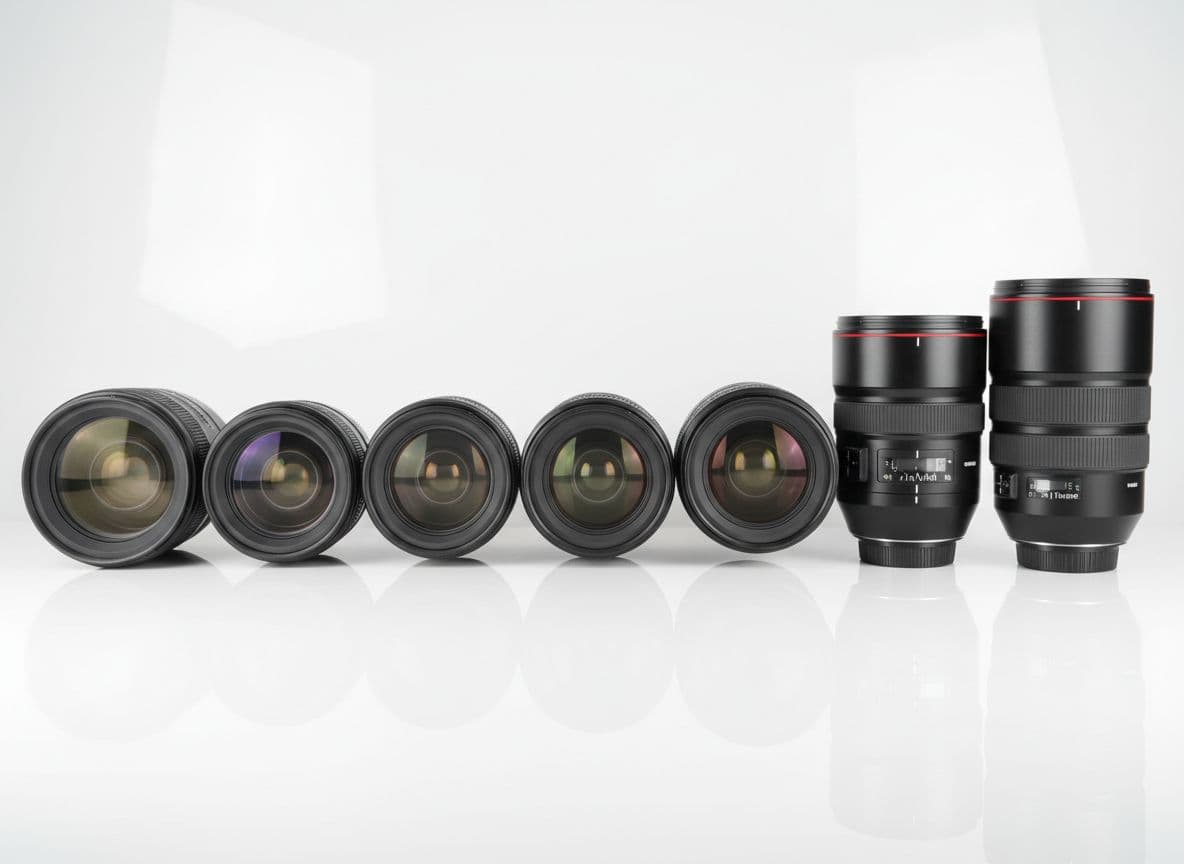
Camera lenses hold their value remarkably well compared to camera bodies, which depreciate 50-70% within 3 years. A high-quality lens can retain 60-80% of its original value for a decade or more, and some discontinued or legendary lenses actually appreciate over time. For example, the Canon 50mm f/1.2L originally retailed for around $1,500 and still sells used for $900-$1,100. Professional-grade lenses like the Nikon 70-200mm f/2.8 or Sony 24-70mm f/2.8 GM routinely sell for $1,200-$1,800 used. Even entry-level kit lenses have a resale value of $50-$150. Knowing your lens's true market value prevents you from underselling to a camera shop (which typically pays only 40-60% of market value) or overpaying when buying used. Our free AI tool gives you the current street price so you can negotiate confidently on eBay, Facebook Marketplace, or at your local camera store.
Key Factors That Affect Camera Lenses Value
Understanding what drives the price of camera lenses helps you get the most accurate valuation.
Brand & Model Tier
Professional-grade lenses (Canon L-series, Nikon S-line, Sony G Master, Sigma Art) command the highest resale prices due to superior optical quality, weather sealing, and build materials. A Sony 24-70mm f/2.8 GM sells used for $1,400-$1,700, while a Tamron 28-75mm f/2.8 in the same focal range sells for $500-$650. OEM lenses (Canon, Nikon, Sony) generally hold value better than third-party brands (Sigma, Tamron), though Sigma Art lenses have narrowed the gap significantly.
Mount System & Compatibility
The lens mount directly impacts resale value and buyer pool. Mirrorless mounts (Sony E, Canon RF, Nikon Z) are in highest demand as the market has shifted away from DSLRs. Canon EF-mount lenses remain popular because they can be adapted to RF-mount bodies, but native RF lenses command a 10-20% premium. Older mounts like Nikon F, Canon FD, Minolta A-mount, and M42 screw mount have smaller buyer pools but attract vintage lens enthusiasts.
Optical Condition
The optical quality of the glass is the most critical condition factor. Fungus, haze, scratches on the front or rear elements, and separation of cemented elements can reduce a lens's value by 30-70%. Light dust inside the lens is normal and has minimal impact on value or image quality. A lens with clean optics and minor cosmetic wear typically sells for 80-90% of the mint-condition price.
Autofocus & Mechanical Function
A lens with smooth, accurate autofocus and a properly functioning aperture mechanism is worth significantly more than one with issues. Sticky or sluggish AF motors, grinding zoom rings, loose focus rings, or aperture blades stuck with oil can reduce value by 40-60%. Image stabilization (IS/VR/OSS) must also function correctly. Vintage manual-focus lenses are evaluated on focus ring smoothness and aperture click accuracy.
Accessories & Completeness
Including the original lens hood, front and rear caps, lens pouch or case, and original box can add 5-15% to the resale value. The lens hood is particularly important for telephoto and wide-angle lenses, as replacements can cost $20-$50. Filter rings should be clean and free of dents. For valuable lenses ($500+), having the original box and warranty card adds collector appeal.
Tips for Valuing Camera Lenses
Get the most accurate valuation by following these tips when photographing your camera lenses.
Photograph the lens from multiple angles including front and rear elements, any cosmetic wear, and the mount. Buyers want to see optical clarity and physical condition
Test autofocus accuracy and speed, zoom ring smoothness, and image stabilization before selling. Functional issues are the most common reason for returns
Include the original lens hood, caps, and box if available. These can add 5-15% to your selling price and signal that the lens was well cared for
Check completed eBay listings (not active listings) for your exact lens model to see real market prices. Asking prices are often 20-30% higher than actual selling prices
Camera Lenses Market Insights
The camera lens market is undergoing a major transition as photographers move from DSLR to mirrorless systems. Sony E-mount lenses are currently the most liquid in the used market, followed by Canon RF and Nikon Z. This shift has created opportunities for buyers. DSLR-mount lenses (Canon EF, Nikon F) are selling at 10-20% discounts compared to 2-3 years ago, even though they remain excellent optically. Third-party manufacturers like Sigma and Tamron have gained significant market share with their Art and Di III lines, offering 80-90% of OEM optical performance at 50-60% of the price. The vintage lens market has seen a surprising boom, driven by video shooters who prize the unique character and rendering of classic manual-focus glass. Lenses like the Helios 44-2 58mm f/2 and Canon FD 50mm f/1.4 have doubled in price over the past 5 years. Online platforms dominate used lens sales: eBay, Fred Miranda, r/photomarket on Reddit, and Facebook Buy/Sell/Trade groups for camera gear are the most active marketplaces. KEH.com and MPB.com offer hassle-free selling with instant quotes but typically pay 15-25% less than private-party sales.
Notable Camera Lenses Values
Real-world examples of what specific camera lenses have sold for, so you can benchmark your own.
| Camera Lense | Condition | Typical Value |
|---|---|---|
| Canon EF 50mm f/1.4 USM | Used | $80 - $160 |
| Nikon AF-S NIKKOR 50mm f/1.8G | Used | $100 - $180 |
| Sony FE 85mm f/1.8 | Used | $280 - $420 |
| Sigma 35mm f/1.4 Art (Canon/Nikon mount) | Used | $350 - $550 |
| Canon EF 70-200mm f/2.8L IS II USM | Used | $1,100 - $1,600 |
| Nikon AF-S NIKKOR 14-24mm f/2.8G ED | Used | $900 - $1,400 |
| Tamron SP 90mm f/2.8 Di Macro (Model F017) | Used | $350 - $550 |
| Canon EF 85mm f/1.2L II USM | Used | $1,200 - $1,800 |
| Leica Summilux-M 50mm f/1.4 ASPH | Used | $3,500 - $5,500+ |
Based on eBay sold listings, KEH Camera and MPB used pricing, and Chrono24/collector market records.
Find Out What Your Camera Lenses Are Worth
Upload a photo now and get a free AI-powered valuation in seconds. No sign-up required.
Camera Lenses Valuation FAQ
Which camera lenses hold their value best?
Professional-grade prime lenses hold value the longest. Canon L-series (70-200mm f/2.8L, 85mm f/1.4L), Nikon S-line (24-70mm f/2.8S, 50mm f/1.2S), and Sony G Master (24-70mm f/2.8 GM, 85mm f/1.4 GM) lenses typically retain 60-80% of their retail value after 5+ years. Fast prime lenses (f/1.2, f/1.4) hold value better than zoom lenses because optical designs for fast primes are harder to improve. Discontinued 'legendary' lenses can actually appreciate. The Nikon 105mm f/2 DC and Canon 200mm f/1.8L have increased in value since being discontinued.
Should I sell my DSLR lenses now that I've switched to mirrorless?
It depends on the mount. Canon EF lenses can be adapted perfectly to Canon RF bodies with the EF-EOS R adapter, so keeping them is viable. Nikon F lenses work on Z bodies via the FTZ adapter with full AF support. Sony A-mount lenses work on E-mount bodies via the LA-EA5 adapter. However, native mirrorless lenses are generally lighter, faster-focusing, and take advantage of new optical designs. If you plan to sell, doing it sooner rather than later is advisable, as DSLR lens values are gradually declining by 5-10% per year as the mirrorless transition continues.
How do I check a used lens for problems before buying or selling?
Inspect the front and rear elements with a flashlight at an angle to check for scratches, fungus (web-like patterns), haze (cloudy appearance), and coating damage (spots where multicoating has worn off). Test autofocus at multiple distances and in low light. Listen for grinding noises when zooming or focusing. Check the aperture blades by stopping down. They should be clean, oil-free, and snap accurately. Look at the mount contacts for wear or corrosion. Shoot test images wide open and at f/8 to check for softness, decentering, or focus issues. For image-stabilized lenses, verify IS/VR is working by shooting handheld at slow shutter speeds.
Where is the best place to sell camera lenses?
For maximum return, eBay is the largest marketplace with the most buyers. Expect to sell at full market value minus 13% in fees. Fred Miranda and r/photomarket offer private-party sales with lower or no fees but smaller audiences. Facebook camera gear groups are excellent for quick sales at fair prices. For convenience, KEH.com and MPB.com provide instant quotes and prepaid shipping but pay 15-25% less than private sales. Local camera stores typically offer the lowest buyback prices (40-60% of market value) but provide immediate cash. For lenses worth $1,000+, the extra effort of a private sale typically nets you $150-$400 more than a trade-in.
Camera Lenses Price Guides
Value anything, anytime
Unlimited valuations, saved history and full reports in the free app.