Last updated: September 2026
How Much Are My Pocket Knives Worth?
Pocket knives have been collected, traded, and treasured for centuries, with a vibrant market spanning antique folders, vintage American-made classics, modern production knives, and limited-edition customs. Our AI analyzes your knife's maker, pattern, blade steel, handle material, tang stamp, condition, and rarity to provide an accurate market valuation. Whether you've inherited a grandfather's Case knife collection, found a vintage Buck 110 at a flea market, or are evaluating a collection of Schrade Old Timers, understanding the true collector value of your pocket knives is essential before selling, insuring, or trading.
Get the free app for unlimited scans


What do you want to value?
Why Knowing Your Pocket Knives Value Matters
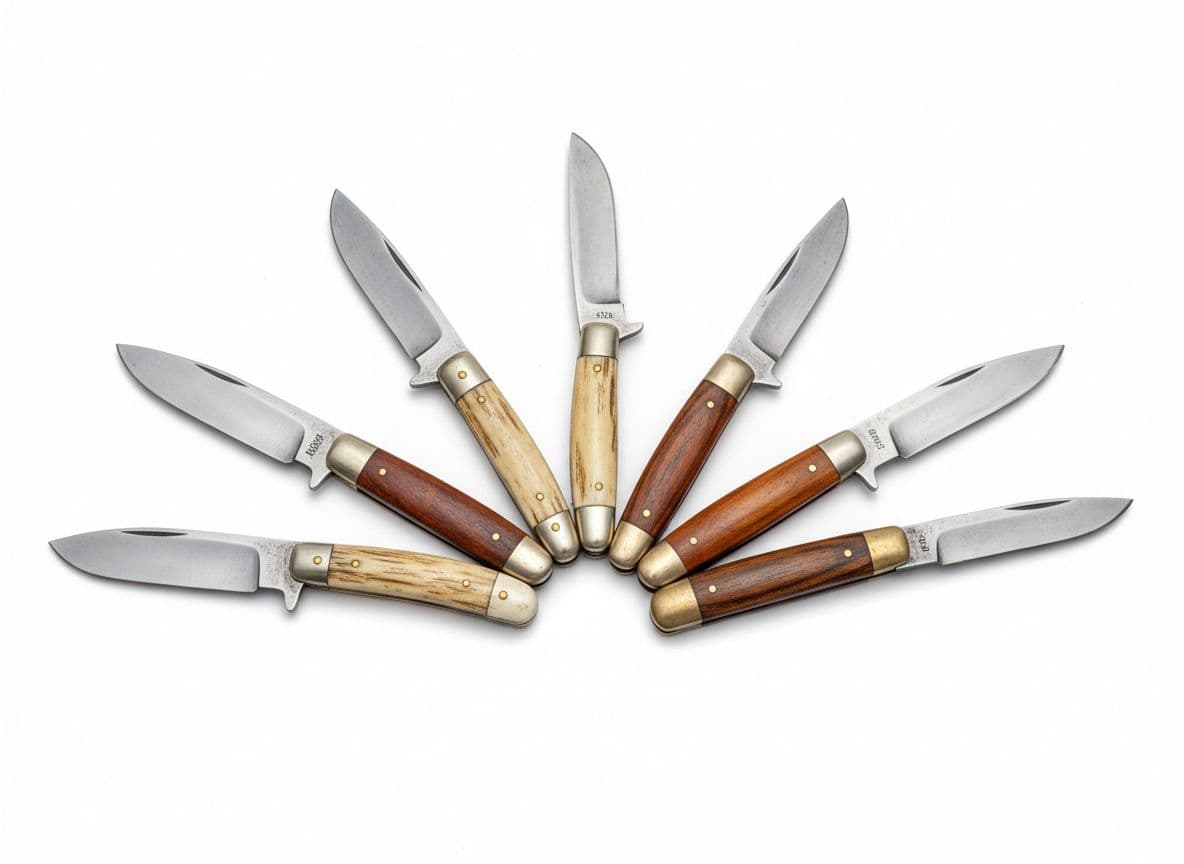
Pocket knife values range enormously. From $5 for a common modern folder to $50,000+ for a rare antique or custom-made piece. Many families have drawers or boxes of old pocket knives without realizing their potential worth. A pre-1940 Case tested XX knife in excellent condition can sell for $500–$5,000, while certain rare patterns bring $10,000–$50,000 at specialized knife auctions. Even everyday knives carry more value than most people realize: a vintage Buck 110 in the original box sells for $100–$400, well-used Schrade Old Timers and Uncle Henry knives fetch $30–$150, and discontinued patterns from any maker command premiums. The knife collecting community is active and passionate. Thousands of knives sell daily on eBay, BladeForums, AllAboutPocketKnives, and at knife shows. Maker, age, condition, and rarity interact in complex ways: a common pattern in poor condition might be worth $5–$20, while the same pattern in mint condition with original packaging could fetch $200–$1,000. Professional knife appraisals cost $25–$100 per knife, and many dealers deliberately undervalue collections to buy at wholesale prices. Our free estimator helps you identify which knives in your collection are valuable keepers, which are worth selling individually, and which are best sold as lots.
Key Factors That Affect Pocket Knives Value
Understanding what drives the price of pocket knives helps you get the most accurate valuation.
Maker & Brand
The manufacturer is the primary value determinant. Case XX is the most collected American pocket knife brand. Pre-1970 Case knives with 'Tested XX' and early 'XX' tang stamps command strong premiums ($50–$5,000+). Buck Knives are iconic, with the Buck 110 being America's best-selling folding knife. Vintage examples (pre-1986, with dot dating system) sell for $50–$500+. Schrade (including Old Timer and Uncle Henry lines) produced quality knives from 1904–2004 before moving production overseas. Camillus, Queen Cutlery, Colonial, Imperial, Ka-Bar, and Remington all have dedicated collector followings. Custom makers like William Henry, Chris Reeve, and Randall Made produce knives valued at $300–$5,000+ each.
Age & Tang Stamp
For Case knives, the tang stamp (marking stamped on the blade tang) precisely dates the knife and is the most important value indicator. Case tang stamp eras include: Tested XX (pre-1940, most valuable. $100–$50,000), XX (1940–1964, very collectible. $50–$2,000), USA (1965–1969. $30–$500), 10-dot dating system (1970–1979. $20–$300), and subsequent dating systems. Buck knives use a dot-and-symbol system beginning in 1986. Older knives in equivalent condition are almost always more valuable. A 1920s Case is worth 5–20x more than a 1990s version of the same pattern.
Pattern & Handle Material
Knife patterns significantly affect collector value. Popular Case patterns include the Trapper (#6254), Stockman (#6318), Canoe (#62131), Copperhead (#6249), and Muskrat (#6230). Rare patterns like the Elephant Toenail and larger Congress knives command premiums. Handle materials dramatically impact value: genuine stag (deer antler) is the most prized (+$50–$500 premium), followed by bone (jigged, smooth, or burned), mother of pearl ($100–$1,000+ premium), and abalone. Synthetic handles (Delrin, plastic) are the least valuable. Rare handle materials like mammoth ivory or genuine tortoiseshell push values to $500–$5,000+.
Condition & Completeness
Condition is graded on a scale from Mint (unused, perfect) to Poor (heavily worn, damaged). Mint-condition vintage knives can be worth 5–20x more than the same knife in poor condition. Key condition factors include blade sharpness and polish (no chips, rust, or resharpening marks), snap and walk (blade opening and closing mechanics), handle integrity (no cracks, chips, or warping), bolster condition (no corrosion or looseness), and shield presence. Original packaging (box, papers, sheath) adds 20–50% to value. Blades that have been resharpened or reground lose significant collector value.
Tips for Valuing Pocket Knives
Get the most accurate valuation by following these tips when photographing your pocket knives.
Photograph both sides of the knife with blades open, showing the tang stamp, handle material, bolsters, and any shield or emblem clearly
Do not attempt to clean, polish, or sharpen vintage knives before valuing. Original patina and unmodified blades are preferred by collectors and preserve maximum value
Check the tang stamp carefully, as this is the most important identification marker. Use a magnifying glass to read small or worn stamps
Note whether you have the original box, sheath, or paperwork, as these can increase the value by 20-50% for vintage knives
Pocket Knives Market Insights
The pocket knife collecting market is a mature, stable segment of the broader collectibles world, with an estimated $500 million+ in annual sales. Unlike some collectibles markets that experience bubble-and-crash cycles, knife values have shown steady, moderate appreciation over decades. The market is divided into several tiers: vintage American-made production knives (Case, Buck, Schrade) are the most actively traded and accessible, with prices from $20–$5,000. Custom and semi-custom knives (Chris Reeve, William Henry, Hinderer, Benchmade Gold Class) occupy a premium tier at $300–$5,000+. Antique and rare knives (pre-1920s, unusual makers, rare patterns) form the high end at $1,000–$50,000+. eBay is the largest marketplace, with thousands of knives sold daily. Specialized platforms like AllAboutPocketKnives.com, BladeForums.com, and Facebook knife groups offer community-based trading. Knife shows remain an important venue for high-end sales and networking. The collector demographic skews older (40–70+), which creates both opportunity (large collections entering the market) and risk (potentially declining buyer base for common knives). American-made knives consistently outperform imported equivalents in collector value.
Notable Pocket Knives Values
Real-world examples of what specific pocket knives have sold for, so you can benchmark your own.
| Pocket Knive | Condition | Typical Value |
|---|---|---|
| Case XX Tested XX Era Stag Handle Trapper (pre-1940) | Used / Good | $150 - $600 |
| Buck 110 Folding Hunter (1960s-1970s first-decade production) | Near Mint | $80 - $250 |
| Schrade Uncle Henry 897UH Limited Edition | Near Mint | $40 - $120 |
| Remington R1273 Bullet Trapper (1920s-1930s) | Used / Good | $200 - $800 |
| Case XX Sowbelly (6375 pattern, bone handle, 1970s) | Near Mint | $100 - $300 |
| Queen Cutlery Stag Canoe (pre-1970s) | Used / Good | $60 - $200 |
| Kershaw Leek (plain blade, standard production) | Used | $20 - $60 |
| Parker-Edwards Alabama Damascus Folding Hunter | Near Mint | $150 - $500 |
| Benchmade Gold Class 940 Osborne (limited run) | Near Mint / Unfired | $400 - $900 |
Based on eBay sold listings, BladeForums price discussions, and knife collector price guides.
Find Out What Your Pocket Knives Are Worth
Upload a photo now and get a free AI-powered valuation in seconds. No sign-up required.
Pocket Knives Valuation FAQ
How do I identify the age of my Case pocket knife?
Case knives are dated through their tang stamp. The marking on the blade's tang (the part visible between the handle and blade when opened). Key dating markers: 'Tested XX' (pre-1940, most valuable), 'XX' without 'Tested' (1940–1964), 'USA' added (1965–1969), and the 10-dot dating system (1970–present, where dots decrease from 10 to 1 and then reset with a symbol change each decade). The pattern number stamped on the blade also provides information: the first digit indicates the handle material (5=stag, 6=bone), the middle digits indicate the number of blades, and the last digits identify the pattern. Case's official website and collector guides (like Shepherd's Case Knife Guide) provide comprehensive tang stamp identification charts.
Are old Buck knives valuable?
Yes, vintage Buck knives have a strong collector market. The Buck 110 Folding Hunter (introduced in 1964) is the most iconic and collected model. Pre-1986 Buck 110 knives are most valuable, with very early examples (1964–1967, no date code) selling for $200–$1,000+ depending on condition. Buck's date coding system (starting in 1986 with a dot system) helps identify production year. Other valuable Buck models include the 112 Ranger, 119 Special, and the rare Kalinga. Buck knives with original leather sheaths and boxes command 30–50% premiums. The key value factors are age (older is better), condition (working mechanisms, clean blades, no handle damage), and model. Even common Buck knives from the 1980s–1990s sell for $30–$80 in good condition, well above their original retail price.
What pocket knife brands are most collectible?
The most collectible pocket knife brands, ranked by collector following and average values: (1) Case XX. The dominant American collectible knife brand, with vast pattern variety and a 130+ year history. Values range from $20 for modern production to $50,000+ for rare antiques. (2) Buck. Iconic American brand, especially the 110 and 112 models. (3) Schrade. Including Old Timer and Uncle Henry sub-brands, produced in the USA until 2004. (4) Remington. Particularly bullet-pattern knives and pre-WWII examples. (5) Queen Cutlery. Small-batch American-made knives with strong collector demand. (6) Cattaraugus. Defunct brand (1886–1963) with rare patterns commanding high prices. (7) Custom makers. Chris Reeve Sebenza, William Henry, Randall Made, and independent makers produce knives valued at $300–$10,000+. (8) European brands. Victorinox, Opinel, and Laguiole have dedicated followings.
Should I clean or restore my vintage pocket knives?
Generally, do not clean or restore vintage pocket knives before getting them valued. Collectors prefer original condition with natural patina. Even minor cleaning can reduce value by 10–30%. Specific guidelines: Never polish blades. Factory polish marks and natural patina are value indicators. Never sharpen. Resharpened blades show altered profiles that reduce collector value. Never oil bone or stag handles with anything other than museum-grade preservation products. For surface dirt, a soft dry cloth is sufficient. Rust can be stabilized (not removed) with Renaissance Wax. Loose pivots can be gently tightened, but avoid disassembly. The exception is modern production knives (post-2000) and knives you intend to use rather than collect. These benefit from basic cleaning and maintenance. For valuable knives ($200+), consult a professional knife restorer who specializes in vintage cutlery before doing anything.
Where is the best place to sell vintage pocket knives?
The best selling venue depends on the knife's value and your goals. For individual knives worth $50+: eBay reaches the largest collector audience and consistently achieves the highest prices. Use the 'completed listings' search to price competitively. For high-value knives ($500+): specialized auction houses like Blade Auction and consignment through established knife dealers offer access to serious collectors. For quick sales: Facebook knife groups (Case Knife Swap, Buck Knife Collectors) and BladeForums.com have active buy/sell/trade sections with knowledgeable buyers. For collections: AllAboutPocketKnives.com has a marketplace specifically for vintage American knives. For convenience: local knife shows allow face-to-face transactions and immediate payment. Avoid pawn shops and general antique dealers, who typically pay 20–40% of collector value. For any platform, clear photographs of both sides of the knife with blades open, close-ups of tang stamps, and honest condition descriptions are essential for achieving fair prices.
Pocket Knives Price Guides
Value anything, anytime
Unlimited valuations, saved history and full reports in the free app.