Last updated: September 2026
How Much Are My Medals & Badges Worth?
From military service medals and combat decorations to Olympic medals, law enforcement badges, and fraternal organization insignia, our AI identifies your medals and badges by type, era, and origin to provide accurate market valuations. Whether you inherited a veteran's medal collection or found badges at an estate sale, discover their true market value.
Get the free app for unlimited scans


What do you want to value?
Why Knowing Your Medals & Badges Value Matters
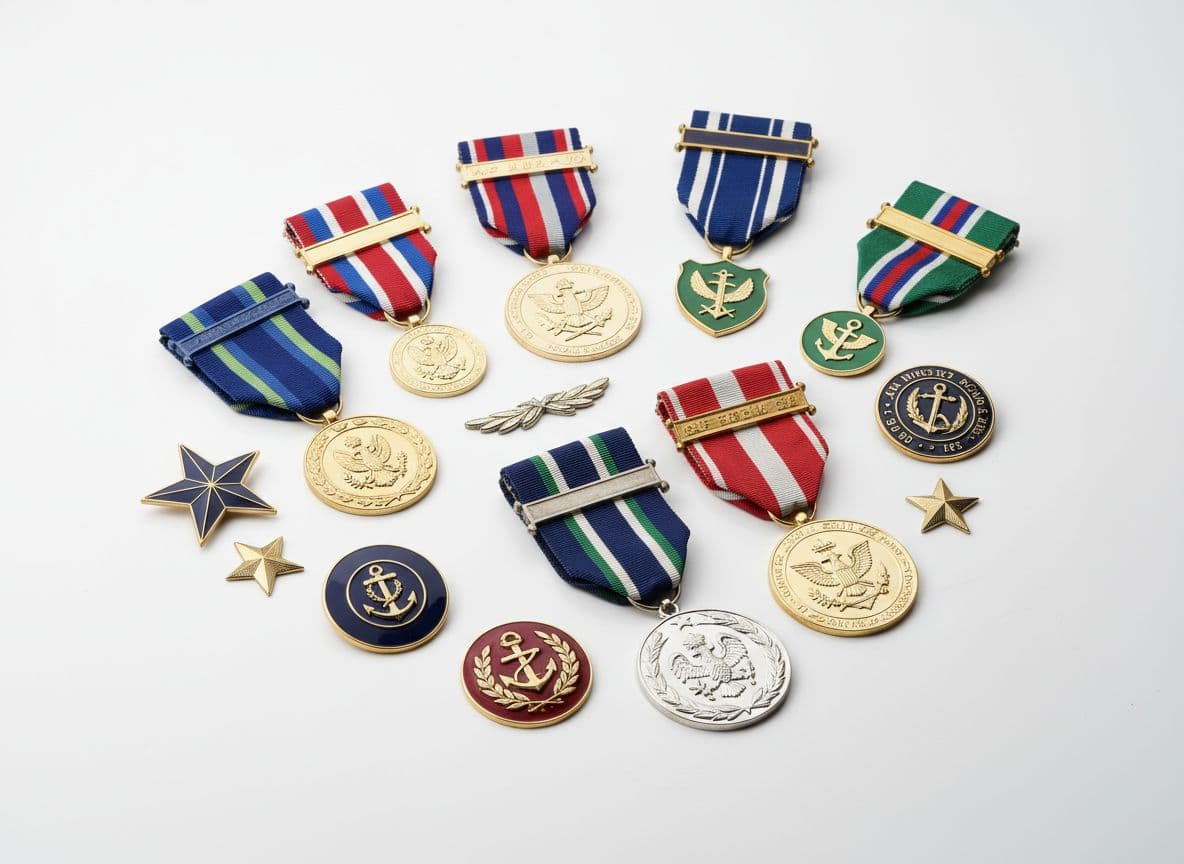
Medals and badges represent a diverse collecting field where historical significance drives premium values. A Medal of Honor can sell for $100,000-$1,000,000+ at auction, and even common military service medals hold $20-$200 values. Olympic medals from notable games or athletes command $10,000-$100,000+. Vintage law enforcement badges, especially from famous departments or the Old West era, are actively collected with values ranging from $100 to $10,000+. Many families have medals and badges stored away from relatives' service or careers without understanding their collector value. Proper identification is essential because many medals look similar but have dramatically different values based on the specific award, era, and recipient.
Key Factors That Affect Medals & Badges Value
Understanding what drives the price of medals & badges helps you get the most accurate valuation.
Type & Significance
The specific award determines base value.combat decorations (Medal of Honor, Distinguished Service Cross, Victoria Cross) are far more valuable than service or campaign medals. Named medals (engraved to a specific recipient) are more valuable than unnamed ones. Medals for gallantry and exceptional service command the highest premiums.
Era & Conflict
Medals from certain periods are more valuable. Civil War medals are highly sought after. WWI and WWII medals have broad collector interest. Pre-1900 medals and badges are generally rarer and more valuable. The specific campaign or engagement associated with a medal affects its desirability.
Named & Researched
Medals that can be traced to a specific recipient through engraving, documentation, or research are worth significantly more than anonymous examples. A WWII Purple Heart named to a D-Day veteran might be worth $500-$2,000, while an unnamed one might be $50-$100.complete research packages with service records multiply value.
Condition & Completeness
Original ribbons, mounting bars, and presentation cases add value. Replaced ribbons or missing components reduce value by 20-40%. Medal condition (surface wear, contact marks, polishing) also affects value. Original groups (multiple medals to the same person) are worth more than the sum of individual medals.
Material & Craftsmanship
Gold and silver medals have intrinsic precious metal value plus collector premiums. Enamel work, engraving quality, and artistic design affect value. Early hand-struck medals are typically more valuable than later machine-struck versions. Maker marks on the rim or reverse help authenticate and date medals.
Tips for Valuing Medals & Badges
Get the most accurate valuation by following these tips when photographing your medals & badges.
Photograph both sides of each medal clearly showing all text and design details
Include any engraving on the rim or back that names the recipient
Show original ribbons, bars, cases, and any documentation together
For groups of medals, photograph them together as a group and individually
Medals & Badges Market Insights
The medal and badge collecting market is well-established internationally, with specialized dealers, auction houses (Dix Noonan Webb, Heritage Auctions), and collector organizations serving the hobby. Military medals are the largest segment, with British, American, and German medals having the most active markets. The market for named medal groups with research has grown as genealogical interest has increased. Olympic medals have seen dramatic price increases, with gold medals from historic games selling at auction for $50,000-$500,000+. Law enforcement badge collecting is a niche but active market, with early Western badges being particularly valuable. Fraternal organization badges and medals (Masonic, Odd Fellows) have a smaller but dedicated collector base. The key trend is increasing importance of provenance and documentation.
Notable Medals & Badges Values
Real-world examples of what specific medals & badges have sold for, so you can benchmark your own.
| Medals & Badge | Condition | Typical Value |
|---|---|---|
| Congressional Medal of Honor (Civil War era) | Authenticated | $50,000 - $400,000+ |
| Olympic Gold Medal (modern, post-1960) | Authenticated | $15,000 - $80,000+ |
| WWII Purple Heart Medal (U.S.) | Named/Documented | $150 - $1,200 |
| Victorian Cross (British, WWI) | Authenticated | $80,000 - $500,000+ |
| U.S. Sheriff's Badge (19th century, silver) | Used | $500 - $5,000+ |
| WWII Nazi Iron Cross First Class | Used | $200 - $1,500 |
| 1984 Los Angeles Olympics Participation Medal | Used | $40 - $200 |
| U.S. Police Badge (modern city issue, retired) | Used | $30 - $300 |
| Nobel Prize Medal (sold at auction) | Authenticated | $500,000 - $4,000,000+ |
Based on eBay sold listings, Heritage Auctions records, and documented medal auction results.
Find Out What Your Medals & Badges Are Worth
Upload a photo now and get a free AI-powered valuation in seconds. No sign-up required.
Medals & Badges Valuation FAQ
Are my grandfather's military medals worth anything?
Many military medals have collector value.common campaign and service medals are typically worth $20-$100 each, while combat decorations and gallantry awards can be worth $200-$10,000+. Named medals (with the recipient's name engraved) are more valuable.complete groups with all medals and original ribbons command premiums. Our AI can identify your medals and provide current market values.
What are the most valuable medals?
The most valuable include: Medal of Honor ($100,000-$1,000,000+), Victoria Cross ($200,000-$500,000), Olympic gold medals ($20,000-$500,000+), and rare Civil War decorations ($5,000-$50,000). Named gallantry awards to notable individuals or for famous actions are the most sought after. Even relatively common medals can be valuable when they tell a compelling story.
Is it legal to buy and sell military medals?
In the United States, it is legal to buy, sell, and collect military medals. However, it is illegal to wear unearned medals or to use them to falsely claim military service (Stolen Valor Act). In some countries (UK, Australia, Canada), selling certain medals is subject to specific regulations. Always research the laws in your jurisdiction before buying or selling.
How do I research who my medal was awarded to?
Named medals (with the recipient engraved) can be researched through military archives. For US medals, the National Archives (NARA) holds service records. UK medals can be researched through The National Archives at Kew. Medal rolls, unit histories, and regimental museums are valuable resources. Online genealogy databases and military forums can also help. Researched medals with a documented story are worth significantly more.
Are old police and fire department badges valuable?
Vintage law enforcement and fire department badges can be quite valuable, especially from the Old West era, famous departments (NYPD, LAPD), or with historical significance. Pre-1940 badges typically start at $100-$300, with rare Old West sheriff and marshal badges commanding $2,000-$20,000+. Fire department badges from the 1800s are also collected. Reproduction badges are common, so authentication is important.
Value anything, anytime
Unlimited valuations, saved history and full reports in the free app.