Last updated: August 2026
How Much Is My World Cup Memorabilia Worth?
With the 2026 FIFA World Cup hosted in the USA, Mexico, and Canada, soccer memorabilia interest is at an all-time high. From vintage World Cup match balls and programs to signed jerseys and Panini sticker albums, our AI values any World Cup collectible from any era.
Get the free app for unlimited scans


Compare real prices
See what world cup memorabilia are listed for right now
What do you want to value?
Get the free app for unlimited scans
Why Knowing Your World Cup Memorabilia Value Matters
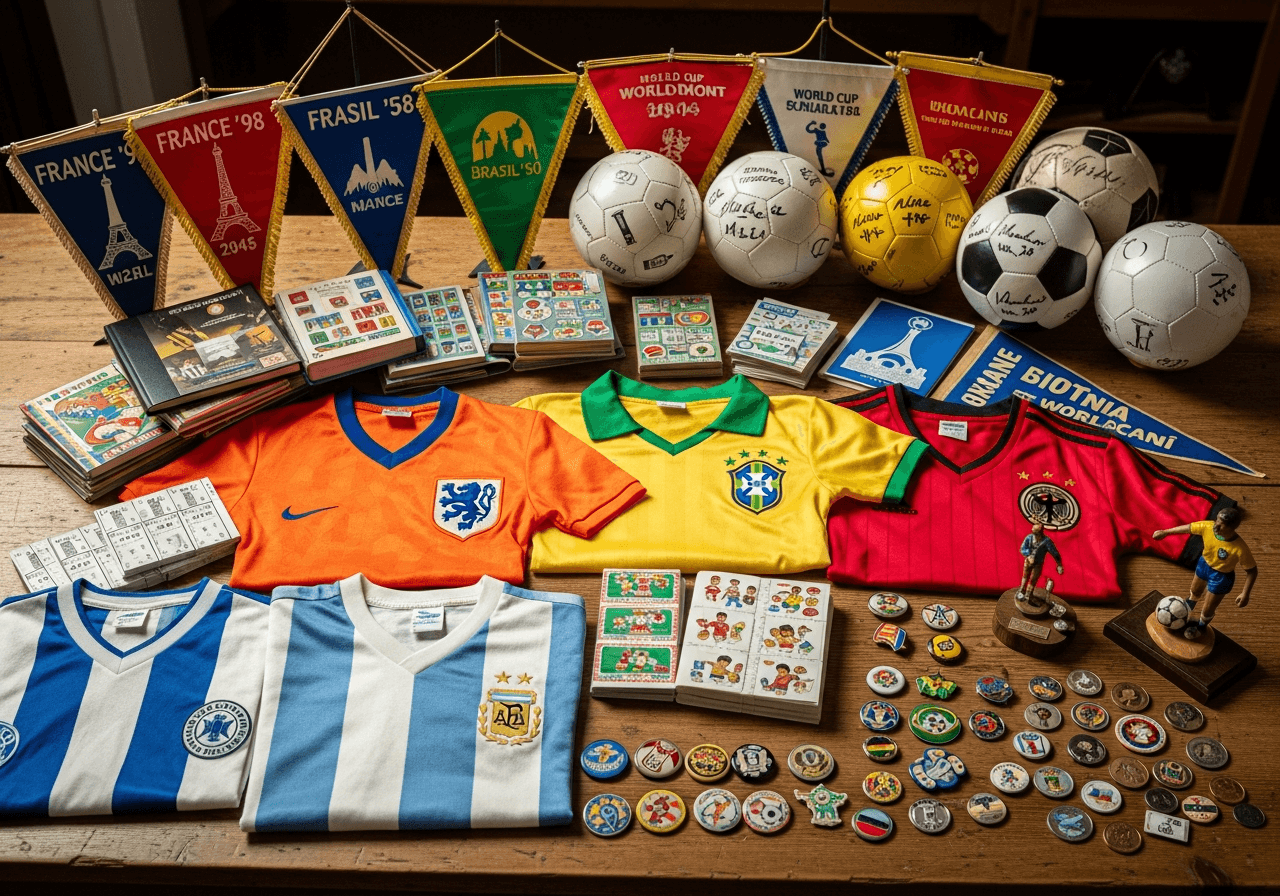
World Cup memorabilia values surge during tournament years and the 2026 World Cup being hosted in North America has created unprecedented interest. Vintage items from classic tournaments (1966, 1970, 1986) have seen 30-50% price increases in the lead-up to 2026. A signed Pelé 1970 Brazil jersey can be worth $50,000+. Even modern items like complete Panini sticker albums from past tournaments sell for $200-$1,000. Understanding current market values helps you capitalize on the tournament excitement.
Key Factors That Affect World Cup Memorabilia Value
Understanding what drives the price of world cup memorabilia helps you get the most accurate valuation.
Tournament & Year
Older World Cup memorabilia is generally more valuable. 1930-1970 items are the rarest and most valuable. The 1966, 1970, 1986, and 2014 tournaments have particularly strong collector markets. 2026 items will have initial hype value that may settle post-tournament.
Item Type
Match-worn jerseys are the most valuable, followed by signed items, official match balls, tournament programs, tickets from historic matches, and Panini sticker albums. Replica jerseys and mass-produced souvenirs have limited collectible value.
Player & Significance
Items connected to legendary players (Pelé, Maradona, Messi, Ronaldo) command massive premiums. Items from historic matches (1966 Final, Hand of God, 2014 7-1) are especially valued. A generic tournament program is worth far less than one from a legendary match.
Condition & Authentication
Condition is critical for paper items (programs, tickets, sticker albums). PSA, Beckett, and JSA authentication for signed items significantly increases value. Provenance (documented history of ownership) adds premium to high-value pieces.
Tips for Valuing World Cup Memorabilia
Get the most accurate valuation by following these tips when photographing your world cup memorabilia.
Photograph the item clearly showing any signatures, dates, or tournament branding
For jerseys, show the crest, player name/number, and any match details
For programs and tickets, photograph the cover and any internal content
Include authentication certificates if available
World Cup Memorabilia Market Insights
The 2026 World Cup in North America has supercharged the soccer memorabilia market. American collectors are entering the market in numbers never seen before. Panini World Cup sticker albums have become mainstream collectibles beyond traditional sports card collectors. Vintage match-worn jerseys from legendary players have become blue-chip alternative investments. The intersection of the World Cup with the booming US soccer card market creates unique opportunities.
Notable World Cup Memorabilia Values
Real-world examples of what specific world cup memorabilia have sold for, so you can benchmark your own.
| World Cup Memorabilia | Condition | Typical Value |
|---|---|---|
| Pele Match-Worn 1970 Brazil World Cup Jersey | Authenticated | $200,000 - $500,000+ |
| Maradona 'Hand of God' Match Ball - 1986 England vs Argentina | Authenticated | $2,000,000 - $3,000,000+ |
| Zinedine Zidane Match-Worn 1998 France World Cup Final Jersey | Authenticated | $50,000 - $150,000+ |
| 1966 England World Cup Final Ticket (Wembley) | Used | $800 - $3,000 |
| 1970 Mexico World Cup Official Match Program | Used | $30 - $150 |
| Panini 1970 Mexico World Cup Complete Sticker Album | Near Mint / Complete | $5,000 - $20,000+ |
| Adidas Telstar Official 1970 World Cup Match Ball (replica era) | Used / Unboxed | $80 - $400 |
| 1994 USA World Cup Commemorative Pin Set (full series) | Sealed | $20 - $80 |
| Ronaldo (R9) Match-Worn 2002 Brazil World Cup Jersey | Authenticated | $30,000 - $100,000+ |
Based on eBay sold listings, major auction house records (Christie's, Sotheby's, Bonhams), and specialist sports memorabilia auction results.
Find Out What Your World Cup Memorabilia Are Worth
Upload a photo now and get a free AI-powered valuation in seconds. No sign-up required.
World Cup Memorabilia Valuation FAQ
What World Cup memorabilia is most valuable?
Match-worn jerseys from legendary players top the market: Pelé's 1970 Brazil shirt, Maradona's 1986 Argentina shirt (sold for $9.3 million), and Geoff Hurst's 1966 Final shirt. Official match balls from historic finals sell for $5,000-$50,000. Complete Panini sticker albums from 1970s-80s tournaments fetch $500-$5,000.
Will 2026 World Cup items be valuable?
Official tournament items (programs, tickets to historic matches, match balls) will gain value over time, especially if memorable moments occur. Mass-produced souvenirs will have limited long-term value. The key is acquiring items connected to specific historic moments during the tournament.
Are Panini World Cup stickers worth collecting?
Complete Panini sticker albums from past World Cups are increasingly valuable. A complete 1970 album can be worth $3,000-$5,000. A complete 2006 or 2010 album sells for $200-$500. Sealed sticker packets from older tournaments are also collectible. The 2026 Panini collection will be highly sought after given the North American host interest.
Value anything, anytime
Unlimited valuations, saved history and full reports in the free app.