Last updated: September 2026
How Much Are Matchbox Cars Worth?
Matchbox cars, produced by Lesney Products since 1953, are among the most collected diecast toys worldwide. From common models worth a few dollars to rare variations worth thousands, the Matchbox universe spans over 70 years of miniature vehicles. Our AI identifies your Matchbox car's model, era, color variation, and condition for an accurate market value.
Get the free app for unlimited scans


Compare real prices
See what matchbox cars are listed for right now
Affiliate link: we earn a commission if you buy, at no extra cost to you.
What do you want to value?
Get the free app for unlimited scans
Why Knowing Your Matchbox Cars Value Matters
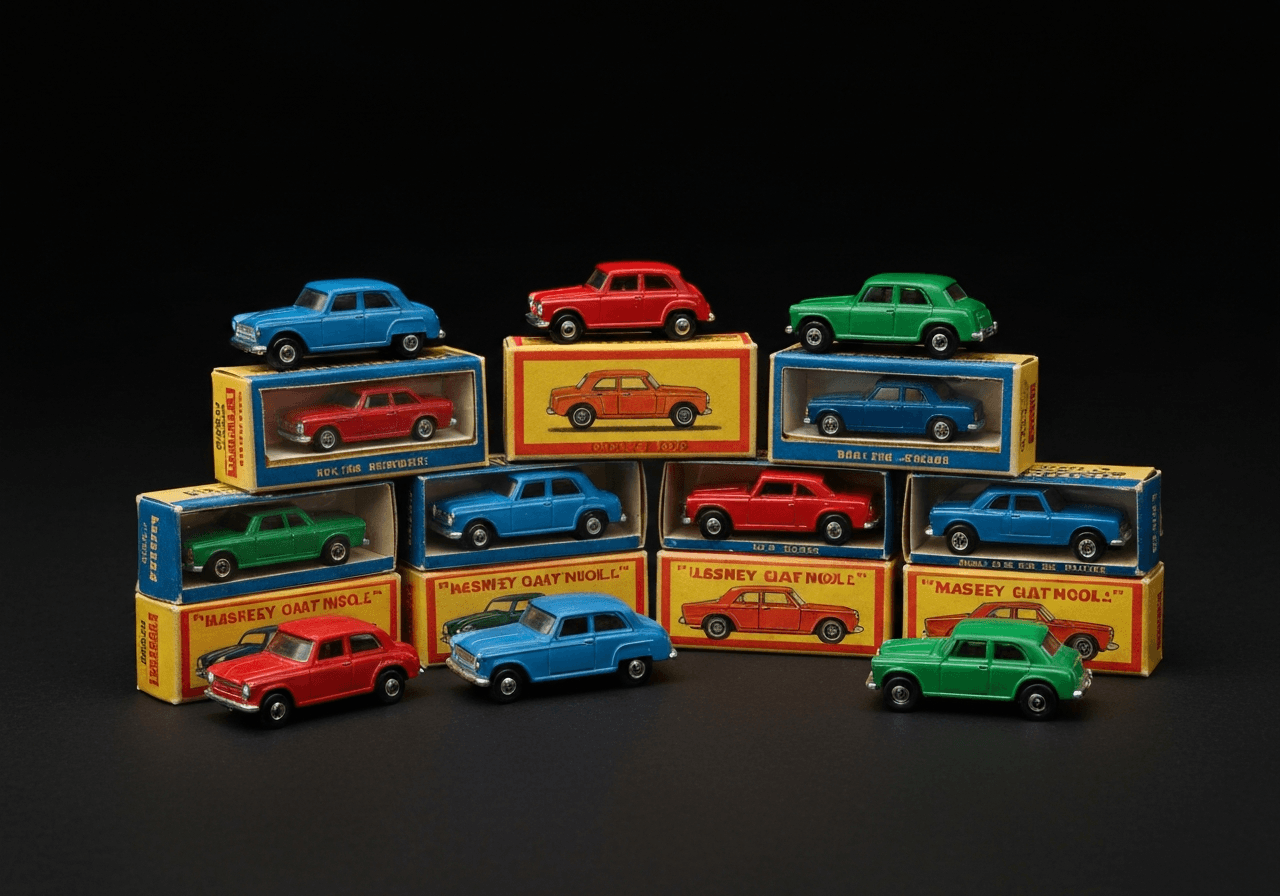
Matchbox cars were the original pocket-sized toy vehicles, and early Lesney-era models (1953-1982) have become serious collectibles. A rare Matchbox #1 Diesel Road Roller in its original box can sell for $5,000-$15,000. Color variations are the key to high values. The same model in a rare color can be worth 100x the common version. Many people have Matchbox cars from their childhood or inherited collections without realizing specific models could be worth $50-$500+. The sheer variety (thousands of models over 70+ years) means there's always something new to discover.
Key Factors That Affect Matchbox Cars Value
Understanding what drives the price of matchbox cars helps you get the most accurate valuation.
Era & Manufacturer
Lesney Regular Wheels (1953-1969): most valuable era, $5-$15,000+. Lesney Superfast (1969-1982): strong values, $5-$500+. Universal/Tyco (1982-1996): moderate values, $2-$50. Mattel era (1997-present): mostly $1-$10 for non-special editions.
Color Variations
This is the biggest value driver. The same casting in a rare color can be worth 10-100x the common version. Example: a regular green Mercedes 230SL might be $10, but a rare red version could be $500+. Color guides and reference books are essential for identifying rare variations.
Original Box & Packaging
Matchbox cars with original boxes are worth 2-5x loose examples. Mint-in-box (MIB) cars with pristine boxes command the highest premiums. Early Lesney boxes (1953-1969) are particularly valuable. Even empty boxes sell for $10-$100+.
Condition
Mint (no chips, no play wear): full market value. Excellent (minor wear): 60-80%. Good (noticeable wear, small chips): 30-50%. Played with (heavy wear, missing parts): 10-20%. For rare models, even played-with examples have meaningful value.
Special Features
Pre-production models, factory errors, promotional issues, and store displays are extremely collectible. Models with metal wheels (pre-1970) are generally more valuable than plastic wheel versions. Working features (tipping beds, opening doors) in good condition add value.
Tips for Valuing Matchbox Cars
Get the most accurate valuation by following these tips when photographing your matchbox cars.
Check the base for markings. 'Lesney' indicates the most valuable era
Look at the wheel type. Metal wheels are earlier and more valuable than plastic
Color variations matter enormously.compare your car's color to reference guides
Keep the box if you have it. It can be worth as much as the car itself
Matchbox Cars Market Insights
The Matchbox car collecting community is global and active, with particularly strong markets in the UK, US, and Australia. The Lesney era (1953-1982) is the most avidly collected, with new color variations and rarities still being discovered and documented. Online platforms have expanded the market, making it easier to find specific models and variations. The hobby benefits from accessibility. You can start collecting for very little money while still having opportunities to find rare pieces worth hundreds or thousands.
Find Out What Your Matchbox Cars Are Worth
Upload a photo now and get a free AI-powered valuation in seconds. No sign-up required.
Matchbox Cars Valuation FAQ
What Matchbox cars are worth the most?
The most valuable include rare Lesney Regular Wheels models in unusual colors: #1 Diesel Road Roller ($5K-$15K in box), magenta #24 Hydraulic Excavator ($5K-$10K), rare color variations of popular models ($500-$5K).complete Lesney collections in good condition can be worth $10,000-$50,000+.
How do I identify a valuable Matchbox car?
Check the base plate for 'Lesney' (most valuable era). Note the wheel type (metal = pre-1970 = more valuable).compare the color to known variations using a reference guide. Rare colors are where the big money is. Look for original boxes, which multiply value significantly.
Are 1990s-2000s Matchbox cars worth anything?
Most are worth $1-$5 each. However, certain limited editions, error models, and promotional issues can be worth $10-$50+. First editions of popular castings and short-run color variations have modest collector interest. The key is identifying which specific models have collector demand.
What's the difference between Matchbox and Hot Wheels?
Matchbox (1953, Lesney/UK) focused on realistic miniature vehicles. Hot Wheels (1968, Mattel/US) focused on flashy, fast fantasy cars. Both are collected, but vintage Matchbox cars from the Lesney era tend to have more variation-based value. Ironically, Mattel now owns the Matchbox brand too.
Where can I sell my Matchbox collection?
eBay is the largest marketplace. Specialist Matchbox dealers and shows offer expertise but may pay 50-60% of retail. Auction houses handle high-value collections ($5K+). Facebook groups for diecast collectors are active trading venues. For large collections, getting a specialist appraisal first is recommended.
Value anything, anytime
Unlimited valuations, saved history and full reports in the free app.