March 15, 2026 · Updated March 2026
How to Tell If Gold Is Real: 10 Simple Tests at Home
Why Testing Gold Matters
Gold has been one of the most counterfeited metals in history. Whether you have inherited jewelry, purchased pieces from a pawn shop or estate sale, or received gold as a gift, knowing how to verify its authenticity is essential. With gold prices hovering around $2,100 to $2,400 per troy ounce in early 2026, even a small piece of genuine gold jewelry can be worth hundreds of dollars.
Fake gold comes in many forms: gold-plated brass, gold-filled base metals, gold-tone costume jewelry, and even sophisticated tungsten-core counterfeits. The tests below range from quick visual checks anyone can do in seconds to more advanced methods that provide near-certain results.
Understanding Gold Purity (Karats)
Before testing, it helps to understand how gold purity is measured. Pure gold is 24 karats (24K), but it is too soft for most jewelry. Gold is alloyed with other metals for durability. Here is a quick reference:
| Karat | Gold Content | Hallmark | Common Uses |
|---|---|---|---|
| 24K | 99.9% | 999 | Bullion, some Asian jewelry |
| 22K | 91.7% | 916 or 917 | Indian/Middle Eastern jewelry |
| 18K | 75.0% | 750 | Fine jewelry, European pieces |
| 14K | 58.3% | 585 | Most U.S. jewelry |
| 10K | 41.7% | 417 | Budget jewelry (minimum for "gold" in U.S.) |
The 10 Tests
Test 1: The Hallmark Check
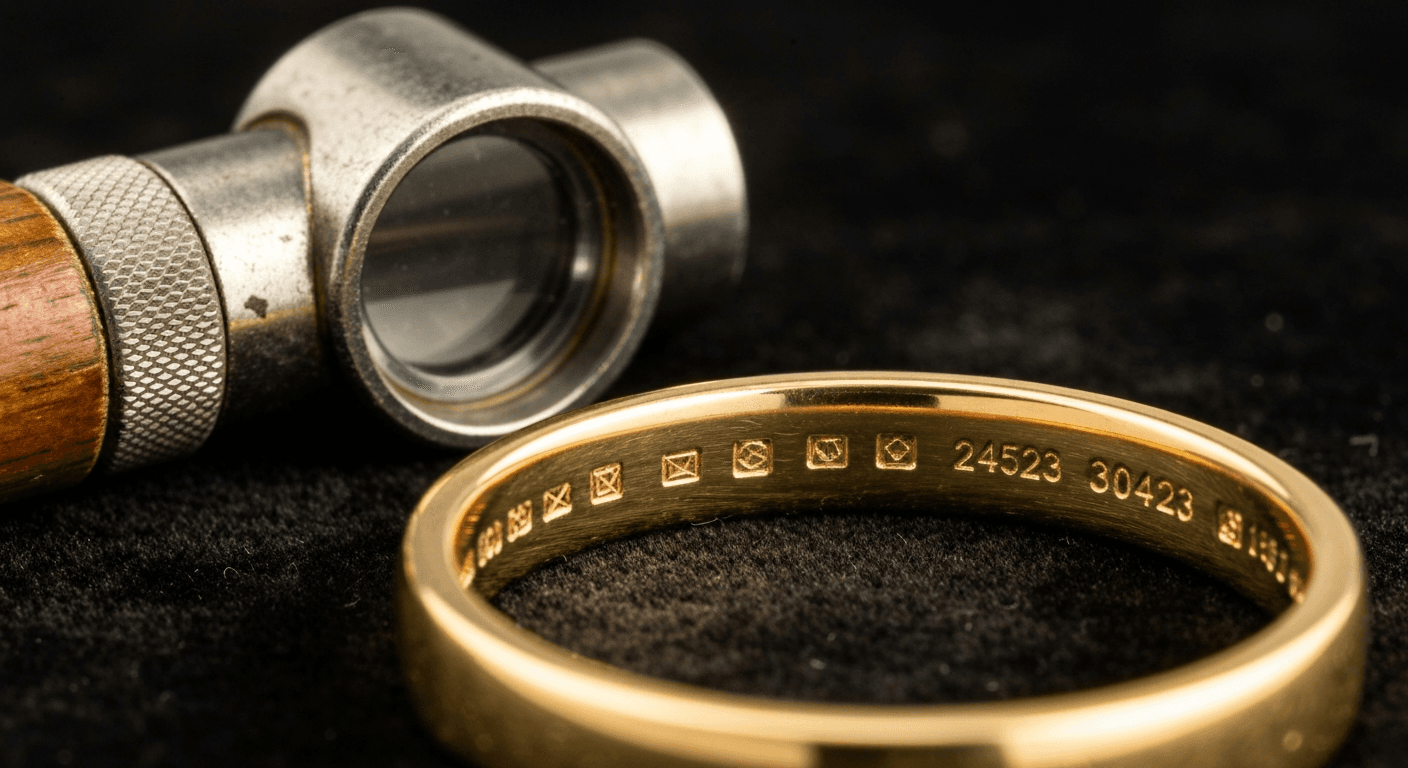
This is the fastest and easiest test. Genuine gold jewelry is almost always stamped with a karat mark: 10K, 14K, 18K, 22K, or 24K. European pieces use numeric stamps like 585 (14K) or 750 (18K). Look on the inside of rings, on clasps of necklaces, and on the posts of earrings. Use a magnifying glass or jeweler's loupe for small stamps.
Limitations: Stamps can be faked, and very old pieces may not have stamps. Also, gold-filled items are stamped "GF" or "1/20 14K GF," which means the item is not solid gold.
Test 2: The Magnet Test
Gold is not magnetic. Hold a strong neodymium magnet (available for a few dollars online) close to your gold item. If the item is attracted to the magnet, it is not gold. It contains iron, nickel, or another ferromagnetic metal. Genuine gold will show no reaction to the magnet.
Limitations: Non-magnetic metals like copper, brass, and aluminum will also pass this test. A piece failing the magnet test is definitely fake, but passing it does not guarantee authenticity.
Test 3: The Skin Test
Real gold does not react with skin or cause discoloration under normal circumstances. If a piece of jewelry leaves green or black marks on your skin, it is likely made of copper, brass, or another base metal. Hold the item against your skin for 15 to 20 minutes and check for any color change.
Limitations: Some people's skin chemistry reacts even with genuine lower-karat gold (10K and 14K contain significant amounts of copper and zinc). This test is not definitive on its own.
Test 4: The Ceramic Scratch Test
Drag the gold item across an unglazed ceramic plate or tile (the back of a ceramic tile works well). Genuine gold leaves a gold-colored streak. Fake gold often leaves a black or dark streak. Press firmly enough to leave a mark but not so hard that you damage the piece.
Limitations: This test can scratch your item. It works best on solid pieces and is not recommended for delicate or highly polished jewelry.
Test 5: The Vinegar Test
Place a few drops of white vinegar on the gold item and wait 15 minutes. Real gold will not change color or react to the vinegar. Fake gold may darken, turn green, or show other discoloration. Rinse the item with water afterward.
Limitations: This test works best on uncoated items. Gold-plated items with a thick plating layer may not react to vinegar, giving a false positive.
Test 6: The Density (Water Displacement) Test
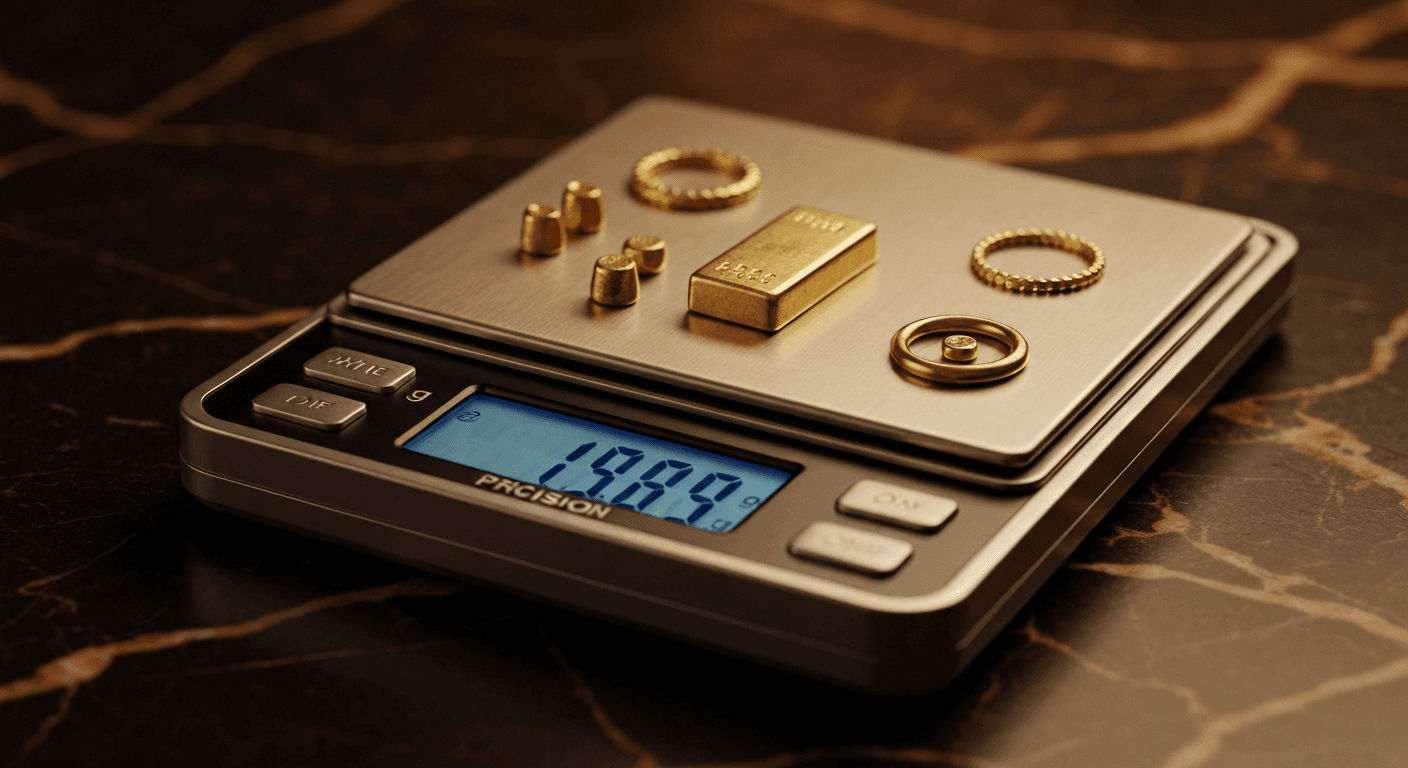
Gold is extremely dense. 19.3 grams per cubic centimeter for pure gold. You can test this at home with a precise kitchen scale and a graduated cylinder or measuring cup:
- Weigh the item in grams (call this W)
- Fill a graduated cylinder with water and note the level (call this V1)
- Drop the item in and note the new level (V2)
- Calculate density: W / (V2 - V1)
The result should be close to the expected density for the stated karat: 19.3 g/cm3 for 24K, about 15.6 for 18K, about 13.1 for 14K, and about 11.6 for 10K.
Limitations: Hollow or gem-set pieces will give inaccurate results. Tungsten has a very similar density to gold (19.25 g/cm3), so sophisticated fakes can pass this test.
Test 7: The Nitric Acid Test
This is one of the most reliable home tests. Purchase a gold testing acid kit (available for $10 to $30 online). Scratch the item on a testing stone to leave a streak, then apply the appropriate acid. For 14K testing acid: genuine 14K gold will not react, while lower-karat gold or fake gold will dissolve or change color.
Limitations: Requires purchasing testing supplies. The acid is corrosive and must be handled carefully. This test will leave a small scratch on the item. It tests only the surface, so thick gold plating can produce misleading results.
Test 8: The Ice Test
Gold has exceptional thermal conductivity. Much higher than most metals used in fakes. Place a small ice cube on the gold item. If the ice melts noticeably faster on the gold than on a comparable non-gold surface, it suggests the item may be genuine. Gold conducts heat rapidly, pulling warmth from the air and transferring it to the ice.
Limitations: This test is imprecise and best used as a supplementary check alongside other methods.
Test 9: The Float Test
Fill a glass or bowl with water and gently drop the gold item in. Real gold is very dense and will sink quickly to the bottom. If the item floats or hovers in the water, it is not solid gold. Even small gold pieces will drop rapidly.
Limitations: Hollow pieces can trap air and float even if made of gold. Heavy base metals like lead and tungsten will also sink. This is a rough screening test only.
Test 10: Professional Testing (XRF Analysis)
For the most accurate result, take your item to a jeweler or gold buyer who has an X-ray fluorescence (XRF) analyzer. This non-destructive test shoots X-rays at the item and reads the elemental composition in seconds. It can determine exact karat purity and detect plating, filling, and base metals. Most jewelers and pawn shops will perform this test for free if you are considering selling.
Limitations: XRF reads only the surface layer (top 10 to 20 microns), so it may not detect a gold-plated tungsten core. For large items or bars, additional tests like drilling or ultrasound may be needed.
Common Stamps to Watch For
Understanding the stamps on your jewelry can tell you a lot before you even begin testing:
- 10K, 14K, 18K, 22K, 24K. Solid gold at the stated karat
- 417, 585, 750, 916, 999. European fineness marks (equivalent to 10K, 14K, 18K, 22K, 24K)
- GF or 1/20. Gold-filled (a thick layer of gold bonded to base metal; has some value but is not solid gold)
- GP, GEP, HGE, RGP. Gold-plated (a very thin gold coating with minimal gold value)
- 925. Sterling silver, not gold (even if the item appears gold-colored, it may be gold-plated silver)
What Is Your Gold Worth?
Once you have confirmed your gold is real, its melt value depends on weight, karat, and the current spot price of gold. As a rough guide in early 2026 with gold near $2,200 per ounce:
| Karat | Value per Gram (approx.) | Value of a 10g Chain |
|---|---|---|
| 10K | $29–$31 | $290–$310 |
| 14K | $41–$43 | $410–$430 |
| 18K | $53–$55 | $530–$550 |
| 22K | $65–$67 | $650–$670 |
| 24K | $70–$72 | $700–$720 |
Note: Jewelry with designer names, antique value, or gemstones may be worth significantly more than melt value.
Think you might have valuable gold jewelry? Upload a photo to our free AI valuation tool and get an instant estimate.

Shop & Compare Prices
See current listings and recently sold items on eBay