Last updated: September 2026
How Much Does an MRI Cost?
An MRI costs $400-$3,500+ depending on the body part, whether you use a hospital or freestanding imaging center, and your insurance coverage. The same MRI can cost 3-5x more at a hospital than an imaging center. Enter your details for a realistic cost estimate.
Get the free app for unlimited scans


MRI Cost Value Calculator
Fill in the details below for an accurate estimate
Why Knowing Your MRI Cost Value Matters
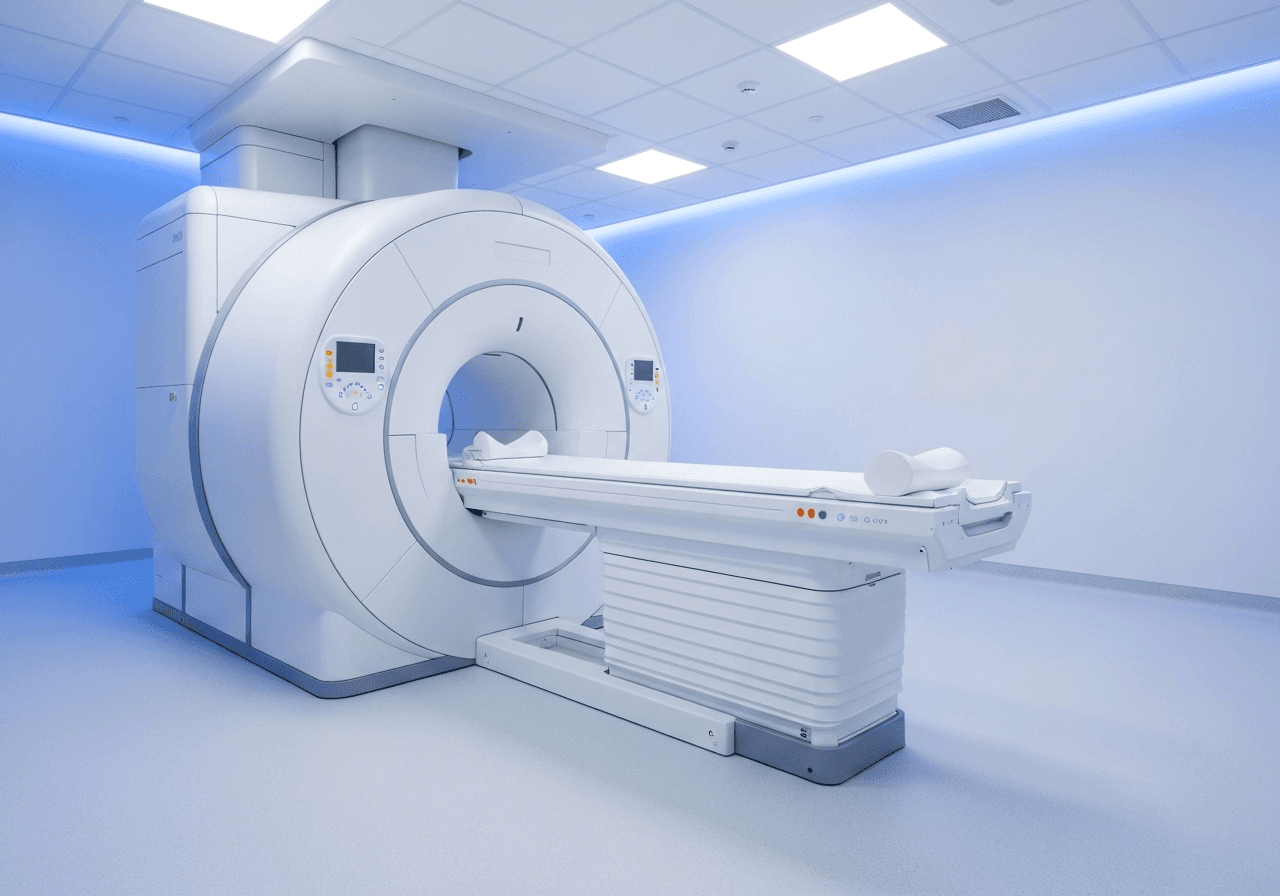
MRI pricing is one of the most opaque areas in healthcare. The exact same brain MRI can cost $500 at a freestanding imaging center or $3,000 at a hospital. For identical quality. With insurance, your out-of-pocket cost depends on whether you've met your deductible, your coinsurance rate, and whether the facility is in-network. Without insurance, cash-pay rates at imaging centers ($400-$1,200) are often cheaper than using insurance with a high deductible. Understanding the pricing landscape can save you $500-$2,000 on a single scan.
Key Factors That Affect MRI Cost Value
Understanding what drives the price of mri cost helps you get the most accurate valuation.
Body Part
Brain MRI: $500-$3,000. Knee MRI: $500-$2,500. Spine (lumbar/cervical): $500-$3,000. Shoulder: $500-$2,500. Abdomen/pelvis: $600-$3,500. Breast MRI: $500-$3,000. Cardiac MRI: $1,000-$5,000. With contrast (gadolinium injection): add $100-$500.
Facility Type
Freestanding imaging center: $400-$1,200 (best value). Outpatient hospital facility: $1,000-$2,500. Hospital inpatient/ER: $2,000-$5,000+. The freestanding imaging center uses the same machine and produces the same quality images. The price difference is purely overhead and billing.
Insurance Status
With insurance (in-network, deductible met): $50-$200 copay/coinsurance. With insurance (deductible NOT met): $400-$2,000 (you pay negotiated rate until deductible is met). Without insurance (cash pay): $400-$1,200 at imaging center. Without insurance at hospital: $1,500-$3,500.
With or Without Contrast
MRI without contrast: base price. MRI with contrast (gadolinium IV injection): adds $100-$500. With and without contrast (both done in same session): adds $200-$800. Your doctor determines whether contrast is needed based on what they're looking for.
Open vs. Closed MRI
Standard closed MRI (tunnel): standard price, best image quality. Open MRI (for claustrophobic or large patients): similar price, slightly lower image quality. Wide-bore MRI (wider tunnel, compromise): may cost $50-$100 more. Some facilities charge extra for sedation if you're claustrophobic ($200-$500).
Tips for Valuing MRI Cost
Get the most accurate estimate by following these tips when evaluating your mri cost.
Specify which body part needs imaging
Note whether your doctor ordered contrast (with or without gadolinium)
Include your insurance status and whether you've met your deductible
Specify your preference for hospital vs. imaging center
MRI Cost Market Insights
MRI pricing transparency has improved with the Hospital Price Transparency Rule (2021), but navigating prices remains difficult. Cash-pay imaging centers have grown rapidly, offering MRIs at $400-$800 with online booking.apps and websites like MDsave, New Choice Health, and RadiologyAssist let you compare MRI prices by ZIP code. Insurance negotiated rates are typically 40-60% of the hospital's list price. If you have a high-deductible plan, always get a cash-pay quote from a freestanding center. It's often cheaper than the insurance-negotiated price.
Find Out What Your MRI Cost Are Worth
Upload a photo now and get a free AI-powered valuation in seconds. No sign-up required.
MRI Cost Valuation FAQ
How much is an MRI without insurance?
At a freestanding imaging center: $400-$1,200. At a hospital outpatient facility: $1,500-$3,500. Always call and ask for the 'cash-pay' or 'self-pay' rate. This is significantly lower than the list price. Many centers offer payment plans.
Why is an MRI so expensive at a hospital?
Hospitals charge facility fees on top of the technical and professional fees. Their overhead is higher (ER, admin, 24/7 staffing). A freestanding imaging center has lower overhead and passes the savings on. The image quality is identical. Both use the same MRI technology.
Does insurance cover MRI?
Most insurance plans cover medically necessary MRIs. You typically need a doctor's order and prior authorization. In-network facilities have lower out-of-pocket costs. If your deductible isn't met, you'll pay the full negotiated rate (usually $500-$1,500 at in-network facilities).
How long does an MRI take?
The scan itself takes 20-60 minutes depending on the body part. With check-in, preparation, and contrast injection (if needed), plan for 1-2 hours total. You'll lie still inside the machine while it takes images using magnets and radio waves. No radiation is involved.
Value anything, anytime
Unlimited valuations, saved history and full reports in the free app.