Last updated: September 2026
How Much Do Braces Cost?
Braces cost between $3,000 and $10,000+ depending on the type and treatment complexity. Traditional metal braces average $3,000-$7,000, ceramic braces $4,000-$8,000, lingual braces $8,000-$13,000, and Invisalign $3,500-$8,500. Our calculator estimates your total cost based on the type of braces, treatment complexity, insurance coverage, and your location. Helping you budget for one of the most common and impactful dental treatments.
Get the free app for unlimited scans


Braces Value Calculator
Fill in the details below for an accurate estimate
Why Knowing Your Braces Value Matters
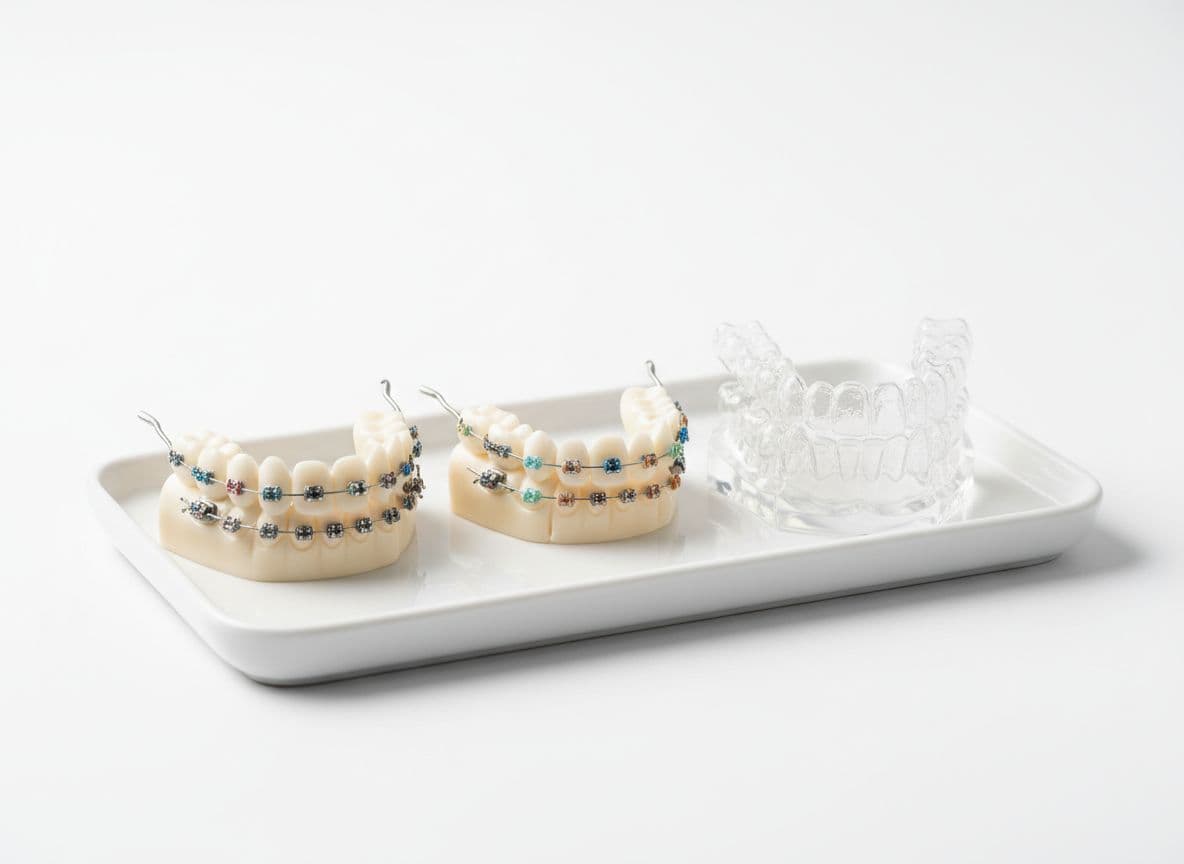
Orthodontic treatment is a significant health and cosmetic investment that affects you for a lifetime. Costs vary dramatically between providers and treatment types. The same case might be quoted at $4,000 by one orthodontist and $8,000 by another. Understanding what drives costs helps you compare quotes intelligently and choose the best value. Additionally, many people don't realize how much insurance can offset costs or that most orthodontists offer interest-free payment plans.
Key Factors That Affect Braces Value
Understanding what drives the price of braces helps you get the most accurate valuation.
Type of Braces
Traditional metal braces: $3,000-$7,000. Most affordable and effective for complex cases. Ceramic/clear braces: $4,000-$8,000. Less visible but slightly more fragile. Self-ligating braces (Damon): $4,000-$8,000. Fewer adjustments needed. Lingual braces (behind teeth): $8,000-$13,000. Invisible but uncomfortable initially. Invisalign/clear aligners: $3,500-$8,500. Removable, nearly invisible, best for mild-moderate cases.
Treatment Complexity
Simple alignment (minor crowding or spacing): $3,000-$5,000, 6-12 months. Moderate (crowding, overbite, or underbite): $4,000-$7,000, 12-18 months.complex (severe malocclusion, jaw alignment, extractions needed): $6,000-$10,000+, 18-30 months. Phase 1 (early treatment for children 7-10): $2,000-$4,000. Adults typically cost 10-20% more than children/teens for the same treatment.
Insurance & Payment Plans
Dental insurance with orthodontic coverage typically covers $1,000-$3,000 of braces cost (50% of treatment up to a lifetime maximum). Many plans have age limits (coverage only for children under 18). HSA/FSA funds can be used for orthodontic treatment tax-free. Most orthodontists offer interest-free monthly payment plans ($100-$300/month) with a down payment of $500-$2,000.
Geographic Location
Orthodontic costs vary by region. Major cities (NYC, LA, San Francisco): $5,000-$10,000+. Suburbs and mid-size cities: $4,000-$7,000. Small cities and rural areas: $3,000-$6,000. Dental schools offer braces at 30-50% discount ($2,000-$4,000) but treatment takes longer due to student learning pace and supervisor schedules.
Tips for Valuing Braces
Get the most accurate estimate by following these tips when evaluating your braces.
Get 2-3 consultations from different orthodontists. Most offer free consultations, and quotes can vary by $2,000-$3,000 for the same treatment.
Ask about all-inclusive pricing that covers adjustments, retainers, and emergency visits. Some offices charge separately for broken brackets, missed appointments, and retainers ($100-$500 extra each).
If cost is a major concern, consider dental school orthodontic clinics. Treatment is performed by supervised residents at 30-50% below private practice rates.
Don't skip retainer wear after braces. Teeth will shift back without retainers, and re-treatment costs $3,000-$7,000. A $200-$500 retainer is the best investment in orthodontics.
Braces Market Insights
The orthodontic market has been transformed by clear aligner technology. Invisalign (Align Technology) dominates but faces increasing competition from SmileDirectClub's successor brands and dentist-supervised aligner companies. Direct-to-consumer aligners ($1,500-$2,500) offer budget options for mild cases but lack in-person monitoring. AI-powered treatment planning has improved efficiency and predictability. Adult orthodontic treatment has grown significantly, now representing 30%+ of all orthodontic starts. Dental insurance coverage for adult orthodontics remains limited, driving demand for payment plans and financing.
Notable Braces Values
Real-world examples of what specific braces have sold for, so you can benchmark your own.
| Brace | Condition | Typical Value |
|---|---|---|
| Traditional Metal Braces (Minor Correction) | Short Treatment | $1,500 - $3,000 |
| Traditional Metal Braces (Full Treatment) | Standard Treatment | $3,000 - $5,000 |
| Ceramic (Clear) Braces (Full Treatment) | Standard Treatment | $4,000 - $8,000 |
| Self-Ligating Braces (e.g., Damon System) | Standard Treatment | $3,500 - $8,000 |
| Lingual Braces (e.g., Incognito) | Complex Treatment | $8,000 - $13,000 |
| Invisalign Lite (Minor Cases) | Short Treatment | $2,500 - $5,000 |
| Invisalign Full (Comprehensive) | Full Treatment | $4,000 - $9,000 |
| Adult Braces with Dental Insurance | Insured Patient | $1,500 - $4,500 |
| Retainer (Post-Treatment, Removable) | Maintenance | $150 - $600 |
Based on published orthodontist fee surveys (American Association of Orthodontists), insurance benefit schedules, and widely reported consumer cost guides.
Find Out What Your Braces Are Worth
Upload a photo now and get a free AI-powered valuation in seconds. No sign-up required.
Braces Valuation FAQ
Are braces cheaper than Invisalign?
Traditional metal braces ($3,000-$7,000) are generally 10-20% cheaper than Invisalign ($3,500-$8,500), though prices overlap significantly. For simple cases, Invisalign may actually cost the same or less since treatment is shorter. For complex cases (severe crowding, significant bite issues), braces are often recommended regardless of cost because they're more effective. Many orthodontists now charge similar fees for both options. The real cost difference often comes down to: (1) Treatment duration (braces may be faster for complex cases). (2) Compliance (Invisalign requires wearing aligners 22 hours/day. Poor compliance extends treatment and costs). (3) Additional treatments needed.
How much do braces cost with insurance?
With dental insurance that includes orthodontic coverage, your out-of-pocket cost is typically reduced by $1,000-$3,000. Most plans cover 50% of orthodontic treatment up to a lifetime maximum (commonly $1,500-$2,500). Example: $6,000 treatment with $1,500 insurance maximum = $4,500 out of pocket. Important caveats: many plans only cover orthodontics for children under 18, there's usually a 12-month waiting period for orthodontic benefits, and it's a lifetime maximum (one-time benefit). You can also use HSA/FSA pre-tax funds ($2,000-$3,000/year) to further reduce your effective cost.
At what age should kids get braces?
The American Association of Orthodontists recommends a first orthodontic evaluation by age 7. However, most children don't start braces until age 11-14, when all permanent teeth have erupted. Phase 1 (early) treatment (ages 7-10) is recommended for specific issues: severe crowding, crossbites, protruding front teeth at risk of injury, or jaw growth problems. Phase 1 costs $2,000-$4,000 and may reduce the complexity (and cost) of later treatment. Most children need braces from ages 11-14 for 18-24 months. Starting at the right age can reduce total treatment cost by addressing issues before they become more complex.
Value anything, anytime
Unlimited valuations, saved history and full reports in the free app.