Last updated: September 2026
How Much Does a Dental Crown Cost?
A dental crown costs $800-$1,500 with insurance or $1,000-$3,000+ without. The material, tooth location, and whether you need additional work (buildup, post) affect the total price. Enter your details for a personalized estimate.
Get the free app for unlimited scans


Dental Crown Value Calculator
Fill in the details below for an accurate estimate
Why Knowing Your Dental Crown Value Matters
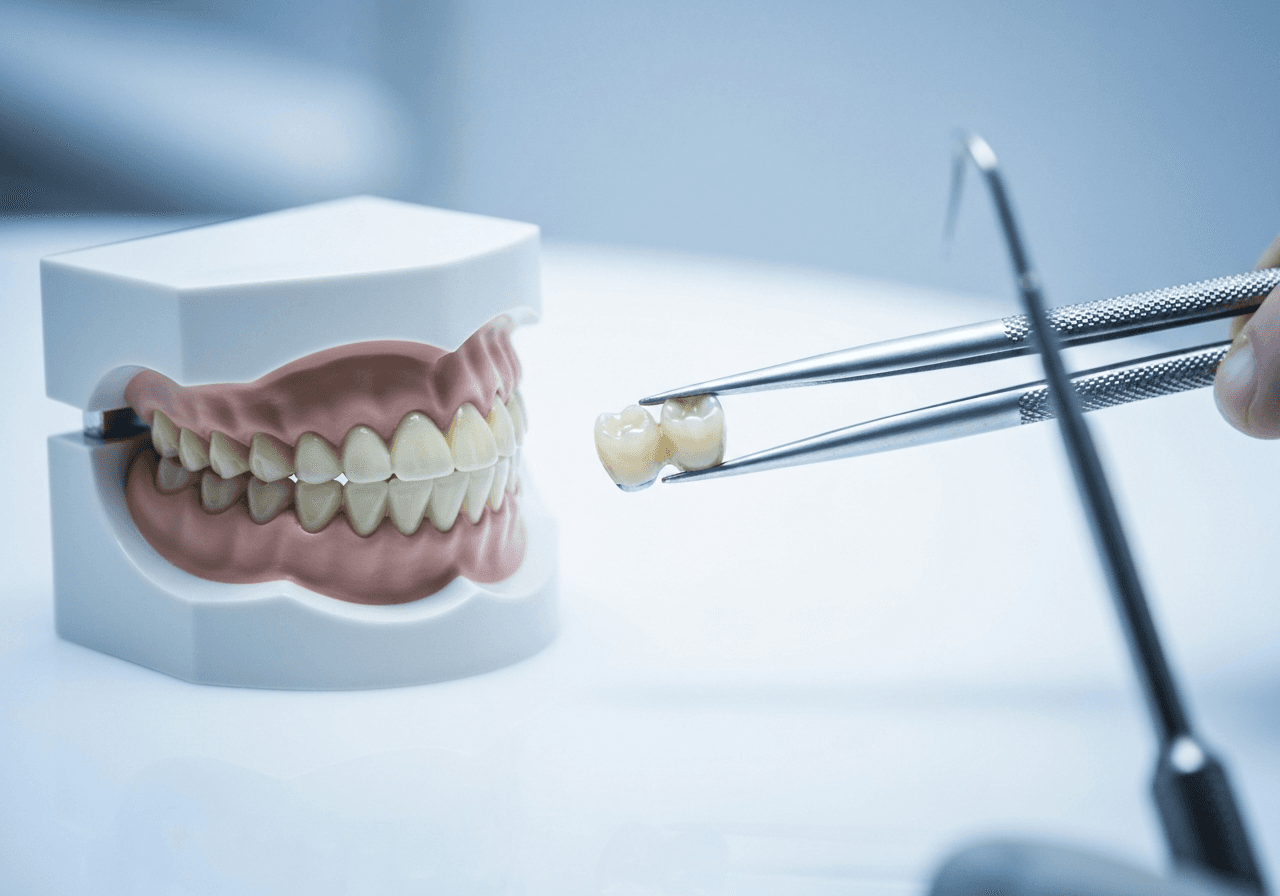
Dental crowns are one of the most common dental procedures. Over 15 million are placed annually in the US. Prices range from $800 for a basic porcelain-fused-to-metal (PFM) crown to $3,000+ for a premium zirconia or gold crown placed by a specialist. Material choice affects both cost and longevity: gold crowns last 25-50 years while all-porcelain may last 10-15 years. Insurance typically covers 50% of the cost, but annual maximums limit coverage. Same-day CEREC crowns have become popular, offering convenience but at similar or slightly higher prices.
Key Factors That Affect Dental Crown Value
Understanding what drives the price of dental crown helps you get the most accurate valuation.
Crown Material
Porcelain-fused-to-metal (PFM): $800-$1,400. All-porcelain/ceramic: $800-$1,500. Zirconia: $1,000-$2,000. Gold or precious metal alloy: $1,000-$2,500. E-max (lithium disilicate): $1,000-$1,800. CEREC (same-day milled): $1,000-$2,000.
Tooth Location
Front teeth (aesthetics priority): all-porcelain or E-max preferred ($1,000-$1,800). Back teeth (strength priority): zirconia or PFM ($800-$1,500). Molars (maximum strength): gold or zirconia ($1,000-$2,500).
Additional Procedures
Core buildup (if tooth is severely damaged): $200-$500. Post and core (after root canal): $300-$700. Temporary crown: usually included. Gum recontouring: $200-$500. These add-on procedures can increase the total cost significantly.
Insurance Coverage
Most dental insurance covers crowns at 50% after deductible. With a $50 deductible and 50% coverage, a $1,200 crown costs you $625 out of pocket. Annual maximums ($1,000-$2,000) limit how many crowns insurance will cover per year.
Provider & Lab
General dentist: standard pricing. Prosthodontist (crown specialist): 20-40% more. Dental school: 40-60% less. The quality of the dental lab matters. Premium labs charge $200-$400 per crown while economy labs charge $75-$150. Same-day CEREC eliminates lab costs but requires a $150K+ milling machine investment.
Tips for Valuing Dental Crown
Get the most accurate estimate by following these tips when evaluating your dental crown.
Specify the tooth that needs a crown (front, premolar, or molar)
Note your preferred material or ask for a recommendation
Include your dental insurance status and coverage level
Mention if you need any additional work (buildup, root canal)
Dental Crown Market Insights
Zirconia crowns have rapidly gained market share due to their combination of strength, aesthetics, and declining costs. Same-day CEREC crowns (designed and milled in-office in 1-2 hours) now account for 15-20% of all crowns, eliminating the need for a temporary crown and second visit. Dental tourism (Mexico, Costa Rica) offers crowns for $300-$600, attracting patients willing to travel. The shift toward digital impressions (no goopy molds) has improved the patient experience and crown fit accuracy.
Find Out What Your Dental Crown Are Worth
Upload a photo now and get a free AI-powered valuation in seconds. No sign-up required.
Dental Crown Valuation FAQ
How much does a dental crown cost without insurance?
Without insurance: PFM crown $800-$1,400, all-porcelain $1,000-$1,500, zirconia $1,000-$2,000, gold $1,200-$2,500. Add $200-$700 for buildup or post if needed. Dental schools offer crowns for $400-$800.
Which dental crown material is best?
Zirconia is the best all-around choice for most teeth. Strong, natural-looking, and biocompatible. E-max/lithium disilicate is the most aesthetic for front teeth. Gold is the most durable for back molars (25-50 year lifespan). PFM is the most affordable but the metal margin can show at the gumline over time.
How long does a dental crown last?
Gold: 25-50 years. Zirconia: 15-25 years. PFM: 10-15 years. All-porcelain: 10-15 years. E-max: 10-20 years. Longevity depends on oral hygiene, grinding habits, and crown placement. A night guard ($300-$500) can significantly extend crown life for people who grind their teeth.
Does getting a crown hurt?
The procedure is done under local anesthesia and is typically painless. Some sensitivity for 1-2 weeks after placement is normal. The appointment takes 1-2 hours for traditional crowns (plus a second visit 2-3 weeks later) or 1-2 hours total for same-day CEREC crowns.
Value anything, anytime
Unlimited valuations, saved history and full reports in the free app.