March 23, 2026 · Updated March 2026
How to Tell If Turquoise Is Real: 7 Tests to Spot Fakes
The Turquoise Fake Problem
An estimated 90% of “turquoise” sold in tourist markets, online, and even some jewelry stores is fake, treated, or misrepresented. The most common fakes are dyed howlite (a white mineral that accepts dye well), reconstituted turquoise (ground-up turquoise powder mixed with resin), and colored plastic or resin. Genuine natural turquoise from mines like Sleeping Beauty, Kingman, or Bisbee in Arizona can be worth $3 to $50+ per carat, while fakes cost pennies.
7 Tests to Identify Real Turquoise
1. The Acetone Test
Dab a cotton swab with acetone (nail polish remover) and rub it on an inconspicuous area. If blue or green color transfers to the swab, the stone is dyed. Genuine turquoise will not transfer color. Dyed howlite and dyed magnesite are the most common fakes caught by this test. Test on the back or inside of a setting. This is the single most reliable home test.
2. The Hot Needle Test
Heat a needle and touch it to an inconspicuous spot. Genuine turquoise will not melt or emit a chemical smell. Plastic and resin fakes will melt, bubble, or produce a chemical/acrid smell. Reconstituted turquoise (resin-bonded) may also produce a slight chemical smell as the binding resin reacts. Test on the back of the stone.
3. The Scratch Test
Turquoise has a Mohs hardness of 5 to 6. You can scratch it with a steel knife, and it should produce a white or light powder. If the scratch reveals a white interior beneath blue surface color, the stone is dyed. Genuine turquoise is colored throughout. Howlite scratches easily (hardness 3.5) and reveals a stark white interior.
4. The Magnification Test
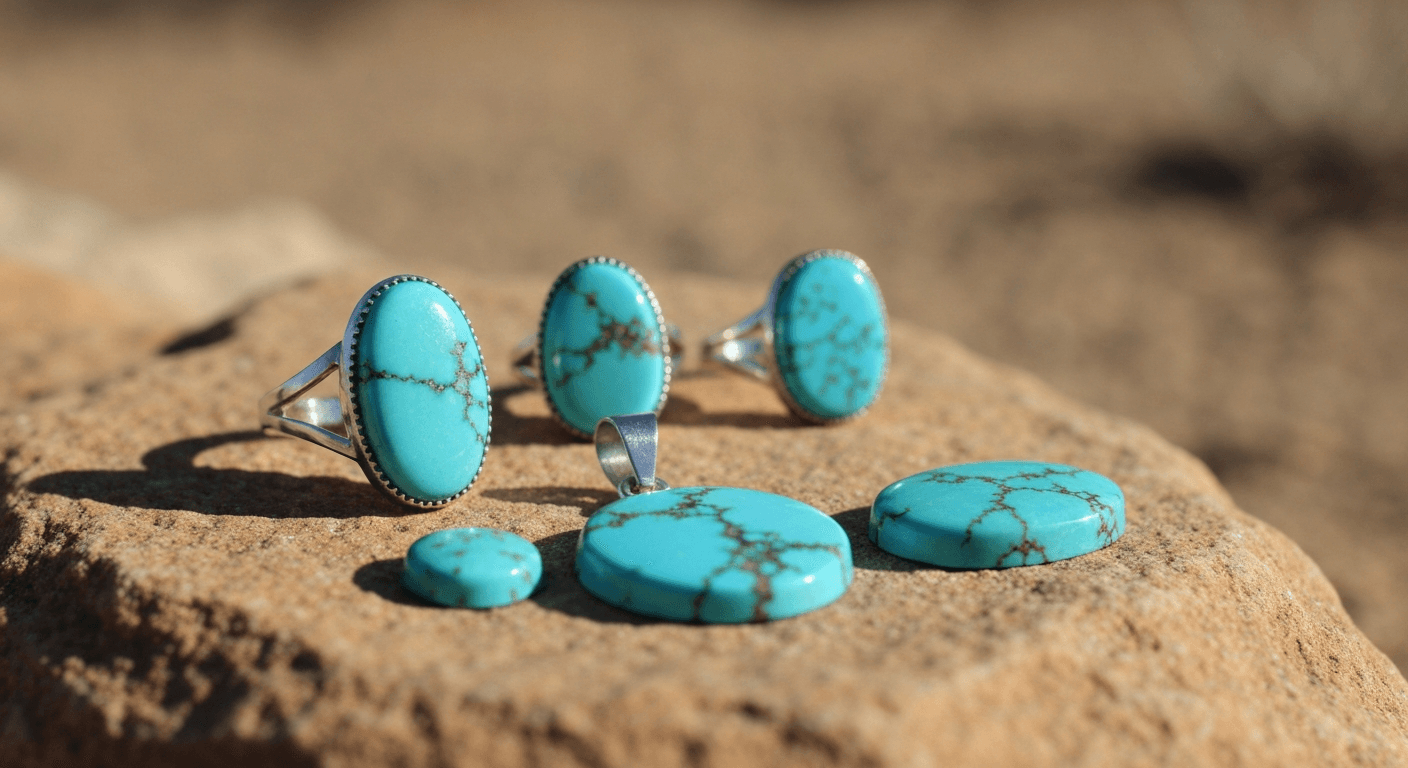
Examine the stone under 10x magnification. Genuine turquoise has a waxy to slightly porous surface with natural variations in color intensity. Look for dye concentrated in pits, cracks, and along the matrix veins. This is a telltale sign of dyed stone. Genuine turquoise matrix (the dark web-like veins) is natural and has subtle variation. Fake matrix on reconstituted turquoise often looks painted or too uniform.
5. The Price Test
Genuine natural turquoise is expensive. A solid blue cabochon from a named mine should cost $5 to $50+ per carat. If you are buying a “turquoise” ring for $15 at a tourist shop, it is almost certainly fake or heavily treated. Even lower-grade genuine turquoise (pale, heavily matrixed) costs more than dyed howlite.
6. The Weight and Temperature Test
Genuine turquoise is a mineral and feels cool to the touch and slightly heavy for its size. Plastic fakes feel warm and lightweight. Reconstituted turquoise may feel similar in weight to genuine because it contains actual turquoise material, making this test less reliable for reconstituted vs. natural.
7. The Water Absorption Test
Place a small drop of water on the stone. Natural untreated turquoise is slightly porous and may darken temporarily where the water sits. Stabilized turquoise (treated with resin to harden it, which is industry-accepted) will not absorb water. Plastic and glass fakes will not absorb water either. This test primarily distinguishes natural from stabilized turquoise.
Types of Turquoise Treatment
| Type | Description | Value vs. Natural |
|---|---|---|
| Natural | Untreated, only cut and polished | 100% (most valuable) |
| Stabilized | Infused with resin to harden, industry-accepted | 30–60% |
| Enhanced | Color-enhanced with dye or Zachery treatment | 10–30% |
| Reconstituted | Ground turquoise powder bonded with resin | 5–15% |
| Block/Imitation | Dyed howlite, magnesite, or plastic | 1–5% |
Valuable Turquoise Mines
- Sleeping Beauty (Arizona): Prized for its robin’s-egg blue with minimal matrix. Mine closed in 2012, increasing value. $10–$50/carat for natural.
- Lander Blue (Nevada): Considered the rarest and most valuable turquoise. Rich blue with distinctive spiderweb matrix. $100–$500+/carat.
- Bisbee (Arizona): Deep blue with chocolate-brown matrix. Mine closed in 1975. $20–$100+/carat.
- Kingman (Arizona): Wide range of blues with black matrix. Still producing. $3–$30/carat for natural.
- Royston (Nevada): Green to blue with brown matrix. Popular in Native American jewelry. $5–$30/carat.
- Persian/Iranian: Classic sky blue, historically the most prized turquoise worldwide. $10–$80/carat.
Want to know what your turquoise is worth? Upload a photo to our free AI valuation tool for an instant estimate.

Shop & Compare Prices
See current listings and recently sold items on eBay