March 23, 2026 · Updated March 2026
How to Tell If Amber Is Real: 7 Simple Tests at Home
Why Amber Authentication Matters
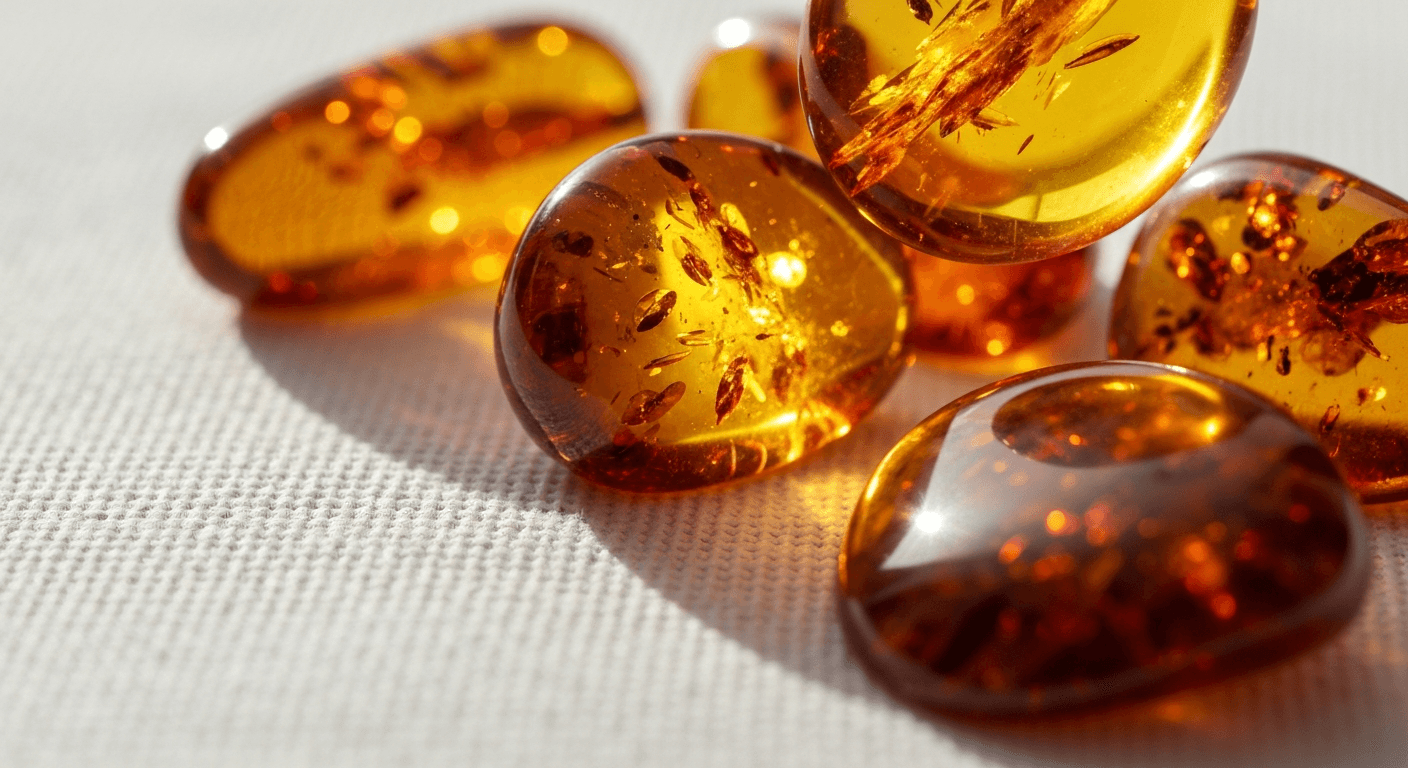
Amber. Fossilized tree resin millions of years old. Has been treasured since antiquity. Baltic amber jewelry is popular worldwide, and genuine pieces with insect inclusions can be worth hundreds to thousands of dollars. Unfortunately, the market is flooded with fakes: plastic imitations, pressed (reconstituted) amber, young copal resin sold as amber, and glass passed off as amber. An estimated 50% of “amber” sold online and at tourist markets is fake or misrepresented.
Genuine Baltic amber ranges from $3 to $20 per gram for standard jewelry-grade pieces. Amber with visible insect inclusions: $50 to $500+ per piece. Amber with rare inclusions (lizards, frogs, feathers): $5,000 to $50,000+. Dominican blue amber: $30 to $100 per gram.
7 Tests to Identify Real Amber
1. The Saltwater Float Test
This is the most reliable home test. Mix approximately 7 tablespoons of table salt into 1.5 cups (350ml) of warm water. Stir until fully dissolved. Drop the amber into the solution. Genuine amber floats in saltwater because its density (1.05–1.10 g/cm³) is less than the saltwater solution (approximately 1.12 g/cm³). Plastic, glass, and most other imitations sink because they are denser. Copal may also float, so this test alone does not distinguish amber from copal. Rinse the amber with fresh water after testing.
2. The UV Light Test
Hold a UV blacklight (365nm wavelength works best) close to the amber in a dark room. Genuine Baltic amber fluoresces a bright blue or blue-green under UV light. The fluorescence is caused by succinic acid, which is unique to Baltic amber. Dominican amber may fluoresce blue or green. Plastic imitations typically do not fluoresce or glow a dull yellowish color. Copal may show some fluorescence but usually weaker than genuine amber. This is one of the most definitive home tests.
3. The Hot Needle Test
Heat a sewing needle with a lighter until it glows red. Touch it gently to an inconspicuous spot on the suspected amber (the back or a drilled hole). Genuine amber produces white smoke with a sweet, piney, resinous smell. Similar to incense. Plastic produces black smoke with a chemical, acrid smell. Glass will not be affected by the needle. Copal melts very easily and may produce a similar smell to amber but softer. This test leaves a tiny mark, so perform it on a hidden area.
4. The Static Electricity Test
Rub the amber vigorously on a piece of wool, cotton, or your hair for 30 to 60 seconds. Then hold it near small pieces of tissue paper or hair clippings. Genuine amber generates a static charge and attracts light materials. This is actually the origin of the word “electricity”. The Greek word for amber is “elektron.” Plastic and glass generally do not generate as strong a static charge, though some plastics can, so this test is supportive rather than conclusive.
5. The Scratch Test
Amber has a hardness of 2 to 2.5 on the Mohs scale. You can scratch genuine amber with a steel knife, and it will produce a powdery residue. If the material chips or flakes instead of powdering, it is likely plastic or glass. Glass (hardness 5.5) cannot be scratched with a knife at all. However, copal is also soft enough to scratch, so this test does not distinguish between amber and copal.
6. The Acetone/Alcohol Test
Place a drop of acetone (nail polish remover) or rubbing alcohol on an inconspicuous spot. Let it sit for 3 to 5 seconds, then wipe it off. Genuine amber is not affected by acetone or alcohol. Copal softens and becomes tacky when exposed to acetone. Plastic may also soften, become sticky, or show discoloration. This is the best test to distinguish genuine amber from copal. Test on a hidden area to avoid visible damage.
7. The Warmth Test
Hold the piece in your hand. Genuine amber feels warm to the touch and heats up quickly in your palm. Glass and stone imitations feel cold and stay cold longer. Plastic may also feel warm, but it often has a different tactile quality. Amber has a slight organic warmth that is difficult to describe but recognizable once you have handled genuine pieces.
Common Amber Imitations
| Material | How to Spot It | Price vs. Real Amber |
|---|---|---|
| Copal (young resin) | Softens with acetone, weaker UV fluorescence, melts easily | 10%–30% |
| Plastic (Bakelite, celluloid) | Sinks in saltwater, chemical smell when heated, no UV fluorescence | 5%–10% |
| Glass | Feels cold, heavy, sinks in saltwater, cannot be scratched with needle | 1%–5% |
| Pressed amber (ambroid) | Unnatural flow patterns under magnification, elongated bubbles | 30%–50% |
| Dyed/treated amber | Color concentrated in cracks, uneven under magnification | 20%–40% |
| Kauri gum | Similar to copal, dissolves partially in acetone | 10%–20% |
What Makes Amber Valuable
- Inclusions. Amber with visible insects, plant matter, or other biological inclusions is worth significantly more.common insect inclusions (flies, gnats): $50–$300. Uncommon inclusions (beetles, ants, spiders): $200–$2,000. Extremely rare inclusions (lizards, scorpions, feathers): $5,000–$50,000+.
- Color. Classic honey and cognac colors are most common. Rare colors include cherry red, green, and blue (Dominican blue amber can reach $100+/gram).
- Clarity. Transparent amber is generally more valuable than opaque. Semi-transparent pieces with visible internal inclusions command premiums.
- Size. Large amber pieces are disproportionately rare. A 50-gram piece of clear amber is worth more per gram than a 5-gram piece.
- Origin. Baltic amber (from the Baltic Sea region) is the most recognized and traded. Dominican amber is prized for blue fluorescence. Burmese (Myanmar) amber has important paleontological value.
- Age. Baltic amber is 35–50 million years old. Burmese amber is approximately 99 million years old (Cretaceous period). Older amber with well-preserved inclusions has scientific as well as collector value.
Buying Tips
- Buy from reputable dealers. Established amber dealers in the Baltic region (Poland, Lithuania, Latvia) or certified gemstone dealers are the safest sources.
- Ask for certificates. Reputable sellers provide certificates of authenticity or will allow independent testing.
- Be skeptical of too-perfect inclusions. Fake amber with artificially placed insects is common. Real inclusions are in natural positions; fakes often show insects that are too perfectly centered or too large.
- Beware of “amber” from tourist markets. Markets in the Dominican Republic, Mexico, and Southeast Asia are known for selling copal and plastic as amber.
Want to know what your amber is worth? Upload a photo to our free AI valuation tool for an instant estimate based on type, color, size, and inclusions.

Shop & Compare Prices
See current listings and recently sold items on eBay