Last updated: August 2026
How Much Is My Stock Portfolio Worth?
Understanding your stock portfolio's total value, asset allocation, and projected growth trajectory is fundamental to sound investment decisions. Whether you hold individual stocks, ETFs, mutual funds, or a mix, our calculator helps you assess your portfolio's current position and future potential.
Get the free app for unlimited scans


Stock Portfolio Value Calculator
Fill in the details below for an accurate estimate
Why Knowing Your Stock Portfolio Value Matters
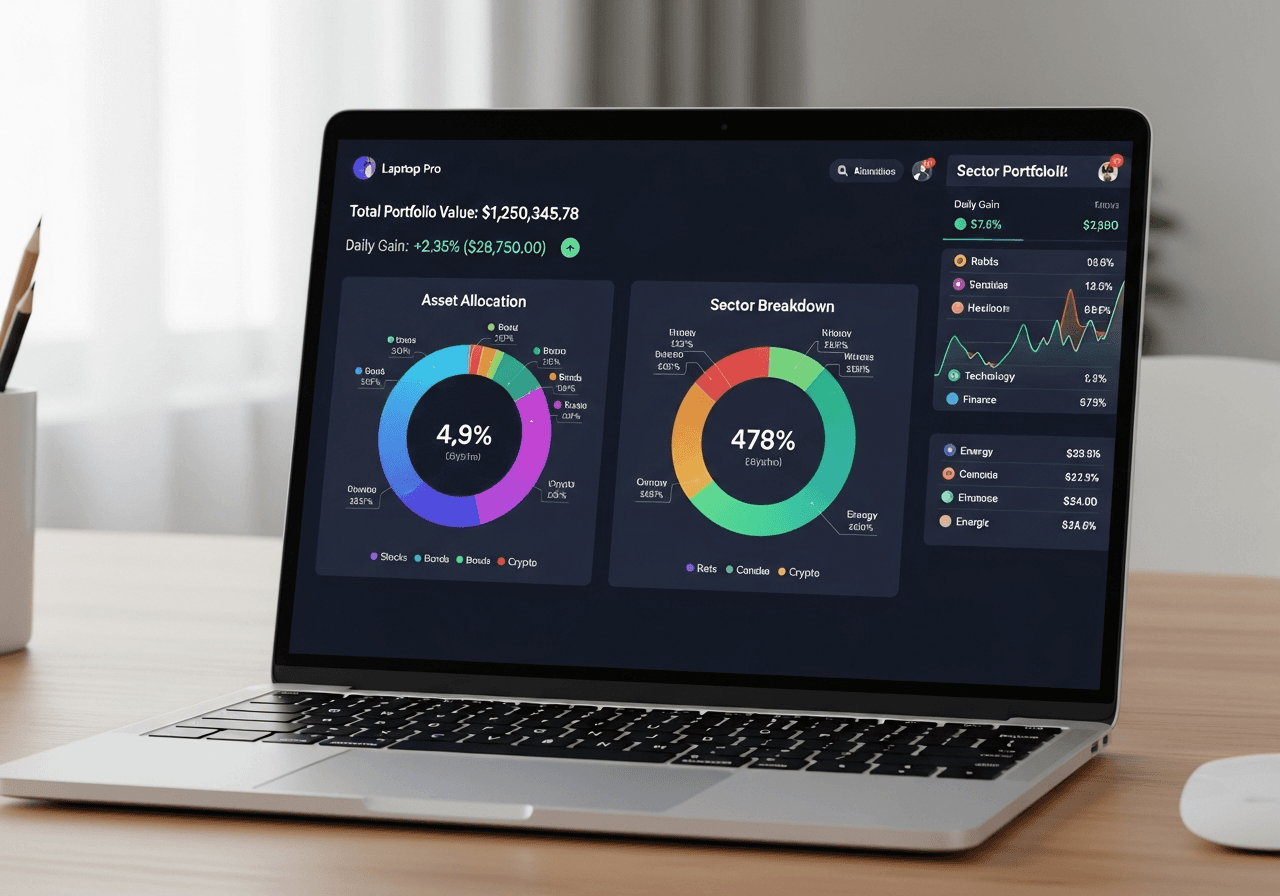
Many investors hold stocks across multiple brokerage accounts, retirement accounts, and employer stock plans without a clear picture of their total portfolio value and allocation. Understanding your complete portfolio — not just individual account balances — reveals whether you're properly diversified, overexposed to any single stock or sector, and on track for your financial goals. A comprehensive view prevents common mistakes like concentration risk and poor asset allocation.
Key Factors That Affect Stock Portfolio Value
Understanding what drives the price of stock portfolio helps you get the most accurate valuation.
Portfolio Size & Allocation
Your total portfolio value combined with how it's allocated between stocks, bonds, and cash determines your risk/return profile. A 90/10 stock/bond split is aggressive (higher potential returns, more volatility). A 60/40 split is moderate. Allocation should shift more conservative as you approach your goal timeline.
Individual Holdings
Concentrated positions (over 10% of portfolio in one stock) carry additional risk. Tech-heavy portfolios performed well recently but carry sector risk. Dividend stocks provide income but may underperform growth stocks. International exposure provides diversification benefits.
Cost Basis & Gains
Your cost basis (what you paid) versus current value determines unrealized gains/losses with tax implications. Long-term holdings (over 1 year) qualify for lower capital gains tax rates. Understanding your tax situation affects optimal selling strategy.
Fees & Expenses
Fund expense ratios, trading commissions, and advisory fees erode returns over time. A 1% annual fee reduces a $500,000 portfolio's 30-year growth by roughly $300,000 compared to a 0.1% fee. Low-cost index funds (Vanguard, Schwab, Fidelity) minimize this drag.
Tips for Valuing Stock Portfolio
Get the most accurate estimate by following these tips when evaluating your stock portfolio.
List all investment accounts (brokerage, 401(k), IRA, HSA) for a complete picture
Include your cost basis for each holding to understand tax implications
Review your allocation — does it match your risk tolerance and timeline?
Check expense ratios on all funds — switch to low-cost index funds where possible
Stock Portfolio Market Insights
The US stock market in 2026 continues its long-term upward trajectory despite periodic volatility. The S&P 500 has delivered approximately 10% average annual returns over the past century (7% after inflation). AI and technology stocks have driven recent market gains. Passive index investing continues to outperform the majority of active fund managers over 10+ year periods. Diversification across sectors, geographies, and asset classes remains the most reliable strategy for long-term wealth building.
Notable Stock Portfolio Values
Real-world examples of what specific stock portfolio have sold for, so you can benchmark your own.
| Stock Portfolio | Condition | Typical Value |
|---|---|---|
| S&P 500 Index Fund (e.g. VOO/SPY) - $10,000 starter position | Active | $10,000 - $15,000+ |
| Single Apple (AAPL) share | Active | $190 - $240 |
| Single NVIDIA (NVDA) share | Active | $100 - $160 |
| Berkshire Hathaway Class B (BRK.B) share | Active | $420 - $500 |
| Diversified 3-ETF lazy portfolio - $50,000 | Active | $50,000 - $80,000+ |
| Single Tesla (TSLA) share | Active | $180 - $340 |
| Growth-heavy tech portfolio - $100,000 initial | Active | $80,000 - $200,000+ |
| Dividend income portfolio - $250,000 | Active | $250,000 - $400,000+ |
| Single Alphabet (GOOGL) share | Active | $160 - $210 |
Based on publicly traded share prices and broad portfolio benchmarks per brokerage and financial data sources (e.g., Yahoo Finance, Morningstar); ranges reflect recent market conditions and are not investment advice.
Find Out What Your Stock Portfolio Are Worth
Upload a photo now and get a free AI-powered valuation in seconds. No sign-up required.
Stock Portfolio Valuation FAQ
How much should I have invested in stocks?
A common guideline is (110 minus your age) percent in stocks. At age 30, that's 80% stocks. At 50, it's 60% stocks. Your specific allocation should reflect your risk tolerance, timeline, and financial goals. Younger investors can generally tolerate more stock exposure.
Should I invest in individual stocks or index funds?
Research consistently shows that most individual stock pickers underperform the market over time. Low-cost index funds (like S&P 500 or total market funds) provide broad diversification and have outperformed 80-90% of professional fund managers over 15+ year periods. A core index fund approach with small satellite individual stock positions is a common compromise.
How often should I check my portfolio?
For long-term investors, quarterly or semi-annual reviews are sufficient. Daily checking leads to emotional decision-making and unnecessary trading. Rebalance when your allocation drifts more than 5% from your target. Major life changes (marriage, home purchase, approaching retirement) warrant immediate portfolio review.
Similar Valuations
Value anything, anytime
Unlimited valuations, saved history and full reports in the free app.