Last updated: September 2026
How Much Do I Need to Retire?
Our retirement savings calculator projects your future retirement nest egg based on your current age, target retirement age, existing 401(k)/IRA balance, monthly contributions, and employer matching. This tool helps you visualize whether your current savings rate will meet your retirement goals and what adjustments might be needed to close any gaps.
Get the free app for unlimited scans


Retirement Savings Value Calculator
Fill in the details below for an accurate estimate
Why Knowing Your Retirement Savings Value Matters
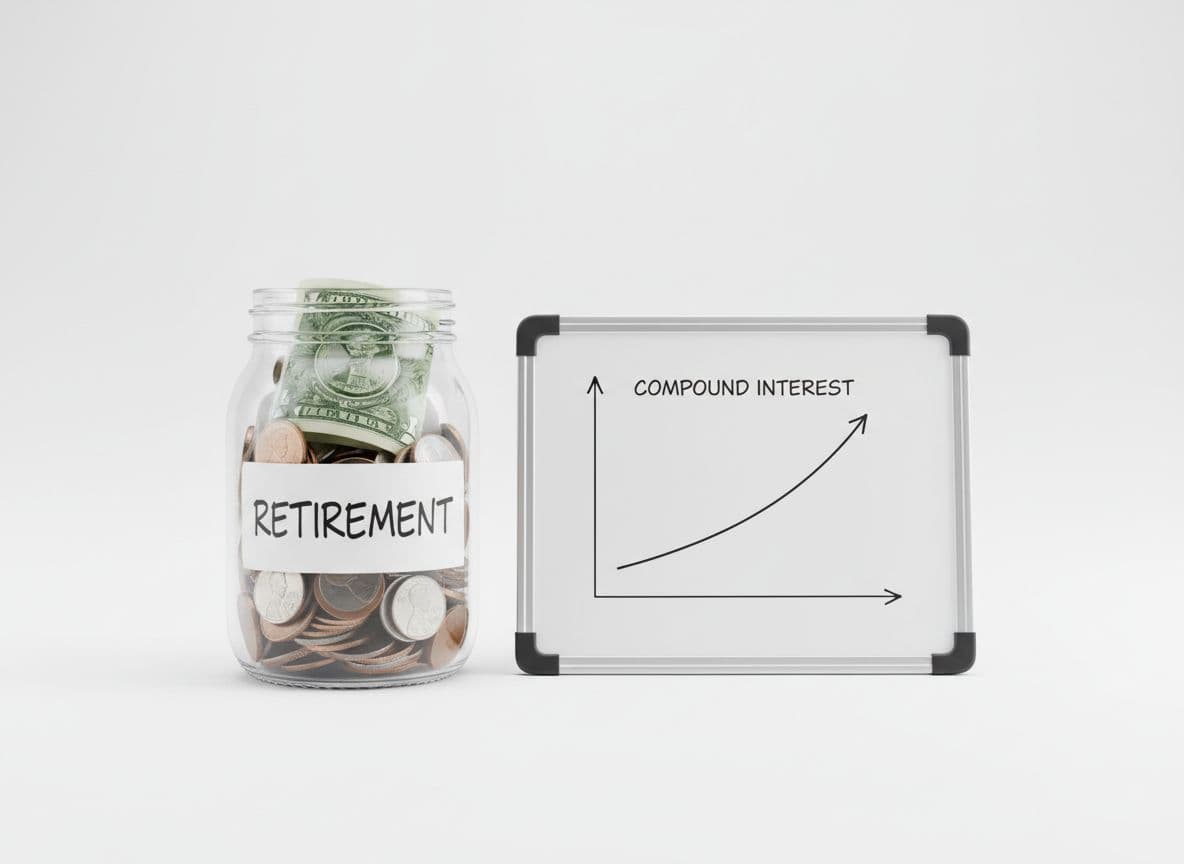
The median retirement savings for Americans aged 55-64 is only $134,000. Far short of the $1,000,000-$2,000,000 most financial advisors recommend for a comfortable retirement. The power of compound interest makes early saving extraordinarily valuable: $500/month invested from age 25 to 65 at 7% annual returns grows to approximately $1,200,000, while the same contribution from age 35 to 65 yields only $567,000. Starting 10 years earlier nearly doubles the result despite contributing only $60,000 more. Employer 401(k) matches are essentially free money, yet approximately 25% of employees don't contribute enough to receive the full match, leaving an average of $1,300/year on the table. Social Security replaces only about 40% of pre-retirement income for average earners, meaning personal savings must cover the remaining 60%. The difference between retiring comfortably and working into your 70s often comes down to consistent contributions and taking full advantage of compound growth during your working years.
Key Factors That Affect Retirement Savings Value
Understanding what drives the price of retirement savings helps you get the most accurate valuation.
Current Age & Time Horizon
Time is the most powerful factor in retirement savings due to compound interest. A 25-year-old has 40 years of compounding, meaning every $1 invested could grow to $15-$20 by age 65 at historical market returns. A 45-year-old has only 20 years, so each dollar grows to roughly $4-$5. This is why starting early. Even with small amounts. Dramatically outperforms starting late with larger contributions. Each year of delay costs exponentially more to catch up.
Current Balance
Your existing retirement balance provides the foundation for future growth. A $100,000 balance at age 35, left untouched and growing at 7% annually, becomes approximately $760,000 by age 65. Without any additional contributions. Even modest existing balances compound significantly over decades. If you're starting from $0, don't be discouraged. Consistent contributions over 20-30 years can still build substantial wealth.
Monthly Contribution Rate
The amount you contribute monthly is the variable you have the most control over. Increasing contributions by just $200/month adds approximately $240,000 to your retirement balance over 30 years (at 7% returns). Financial advisors recommend saving 15-20% of gross income for retirement, including employer match. The IRS allows up to $23,500 in 401(k) contributions in 2026 ($31,000 if 50+), and $7,000 in IRA contributions ($8,000 if 50+).
Employer Match
An employer 401(k) match is the highest guaranteed return on any investment. A common match formula is 50% of employee contributions up to 6% of salary, meaning a $75,000 earner who contributes 6% ($375/month) receives an additional $187.50/month. A 50% instant return. Some employers match dollar-for-dollar up to 3-6%. Always contribute at least enough to receive the full employer match; not doing so is leaving free money on the table.
Investment Returns & Allocation
Long-term investment returns significantly impact your final balance. The S&P 500 has returned approximately 10% annually (7% after inflation) over the past century. A portfolio 80% stocks / 20% bonds might average 7-8% returns, while a conservative 40/60 split might return 5-6%. The difference matters enormously: $500/month over 30 years at 6% yields $502,000, while 8% yields $745,000. A $243,000 gap from just 2% difference in returns. Target-date funds automatically adjust allocation as you age.
Tips for Valuing Retirement Savings
Get the most accurate estimate by following these tips when evaluating your retirement savings.
Enter your exact current age and desired retirement age, as even a 2-3 year difference in retirement timing can mean $100,000-$300,000 more or less in required savings
Include your total retirement balance across all accounts. 401(k), IRA, Roth IRA, and any other retirement-designated investments. For an accurate projection
Report your actual monthly contribution amount including any automatic payroll deductions, as accuracy here directly determines the reliability of your projection
Select your employer match level carefully since this 'free money' compounds significantly over decades and is a critical part of your total retirement savings rate
Retirement Savings Market Insights
The retirement savings landscape has shifted in several important ways. The transition from defined-benefit pensions to 401(k) plans has placed retirement funding responsibility squarely on individuals, and many are unprepared. The Federal Reserve reports that 25% of non-retired adults have no retirement savings at all. On the positive side, auto-enrollment in 401(k) plans has increased participation rates to over 90% at companies that offer it. The SECURE Act 2.0 (2024) introduced several beneficial changes including higher catch-up contribution limits for ages 60-63 ($11,250 in 2025), automatic enrollment mandates for new plans, and student loan payment matching. Market returns have been strong, with the S&P 500 returning approximately 12% annually over the past decade, boosting retirement balances. However, financial advisors caution that future returns may be lower, recommending a 6-7% long-term planning assumption rather than extrapolating recent performance.
Notable Retirement Savings Values
Real-world examples of what specific retirement savings have sold for, so you can benchmark your own.
| Retirement Saving | Condition | Typical Value |
|---|---|---|
| 401(k) - Early Career Starter (Age 25-30) | Active Account | $5,000 - $25,000 |
| Traditional IRA - Mid-Career Saver (Age 35-40) | Active Account | $40,000 - $120,000 |
| Roth IRA - Maxed-Out Over 10 Years | Active Account | $80,000 - $180,000 |
| 401(k) - On-Track at 50 (Fidelity Benchmark) | Active Account | $300,000 - $600,000 |
| 401(k) + IRA Combined - Pre-Retirement (Age 60-65) | Active Account | $500,000 - $1,500,000 |
| Target-Date 2035 Fund - Typical Rollover Balance | Invested | $150,000 - $400,000 |
| Pension (Defined Benefit) - 30-Year Public Sector Worker | Vested | $400,000 - $900,000+ |
| Solo 401(k) - Self-Employed High Contributor (1 Year Max) | Active Account | $66,000 - $69,000 |
| Social Security Benefit - Average Retired Worker | Claiming at 67 | $1,900 - $3,800/mo |
Based on IRS contribution limits, SSA benefit data, Fidelity and Vanguard retirement savings benchmarks, and widely cited financial planning guidelines.
Find Out What Your Retirement Savings Are Worth
Upload a photo now and get a free AI-powered valuation in seconds. No sign-up required.
Retirement Savings Valuation FAQ
How much money do I need to retire comfortably?
The common benchmark is 25x your annual expenses (the '4% rule'), meaning if you spend $60,000/year, you need approximately $1,500,000 in retirement savings. This assumes you can safely withdraw 4% annually for 30 years without depleting the portfolio. However, the right number depends heavily on your lifestyle, location, healthcare needs, and whether you'll have Social Security or pension income. Many financial planners now suggest the 4% rule is too aggressive and recommend 3.3-3.5% withdrawal rates for early retirees. A good starting target: aim for 10-12x your current salary saved by age 67.
Am I saving enough for retirement?
Fidelity's age-based benchmarks suggest: 1x salary saved by 30, 3x by 40, 6x by 50, 8x by 60, and 10x by 67. If you earn $80,000 at age 40, you should have approximately $240,000 saved. If you're behind, increasing your savings rate by even 2-3% of income can make a significant difference over time. Catch-up contributions (extra $7,500/year in 401(k) after age 50) help close gaps. The most important action is increasing your savings rate today rather than trying to time markets or find higher returns.
What's the difference between a 401(k) and an IRA?
A 401(k) is employer-sponsored with higher contribution limits ($23,500 in 2025) and often includes employer matching. Traditional 401(k) contributions are pre-tax, reducing your taxable income now but creating taxable withdrawals in retirement. An IRA (Individual Retirement Account) is self-directed with lower limits ($7,000 in 2025) but more investment choices. A Roth version of either (Roth 401(k) or Roth IRA) uses after-tax contributions that grow and are withdrawn tax-free. Most financial advisors recommend maximizing your 401(k) match first, then contributing to a Roth IRA, then increasing 401(k) contributions toward the maximum.
Should I pay off debt or save for retirement?
Always contribute enough to get the full employer 401(k) match. That's an instant 50-100% return that no debt interest rate can match. Beyond that, prioritize paying off high-interest debt (credit cards at 15-25%) before increasing retirement contributions, since guaranteed debt elimination beats uncertain investment returns. For moderate-interest debt (student loans at 5-7%), a split strategy works well. Contribute 10-12% to retirement while making extra debt payments. For low-interest debt (mortgage at 3-4%), maximizing retirement contributions generally wins since long-term market returns exceed the interest savings from early payoff.
How does Social Security factor into my retirement savings needs?
Social Security currently replaces about 40% of pre-retirement income for average earners (less for high earners, more for low earners). The average Social Security benefit in 2025 is approximately $1,900/month ($22,800/year), with the maximum benefit around $4,000/month for those who delayed claiming until age 70. You can estimate your benefit at ssa.gov. However, the Social Security trust fund faces a projected shortfall around 2033, after which benefits may be reduced by 20-25% without legislative action. Financial planners recommend planning for retirement as if Social Security will provide 70-80% of current projected benefits, treating any full benefit as a bonus.
Similar Valuations
Value anything, anytime
Unlimited valuations, saved history and full reports in the free app.