Last updated: September 2026
How Much Is My Silverware Worth?
From sterling silver flatware sets by Tiffany, Gorham, and Wallace to antique coin silver spoons and ornate tea services, our AI identifies your silverware's maker, pattern, and composition to provide accurate market valuations. Whether you inherited grandmother's silver or found pieces at an estate sale, discover if you're holding sterling silver or silver plate.
Get the free app for unlimited scans


Compare real prices
See what silverware are listed for right now
Affiliate link: we earn a commission if you buy, at no extra cost to you.
What do you want to value?
Get the free app for unlimited scans
Why Knowing Your Silverware Value Matters
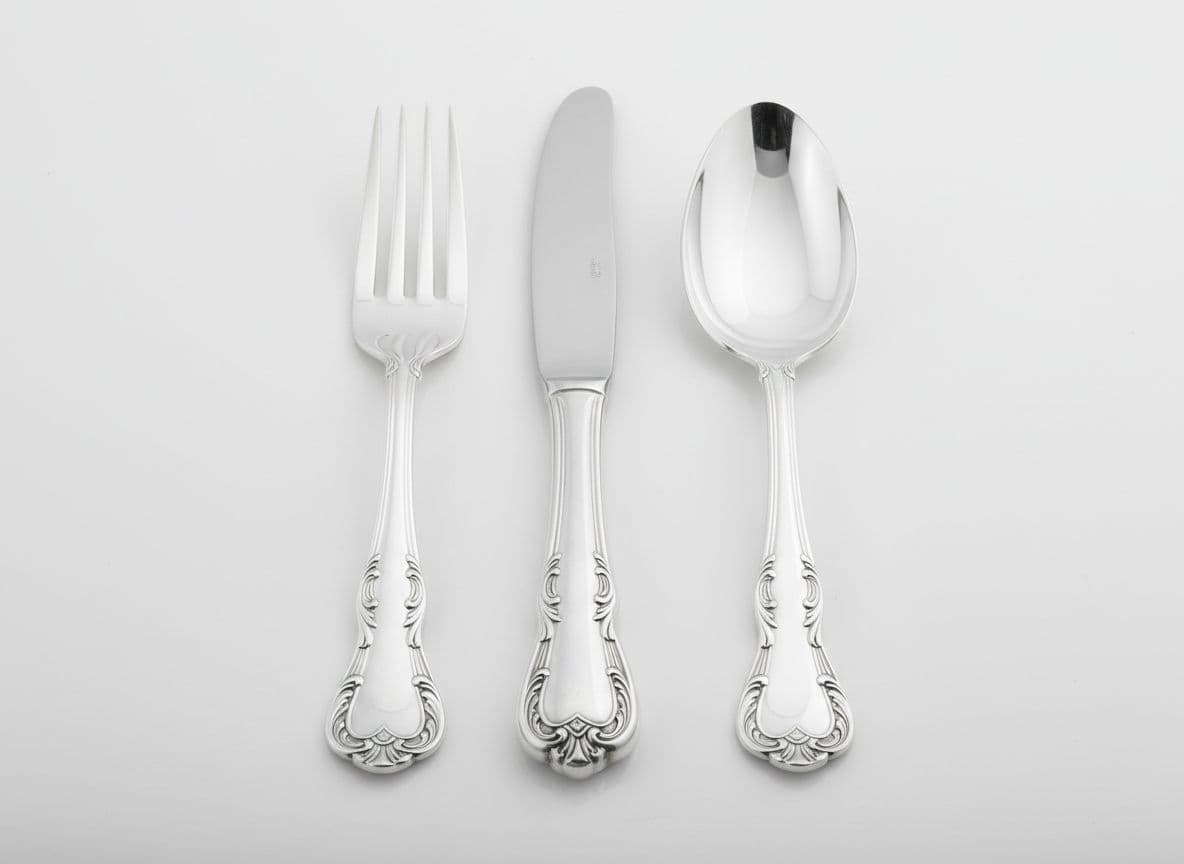
Many households have silverware tucked away in drawers and cabinets without knowing whether it's valuable sterling silver or relatively worthless silver plate. Sterling silver flatware has both a precious metal melt value and a collector/retail value that can be significantly higher. A complete set of sterling flatware in a desirable pattern can be worth $2,000-$15,000+, while even individual serving pieces from premium makers fetch $50-$500 each. Silver-plated items look identical to sterling but contain only a thin layer of silver and are worth far less. Properly identifying and valuing your silver prevents costly mistakes when selling.
Key Factors That Affect Silverware Value
Understanding what drives the price of silverware helps you get the most accurate valuation.
Sterling vs. Silver Plate
This is the single most important distinction. Sterling silver (marked 925 or 'Sterling') contains 92.5% pure silver and has significant intrinsic value. Silver plate (marked EPNS, A1, or 'Silver Plate') has only a thin silver coating over base metal and minimal melt value. Our AI can help identify markings.
Maker & Pattern
Silver from prestigious makers like Tiffany & Co., Georg Jensen, Gorham, Reed & Barton, and Wallace commands higher prices. Within each maker, certain patterns are more desirable. Tiffany's Chrysanthemum pattern, for example, commands much higher prices per piece than their simpler patterns.
Weight & Piece Count
Sterling silver has a base melt value determined by weight and current silver spot prices.complete sets with place settings for 8 or 12, plus serving pieces, are worth more than incomplete sets. Individual pieces are valued based on size, function, and pattern desirability.
Age & Rarity
Antique silver (pre-1900) often carries a premium above melt value, especially pieces by notable silversmiths. American coin silver (pre-1860) pieces, Georgian-era English silver, and colonial-period silver are particularly valuable. Rare patterns or limited production pieces command collector premiums.
Condition & Monograms
Deep scratches, dents, and repairs reduce value. However, normal wear from use is expected on antique silver. Monograms are controversial - they reduce value for some buyers by 20-30% but add historical interest for others. Removal of monograms by buffing thins the silver and can reduce value further.
Tips for Valuing Silverware
Get the most accurate valuation by following these tips when photographing your silverware.
Photograph any hallmarks, stamps, or markings on the back of pieces - these identify maker and silver content
Show the overall set laid out to demonstrate completeness
Include close-ups of any monograms, damage, or wear
If possible, note the pattern name - it's often stamped on the back or can be found on the original box
Silverware Market Insights
The sterling silver market is influenced by both the precious metal spot price and collector demand. Sterling flatware values have softened somewhat as formal dining has declined, but premium patterns from top makers remain strong. The melt value of silver provides a reliable floor price that fluctuates with commodity markets. Georg Jensen silver has seen strong appreciation, with vintage pieces selling for multiples of their silver content value. The market for silver hollowware (tea sets, bowls, candlesticks) varies by maker and style - Art Deco and Mid-Century Modern designs are currently in high demand. Silver-plated items have minimal resale value unless they're from highly regarded makers or feature exceptional craftsmanship.
Notable Silverware Values
Real-world examples of what specific silverware have sold for, so you can benchmark your own.
| Silverware | Condition | Typical Value |
|---|---|---|
| Gorham Chantilly Sterling Silver Flatware Set (12-place) | Used / Complete | $1,500 - $4,000 |
| Reed & Barton Francis I Sterling Silver Flatware Set (8-place) | Used / Complete | $1,200 - $3,500 |
| Tiffany & Co. Chrysanthemum Sterling Silver Dinner Fork (single) | Authenticated | $150 - $350 |
| Wallace Grand Baroque Sterling Silver Flatware (per piece) | Used | $30 - $120 |
| Georg Jensen Acorn (Konge) Sterling Silver Flatware Set | Used / Partial | $2,000 - $8,000+ |
| International Silver Silverplate Flatware Set (service for 8) | Used | $20 - $80 |
| Antique Victorian Sterling Silver Tea Set (4-piece) | Authenticated | $800 - $3,000 |
| Gorham Sterling Silver Serving Spoon (large, 19th century) | Used | $60 - $200 |
| Rogers Bros. Silverplate Serving Pieces (per piece) | Used | $5 - $30 |
Based on eBay sold listings, live auction records (Replacements Ltd., Heritage Auctions), and silver dealer secondary market data.
Find Out What Your Silverware Are Worth
Upload a photo now and get a free AI-powered valuation in seconds. No sign-up required.
Silverware Valuation FAQ
How can I tell if my silverware is sterling silver or silver plated?
Look for markings on the back of each piece. Sterling silver is marked 'Sterling,' '925,' or '.925.' Silver plate is typically marked 'EPNS' (Electroplated Nickel Silver), 'Silver Plate,' 'A1,' or 'Quadruple Plate.' Some antique silver has hallmarks that indicate origin and purity. If there are no markings, a simple magnet test can help - sterling silver is not magnetic.
Is silver-plated silverware worth anything?
Silver-plated items have minimal precious metal value. However, pieces from premium makers (Christofle, Elkington, Reed & Barton) in excellent condition can have decorative value of $5-50 per piece.complete silver-plated sets in original cases might sell for $50-200. The exception is antique Sheffield plate (pre-1840 hand-plated silver), which can be quite valuable.
Should I polish my silver before getting it valued?
Light polishing with proper silver polish is fine and can improve appearance. However, for antique silver, the patina (tarnish) can actually be desirable to collectors and should not be aggressively removed. Never use abrasive cleaners, steel wool, or dip solutions on valuable silver. For AI valuation purposes, even tarnished silver can be accurately assessed.
How much is a complete set of sterling silver flatware worth?
A complete sterling set for 8-12 place settings with serving pieces typically weighs 80-150 troy ounces and has a melt value of $2,000-$4,000+ at current silver prices. Retail and collector value is usually higher, ranging from $3,000-$15,000+ depending on maker and pattern. Premium patterns from Tiffany, Georg Jensen, and Gorham can be worth significantly more.
Silverware Price Guides
Silverware Guides & Articles
Value anything, anytime
Unlimited valuations, saved history and full reports in the free app.