Last updated: September 2026
How Much Is My Gold Bar Worth?
Gold bars are valued primarily by weight and purity, with prices tied directly to the gold spot price. A 1 oz gold bar is worth approximately $2,300-$2,800+ at current prices. Enter your bar's details for an accurate valuation based on today's market.
Get the free app for unlimited scans


Compare real prices
See what gold bars are listed for right now
Affiliate link: we earn a commission if you buy, at no extra cost to you.
Gold Bars Value Calculator
Fill in the details below for an accurate estimate
Get the free app for unlimited scans
Why Knowing Your Gold Bars Value Matters
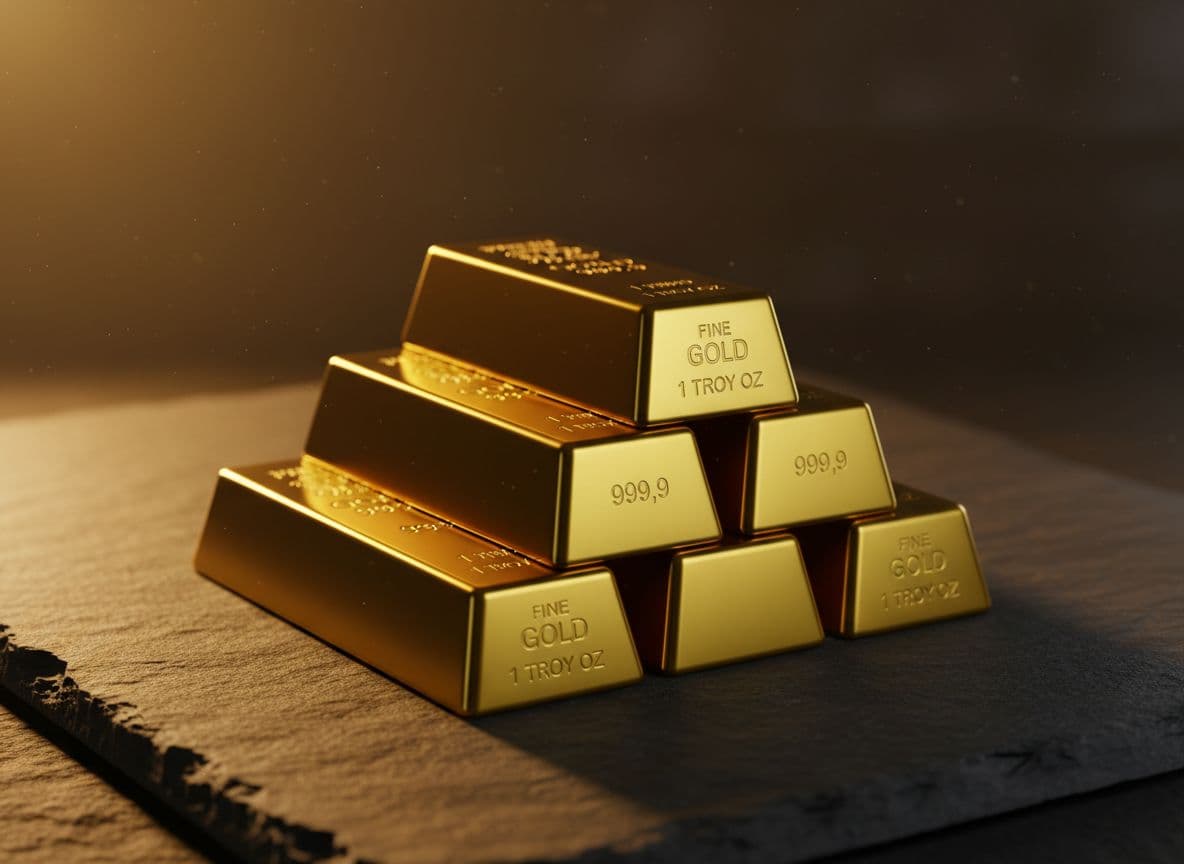
Gold bars are one of the most straightforward investments to value. Their worth is directly tied to gold spot prices plus a small premium for fabrication and dealer markup. However, premiums vary significantly between bar sizes, brands, and dealers. A 1 oz gold bar from a recognized mint (PAMP, Valcambi, Perth Mint) sells for a lower premium than a no-name bar. Understanding premiums and spreads helps you buy and sell gold bars at the best prices.
Key Factors That Affect Gold Bars Value
Understanding what drives the price of gold bars helps you get the most accurate valuation.
Weight
Common sizes: 1 gram (~$80-$100), 5 gram (~$400-$500), 10 gram (~$780-$950), 1 oz (~$2,300-$2,800), 100 gram (~$7,500-$9,000), 1 kilogram (~$75,000-$90,000). Larger bars have lower per-ounce premiums but require more capital.
Purity
Investment-grade gold bars are .9999 fine (24 karat, 99.99% pure gold). Some older or specialty bars are .999 or .995 fine. Higher purity commands slightly higher prices. Always verify purity markings stamped on the bar.
Brand & Mint
PAMP Suisse, Valcambi, Perth Mint, Royal Canadian Mint, and Heraeus command the lowest premiums and easiest resale. Lesser-known brands or generic bars may trade at slight discounts. LBMA-accredited refiners produce the most widely accepted bars.
Spot Price
Gold spot price fluctuates throughout trading hours based on global markets. Bar value moves in real-time with spot. Check the current spot price and multiply by weight in troy ounces to get the melt value. Dealer premiums are added on top.
Assay Card & Packaging
Bars in original sealed assay cards (tamper-evident packaging with serial number) sell faster and at higher premiums. Bars removed from assay packaging may need to be re-assayed before sale, adding cost. Keep bars in original packaging whenever possible.
Tips for Valuing Gold Bars
Get the most accurate estimate by following these tips when evaluating your gold bars.
Note the weight in grams or troy ounces stamped on the bar
Check the purity marking (.9999, .999, etc.)
Keep the bar in its original assay card/packaging for best resale value
Identify the manufacturer/mint stamped on the bar
Gold Bars Market Insights
Gold has hit record highs in 2025-2026, driven by central bank buying, geopolitical uncertainty, and inflation concerns. Gold bars remain the most cost-efficient way to invest in physical gold due to their low premiums over spot. Online dealers (JM Bullion, APMEX, SD Bullion) have made buying and selling gold bars more accessible and transparent. The spread between buy and sell prices has compressed as competition has increased.
Find Out What Your Gold Bars Are Worth
Upload a photo now and get a free AI-powered valuation in seconds. No sign-up required.
Gold Bars Valuation FAQ
How much is a 1 oz gold bar worth?
A 1 troy ounce gold bar is worth the current gold spot price plus a dealer premium of 2-5%. At current prices, that's approximately $2,300-$2,800. The exact value changes with the spot price throughout the trading day.
Where can I sell gold bars?
Online precious metals dealers (JM Bullion, APMEX, SD Bullion), local coin shops, and pawn shops all buy gold bars. Online dealers typically offer the best prices. For large quantities, direct contact with LBMA-accredited refiners may yield the best rates.
Are smaller gold bars worth buying?
Smaller bars (1g, 5g, 10g) have higher premiums per ounce (10-20% over spot) compared to 1 oz bars (2-5% over spot). They're more affordable to start but less cost-efficient. For investment purposes, 1 oz bars offer the best balance of cost-efficiency and affordability.
How do I know if my gold bar is real?
Check weight (should match stamped weight precisely), dimensions (published specs for each brand), and magnetism (gold is not magnetic). Recognized brands with serial numbers and assay cards provide the best assurance. For high-value bars, professional assay testing is recommended.
Do gold bars increase in value?
Gold bars increase in value when the gold spot price rises. Gold has historically appreciated 7-10% annually over long periods and serves as an inflation hedge. However, gold prices can be volatile in the short term and don't pay dividends or interest.
Value anything, anytime
Unlimited valuations, saved history and full reports in the free app.