Last updated: September 2026
How Much Are Walking Liberty Half Dollars Worth?
Check current market values, learn what affects pricing, and get tips for buying and selling.
← All Walking Liberty Half Dollar valuationsWhat do you want to value?
Get the free app for unlimited scans


Walking Liberty Half Dollars Price Guide
Current market values based on recent sales data and market trends.
| Item | Condition | Price Range |
|---|---|---|
| 1921 | G-4 | $180 - $260 |
| 1921-D | G-4 | $400 - $550 |
| 1921-S | VF-20 | $650 - $950 |
| 1916-S | VG-8 | $130 - $190 |
| 1938-D | VF-20 | $90 - $140 |
| 1917-D Obverse Mint Mark | F-12 | $55 - $85 |
| 1934-1947 common dates | Circulated | $13 - $18 |
| 1941-1945 common dates | MS-63 | $45 - $70 |
| 1942 or 1943 | MS-65 | $140 - $220 |
| 1947-D | MS-65 | $150 - $250 |
What Determines Walking Liberty Half Dollars Value
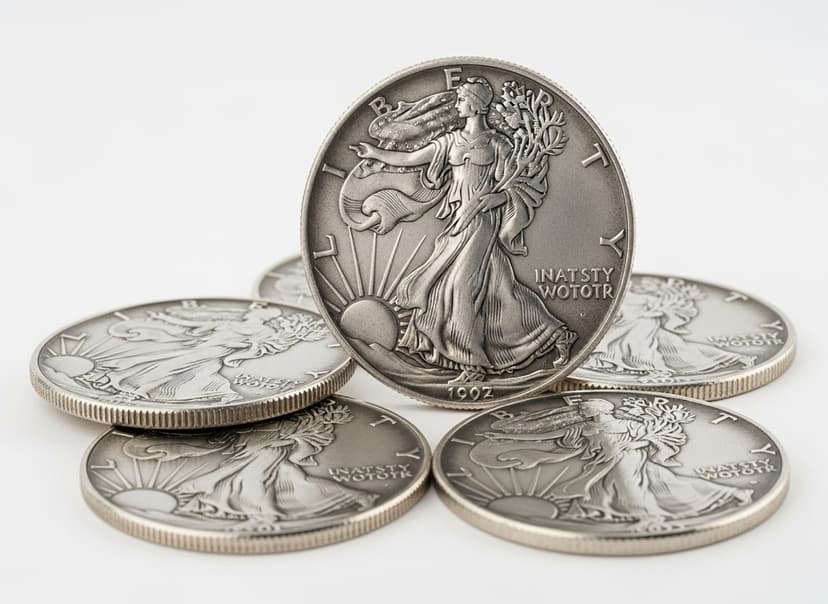
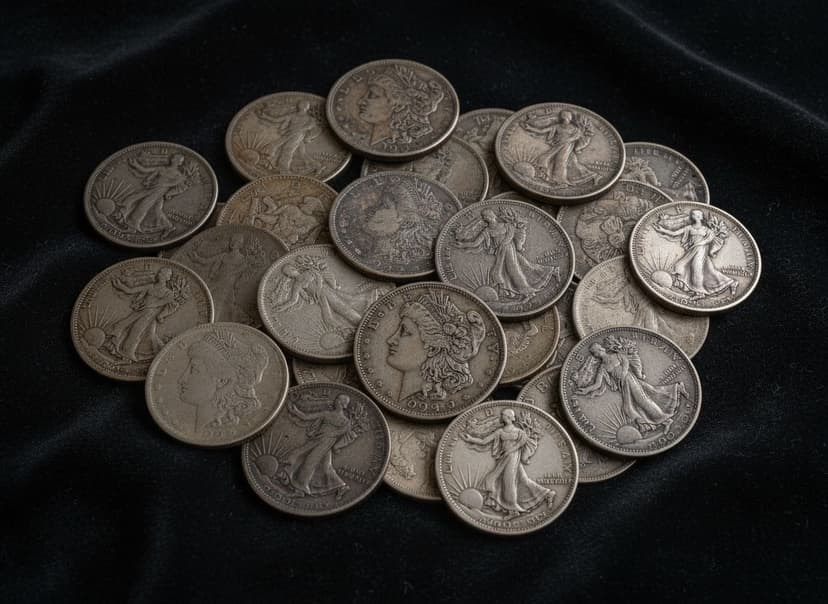
Adolph Weinman's Walking Liberty half dollar is widely considered the most beautiful US circulating coin ever struck, which is why the design was revived for the American Silver Eagle. It ran from 1916 to 1947 in 90% silver, giving each coin 0.3617 troy ounces of pure silver, and that silver floor supports the price of every common date. The series divides cleanly into two eras. The early dates from 1916 through 1933 include all of the keys, with the three 1921 issues and the 1916-S standing well above everything else. The later dates from 1934 through 1947, often called the short set, were struck in large numbers and are affordable even in mint state, which makes them the standard entry point for new collectors. Strike quality is a chronic issue across the series, particularly on Liberty's left hand and the branch details.
Silver content sets a hard floor around melt for every common date, so the short set from 1934 to 1947 rarely trades far below bullion. Above that, date and mint mark do the heavy lifting: the 1921 trio and 1916-S carry premiums that dwarf the rest of the series. Grade drives price steeply in mint state, and the market pays a large premium for a full strike, meaning complete detail in Liberty's left hand, the skirt lines, and the eagle's breast feathers. Weakly struck San Francisco coins from the 1940s are common and sell for far less than sharply struck Philadelphia examples in the same technical grade. Original luster and attractive natural toning add real money, while cleaning, rim damage, and scratches on the large open fields subtract heavily.
Buying & Selling Tips
Buying
Buy the short set in circulated grades as an inexpensive way to own the design. Common dates trade close to silver melt.
For key dates, insist on PCGS or NGC holders. Added mint marks and altered dates on 1921 coins are a known problem.
Judge strike separately from grade. An MS-64 with a full hand often outsells an MS-65 with a flat one.
Watch the 1917 issues carefully. Obverse and reverse mint mark varieties exist and carry different prices.
Buy raw common dates by the roll from bullion dealers rather than individually from collectors. The premium is much lower.
Selling
Separate keys from common dates before selling. A dealer buying a mixed bag will price the whole lot near melt.
Sell common circulated halves by weight to a bullion buyer and reserve individual listings for anything MS-63 or better.
Have key dates certified. The authentication alone widens your buyer pool because collectors will not bid on raw 1921 coins.
Mention strike quality explicitly in listings. Buyers search for full head, full hand, and full skirt line descriptions.
Do not dip or clean toned coins. Attractive original toning on this design is one of the few things that beats melt by a wide margin.
Walking Liberty Half Dollars FAQ
How much silver is in a Walking Liberty half dollar?
Each coin is 90% silver and 10% copper, weighing 12.5 grams total, which works out to 0.3617 troy ounces of pure silver. That silver content is what sets the minimum value for common dates.
Which Walking Liberty half dollars are the most valuable?
The 1921, 1921-D, and 1921-S are the key dates, with the 1921-D having the lowest mintage at 208,000. The 1916-S and 1938-D are the main semi-keys. In gem mint state, any of these can reach five figures.
What is the Walking Liberty short set?
It is the run of dates from 1934 through 1947, which were struck in much larger quantities than the early issues. Collectors assemble it because it is affordable in mint state while still showing the complete design.
Where is the mint mark on a Walking Liberty half?
From 1916 through part of 1917 it appears on the obverse below IN GOD WE TRUST. From 1917 onward it moved to the reverse, at the lower left below the branch. Philadelphia coins have no mint mark.
Are worn Walking Liberty halves worth anything?
Yes. Even a heavily worn common date is worth its silver content, typically $13 to $18 depending on spot prices. Key dates retain strong collector premiums even in Good condition.
Got Walking Liberty Half Dollars to Value?
Upload a photo and get a free AI-powered valuation in seconds. No sign-up required.