Last updated: September 2026
How Much Is a Silver Certificate Worth?
Check current market values, learn what affects pricing, and get tips for buying and selling.
← All Silver Certificate valuationsWhat do you want to value?
Get the free app for unlimited scans


Silver Certificates Price Guide
Current market values based on recent sales data and market trends.
| Item | Condition | Price Range |
|---|---|---|
| 1957 / 1957A / 1957B $1 | Circulated | $1.50 - $3 |
| 1957 $1 | Crisp Unc (CU) | $8 - $15 |
| 1935 series $1 (all letters) | Circulated | $2 - $5 |
| 1935A $1 Star Note | VF | $12 - $30 |
| 1935A HAWAII $1 | VF | $45 - $90 |
| 1935A North Africa $1 | VF | $60 - $130 |
| 1928 $1 Funnyback | VF | $25 - $50 |
| 1928C / 1928D / 1928E $1 | VF | $120 - $450 |
| 1934 $5 Silver Certificate | VF | $14 - $28 |
| 1896 $1 Educational Series | VF | $700 - $1,400 |
What Determines Silver Certificates Value
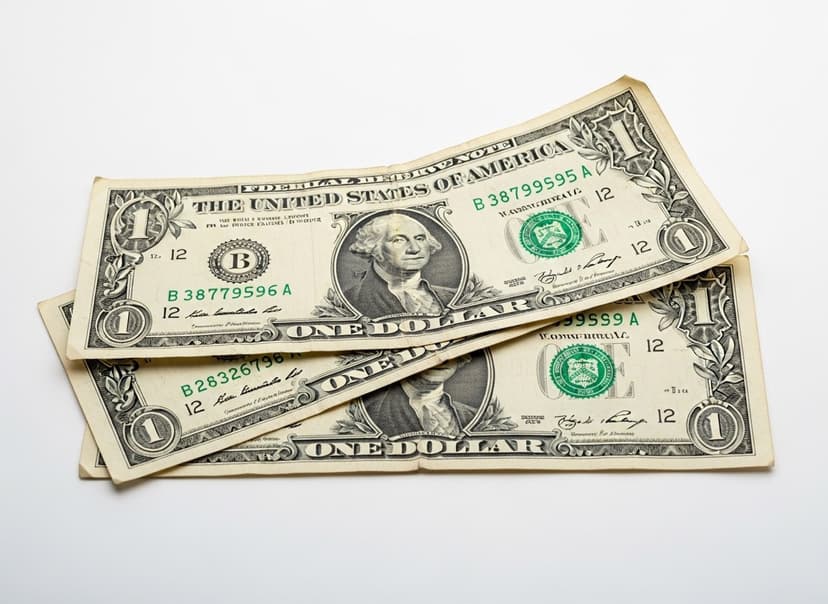
Silver certificates are US paper money that once promised redemption in silver on demand, identifiable at a glance by their blue Treasury seal and blue serial numbers. Redemption ended in 1968, so today they are collectible currency rather than a claim on metal. The critical thing to understand is that the small-size series from 1935 and 1957 were printed in the billions, so a circulated $1 silver certificate from those years is worth only a small premium over face value, typically a dollar or two. Real money starts with earlier large-size notes, the 1928 series, star notes replacing misprints, low or fancy serial numbers, and the wartime emergency issues: the 1935A HAWAII overprint for the Pacific theater and the yellow-seal North Africa notes. Grade is decisive in paper money, and the gap between a folded note and a crisp uncirculated one is enormous.
Condition dominates paper money value more than almost any other collectible. The grading ladder runs from Good through Very Fine to Crisp Uncirculated, and a single hard center fold can cut a note's value by half. Series year and sub-series letter come next, with the late 1928 letters and the 1933 series being genuinely scarce while 1935 and 1957 are commodity notes. Star notes, which replaced sheets damaged during printing, carry a consistent premium across every series. Serial number novelty is its own market: solid digits, ladders, radars, and very low numbers under 100 can multiply value regardless of series. Wartime overprints and unusual seal colors are the last major driver. Tears, pinholes, writing, tape, and washing all reduce value sharply and cannot be undone.
Buying & Selling Tips
Buying
Buy the highest grade you can afford rather than more notes. In currency, one crisp note usually outperforms five circulated ones.
Handle notes only by the edges and store them in Mylar currency sleeves, not PVC, which yellows and sticks over time.
Check every note for a star at the end of the serial number before dismissing it as common.
For HAWAII and North Africa notes, buy graded examples from PMG or PCGS Banknote. Both are counterfeited by altering ordinary 1935A notes.
Original sealed packs of 1957 $1 certificates are a cheap way to get consecutive crisp uncirculated notes.
Selling
Do not press, iron, or wash a note to improve its look. Graders detect it immediately and label the note as altered.
Have anything you believe is worth over $150 professionally graded. Encapsulated notes sell faster and higher.
Scan both sides at high resolution on a flat surface. Currency buyers judge folds and corners entirely from images.
Sell common 1935 and 1957 notes in bulk lots of twenty or more. Individually they are not worth the listing effort.
Fancy serial numbers deserve their own listing with the pattern spelled out in the title, since specialist collectors search by pattern.
Silver Certificates FAQ
Can you still redeem a silver certificate for silver?
No. Redemption for silver bullion ended on June 24, 1968. Silver certificates remain legal tender at face value, but their worth today is entirely collector-driven.
How much is a 1957 $1 silver certificate worth?
A circulated one is worth about $1.50 to $3. In crisp uncirculated condition it rises to $8 to $15. Over five billion were printed across the 1957, 1957A, and 1957B series, so they are extremely common.
What makes a silver certificate valuable?
Crisp uncirculated condition, a star in the serial number, an early or scarce series letter such as 1928C through 1928E, a wartime HAWAII or North Africa overprint, or a novelty serial number. Any one of these can turn a $2 note into a $50 to $500 note.
What is a star note silver certificate?
When a sheet was damaged during printing, the Bureau of Engraving replaced it with a note bearing a star at the end of the serial number. Star notes were printed in much smaller quantities and typically sell for five to ten times a regular note of the same series and grade.
Why does my silver certificate have a blue seal?
Blue seals and blue serial numbers identify silver certificates, distinguishing them from green-seal Federal Reserve Notes and red-seal United States Notes. Brown and yellow seals mark the special WWII Hawaii and North Africa issues.
Got Silver Certificates to Value?
Upload a photo and get a free AI-powered valuation in seconds. No sign-up required.