Last updated: September 2026
How Much Is Jade Worth?
Check current market values, learn what affects pricing, and get tips for buying and selling.
← All Jade valuationsWhat do you want to value?
Get the free app for unlimited scans


Jade Price Guide
Current market values based on recent sales data and market trends.
| Item | Condition | Price Range |
|---|---|---|
| Imperial jadeite bangle, Type A | Vivid green, translucent | $30,000 - $500,000+ |
| Fine jadeite bangle, Type A | Good green, semi-translucent | $3,000 - $25,000 |
| Commercial jadeite bangle, Type A | Pale or mottled | $200 - $1,500 |
| Jadeite pendant, Type A | Good green | $400 - $6,000 |
| Lavender jadeite, Type A | Even color | $800 - $15,000 |
| Type B jadeite (bleached, filled) | Any | 5% - 15% of Type A |
| Type C jadeite (dyed) | Any | $20 - $200 |
| Nephrite jade carving | Good quality | $100 - $2,500 |
| Antique Chinese nephrite (Qing) | Documented | $2,000 - $80,000 |
| Serpentine sold as jade | Any | $10 - $80 |
What Determines Jade Value
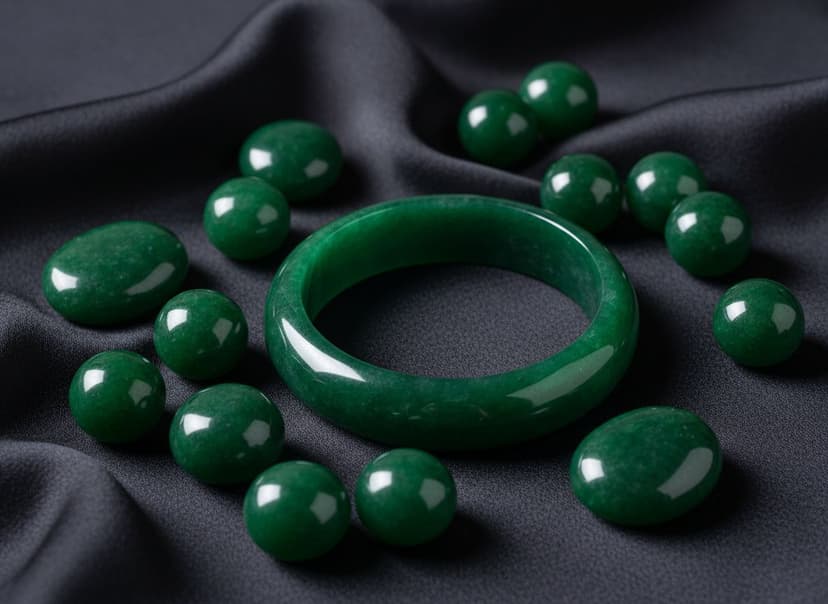
Jade is two different minerals sold under one name, and confusing them is the most expensive mistake in this category. Jadeite is the rarer and far more valuable of the two, found principally in Myanmar, and it is what the market means when it talks about imperial jade. Nephrite, historically the jade of Chinese carving traditions and also found in Canada, New Zealand, and Siberia, is tougher but far more common and typically sells for a small fraction of jadeite prices. The second essential distinction is the treatment grading system. Type A jade is natural and untreated apart from waxing. Type B has been acid-bleached and polymer-impregnated to remove brown staining, which makes it look better initially but degrades over years. Type C is dyed. Type B and C jade sells for a tiny fraction of Type A and is extremely common in tourist and online markets, which is why certification from a recognized laboratory is essential above a few hundred dollars.
Species comes first, and jadeite versus nephrite is a difference of one to two orders of magnitude in price for comparable pieces. Within jadeite, color is the primary driver, with intense emerald green, called imperial, at the top, followed by lavender, then white, yellow, and black. Translucency is nearly as important as color, since the finest jade allows light to pass and appears to glow from within. Texture matters and is judged by how fine and even the crystalline structure appears; a coarse granular texture reduces value substantially. Treatment grade is the variable most likely to destroy value unexpectedly, so Type A certification is critical. For carved pieces and antiques, workmanship and provenance can exceed material value entirely. Finally, size and thickness matter for bangles, where solid one-piece construction from a single boulder is far more valuable than a pieced or thin band.
Buying & Selling Tips
Buying
Require a Type A certificate from a recognized gemological laboratory. Treated jade is extremely common and visually convincing when new.
Learn the difference between jadeite and nephrite before shopping. Sellers use the word jade loosely and the price gap is enormous.
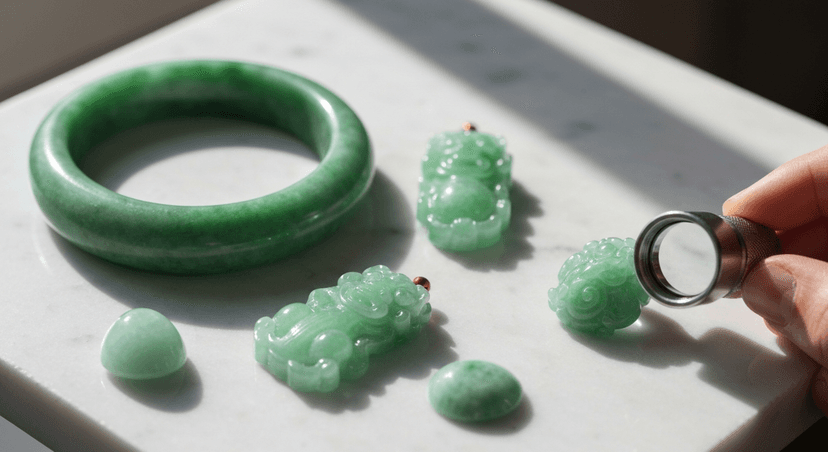
Check translucency by holding the piece against a light source. Glow through the material is a strong quality indicator.
Inspect for dye concentration in fractures under magnification. It is the clearest sign of a Type C stone.
Buy bangles cut from a single piece. Pieced or reconstructed bangles are worth far less and the joins are visible on close inspection.
Selling
Get certification before selling anything you believe is Type A. Buyers assume treatment by default and discount accordingly.
Sell fine jadeite through Asian auction houses or specialist dealers. Western general markets consistently undervalue high-grade jade.
Photograph with backlighting to show translucency. It is the single most persuasive image for a quality piece.
Do not polish or re-wax an antique carving. Original surface and patina matter to collectors of Chinese jade.
Provide any provenance documentation for antiques. For Qing and earlier pieces, history can be worth more than the material.
Jade FAQ
What is the difference between jadeite and nephrite?
They are two distinct minerals. Jadeite is rarer, harder to source, and found mainly in Myanmar, and it is what commands high prices. Nephrite is more common and tougher, used historically in Chinese carving, and typically sells for a small fraction of jadeite prices.
What does Type A jade mean?
Type A is natural jadeite that has not been chemically treated beyond surface waxing. Type B has been acid-bleached and resin-impregnated, and Type C has been dyed. Only Type A holds long-term value.
How can I tell if my jade is real?
Real jade feels cool and dense, resists scratching by a steel blade, and produces a clear ringing tone when struck. However, distinguishing treated jadeite from natural requires laboratory testing, so certification is the only reliable answer for a valuable piece.
What is imperial jade?
Imperial jade is the trade term for the finest jadeite: intensely saturated emerald green with high translucency and a fine, even texture. Top examples sell for tens of thousands of dollars per piece and rare bangles have exceeded a million at auction.
Does jade increase in value over time?
Fine Type A jadeite has appreciated substantially over the past two decades, driven by demand from Chinese collectors and constrained Burmese supply. Treated jade and commercial-grade nephrite have not.
Got Jade to Value?
Upload a photo and get a free AI-powered valuation in seconds. No sign-up required.