Last updated: September 2026
How Much Is a Diamond Worth Per Carat?
Check current market values, learn what affects pricing, and get tips for buying and selling.
← All Diamonds valuationsWhat do you want to value?
Get the free app for unlimited scans


Diamond Price Per Carat Price Guide
Current market values based on recent sales data and market trends.
| Item | Condition | Price Range |
|---|---|---|
| 0.50 ct, G color, VS2, ideal cut | Natural, GIA | $1,100 - $1,800 per carat |
| 1.00 ct, G color, VS2, ideal cut | Natural, GIA | $4,500 - $7,000 per carat |
| 1.00 ct, D color, IF, ideal cut | Natural, GIA | $14,000 - $22,000 per carat |
| 1.00 ct, J color, SI2 | Natural, GIA | $2,800 - $4,200 per carat |
| 2.00 ct, G color, VS2 | Natural, GIA | $9,000 - $15,000 per carat |
| 3.00 ct, G color, VS2 | Natural, GIA | $16,000 - $26,000 per carat |
| 1.00 ct lab-grown, G, VS2 | Lab, IGI | $500 - $1,100 per carat |
| 2.00 ct lab-grown, G, VS2 | Lab, IGI | $700 - $1,600 per carat |
| Natural diamond resale | Any size | 25% - 40% of retail |
| Lab-grown diamond resale | Any size | 0% - 15% of retail |
What Determines Diamond Price Per Carat Value
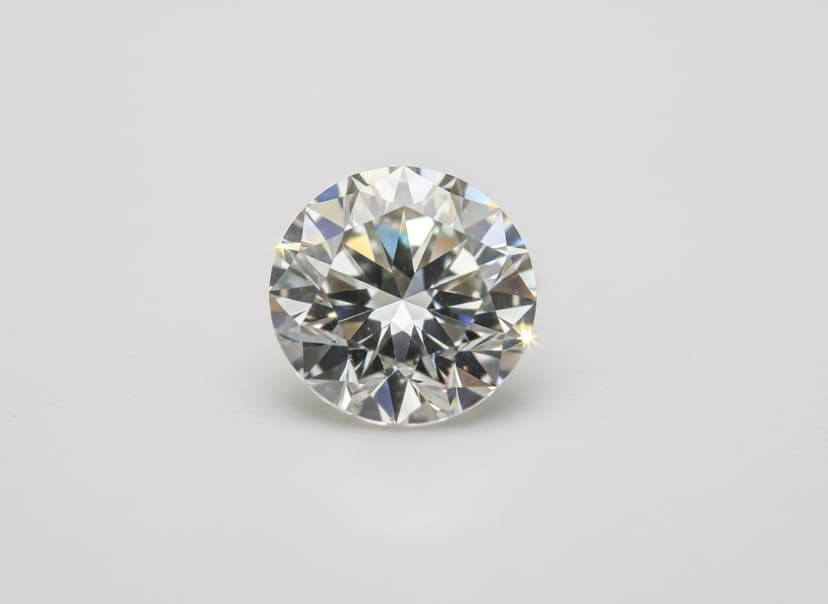
Diamond pricing is not linear with size, and that single fact explains most of the confusion buyers have. A two carat diamond is not twice the price of a one carat; it is typically three to four times, because larger rough is exponentially scarcer. Price per carat jumps at psychological weight thresholds, so a 0.99 carat stone can cost twenty percent less per carat than a 1.01 carat stone of identical quality. The other structural change in this market is lab-grown diamonds, whose prices have collapsed roughly eighty percent since 2020 as production capacity expanded. A lab-grown stone that cost $4,000 in 2019 might cost $700 today, and lab-grown resale value is effectively near zero. Natural diamond resale is also far below retail, typically twenty-five to forty percent of what was paid, because retail markup and the absence of a consumer secondary market both work against the seller.
The four Cs remain the framework, but their influence is uneven. Carat weight drives price exponentially rather than proportionally, and crossing a whole-carat threshold adds a step change. Cut quality affects both beauty and price by roughly fifteen to twenty percent between excellent and fair, and it is the only C that a buyer can perceive without training. Color grades from D to Z, with the visible difference between adjacent grades being minimal and the price difference substantial, which is why G through I offers the best value. Clarity matters mostly at the extremes, since most VS2 and many SI1 stones are eye-clean and look identical to a flawless stone in the ring. Certification laboratory matters enormously: GIA and AGS grade strictly while some other labs grade two or three steps looser, which makes a cheap certificate a warning rather than a bargain. Fluorescence, shape, and whether the stone is natural or lab-grown all shift price materially.
Buying & Selling Tips
Buying
Buy just under whole-carat weights. A 0.90 or 1.90 carat stone costs meaningfully less per carat and looks nearly identical.
Insist on GIA or AGS certification. Reports from looser labs routinely overstate color and clarity by two grades or more.
Prioritize cut over color and clarity. Cut is what makes a diamond sparkle and it is the only difference most people actually see.
Consider G through I color and VS2 to SI1 clarity. That range delivers eye-clean, white-looking stones at a fraction of top-grade prices.
Understand that lab-grown is a consumption purchase, not an asset. Prices continue to fall and resale is effectively zero.
Selling
Expect twenty-five to forty percent of retail. Diamond retail includes large markup that no secondary buyer will reimburse.
Get the GIA report before shopping the stone. Buyers discount uncertified diamonds heavily and will not take your word on grade.
Compare offers from diamond buyers, auction houses, and consignment jewelers. Spreads between them are unusually wide.
Consider selling the setting separately if it is a recognized designer piece. Branded settings sometimes hold more value than the stone.
Avoid mall jewelers and cash-for-gold shops. They price on melt and pay the least for the diamond itself.
Diamond Price Per Carat FAQ
How much is a 1 carat diamond worth?
A natural 1 carat round in G color, VS2 clarity with an ideal cut typically retails for $4,500 to $7,000. The same stone in D color and internally flawless can reach $22,000, while a J color SI2 might cost $2,800.
Why is a 2 carat diamond more than twice the price of a 1 carat?
Large rough diamonds are exponentially scarcer than small ones, so price per carat rises with size. A 2 carat stone typically costs three to four times a comparable 1 carat, not twice.
Are lab-grown diamonds worth anything?
As jewelry, yes; as an asset, essentially no. Lab-grown prices have fallen roughly eighty percent since 2020 as production scaled, and the secondary market pays close to nothing because new stones are so cheap.
How much can I sell my diamond for?
Typically twenty-five to forty percent of what you paid at retail. Retail prices include substantial markup, and there is no liquid consumer resale market to recover it. Auction can do better for stones above three carats.
Which of the four Cs matters most?
Cut, because it determines how the diamond actually looks. A well-cut stone in G color with VS2 clarity outperforms a poorly cut D flawless stone visually, and costs far less.
Related Articles
Got Diamond Price Per Carat to Value?
Upload a photo and get a free AI-powered valuation in seconds. No sign-up required.