Last updated: September 2026
How Much Will My Electric Bill Be?
Electricity costs are a major household expense that varies dramatically by location, home size, and usage patterns. Our calculator uses your home's square footage, state, heating/cooling system type, and number of occupants to estimate your monthly electric bill. Whether you're moving to a new state and want to budget for utilities, comparing the cost of different home sizes, or trying to understand why your bill seems high, getting an accurate estimate helps you plan your monthly budget and identify potential savings opportunities.
Get the free app for unlimited scans


Electric Bill Estimate Value Calculator
Fill in the details below for an accurate estimate
Why Knowing Your Electric Bill Estimate Value Matters
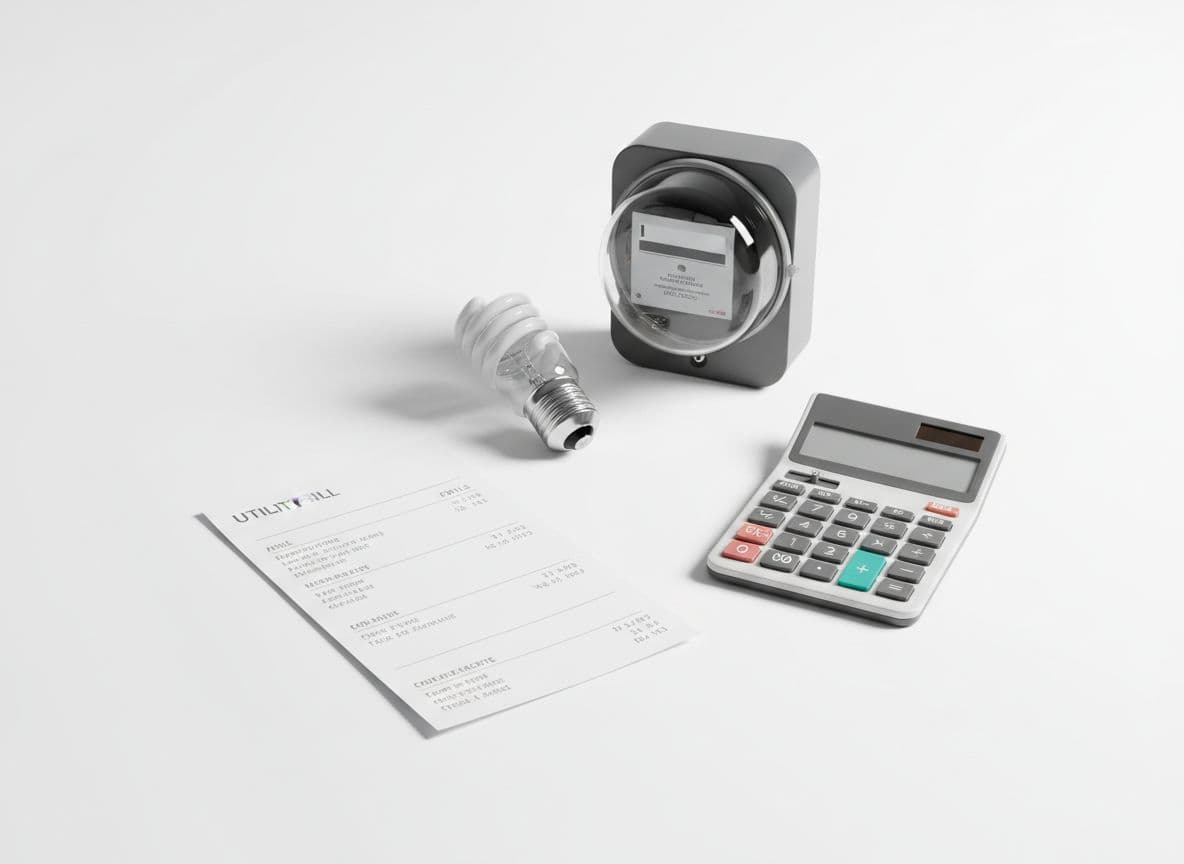
The average American household spends approximately $150-$170 per month on electricity, but actual bills range from under $80 in states like Utah and Washington to over $250 in states like Hawaii and Connecticut. Home size is a major factor: a 1,000 sqft apartment typically costs $80-$120/month while a 3,000 sqft home runs $180-$350/month depending on location and HVAC type. Air conditioning is the single largest electricity expense in warm climates. Summer electric bills in Texas, Arizona, and Florida often spike to $250-$450/month for average-sized homes. Heating with electricity (heat pumps or electric resistance) can push winter bills to $200-$400/month in cold climates. The number of occupants matters too: each additional person adds roughly $20-$40/month through increased lighting, hot water, laundry, cooking, and device charging. Electric rates vary enormously by state: Hawaii charges an average of $0.43/kWh, Connecticut $0.30/kWh, while Louisiana pays just $0.11/kWh and Idaho $0.10/kWh. Understanding these factors before signing a lease or buying a home prevents budget surprises that can strain finances for years.
Key Factors That Affect Electric Bill Estimate Value
Understanding what drives the price of electric bill estimate helps you get the most accurate valuation.
State & Electric Rate
Electricity rates vary by more than 4x across the US. The most expensive states include Hawaii ($0.43/kWh), Connecticut ($0.30/kWh), Massachusetts ($0.29/kWh), California ($0.28/kWh), and New York ($0.24/kWh). The cheapest states include Idaho ($0.10/kWh), Louisiana ($0.11/kWh), Utah ($0.11/kWh), Washington ($0.11/kWh), and Wyoming ($0.11/kWh). Rate structures also differ: some utilities charge flat rates, others use tiered pricing (higher rates for higher usage), and many have time-of-use rates with peak and off-peak pricing.
Home Size & Insulation
Larger homes cost more to heat, cool, and light. Average monthly electricity costs by home size: 800-1,000 sqft ($80-$120), 1,200-1,500 sqft ($100-$160), 1,800-2,200 sqft ($140-$220), 2,500-3,000 sqft ($180-$300), 3,500+ sqft ($250-$400+). These ranges vary significantly by insulation quality, window efficiency, and building age. A well-insulated newer home can cost 30-50% less to heat and cool than a poorly insulated older home of the same size.
Heating & Cooling System
HVAC type is the single largest variable in electricity consumption. Central AC systems use 3,000-5,000 kWh per cooling season ($300-$600 in electricity). Window units are less efficient but cool smaller spaces. Heat pumps are the most efficient electric heating option, using 30-60% less electricity than electric resistance heating. Homes heated with natural gas or oil have much lower electric bills ($30-$80/month less) since their heating cost appears on a separate gas bill. Homes with all-electric heating in cold climates can see winter bills of $300-$500/month.
Occupancy & Usage Habits
Each additional household member adds approximately $20-$40/month to the electric bill through increased use of lighting, hot water (if electric), laundry, cooking, electronics, and HVAC (more door openings, comfort preferences). Work-from-home occupants add $30-$50/month on average. Energy-intensive habits like running an older refrigerator, using an electric dryer frequently, keeping the thermostat below 72°F in summer, or mining cryptocurrency can add $50-$200+ to monthly bills.
Tips for Valuing Electric Bill Estimate
Get the most accurate estimate by following these tips when evaluating your electric bill estimate.
Enter your home's actual square footage and state for the most accurate estimate. Electricity rates and climate conditions vary dramatically across the US
Consider your heating source when evaluating the estimate. Homes heated with natural gas will have lower electric bills but a separate gas bill of $50-$150/month
Compare the estimate to your actual bills to identify if you're overpaying. Bills significantly above the estimate may indicate efficiency issues, old appliances, or air leaks worth addressing
If moving to a new area, check whether the local utility uses tiered pricing or time-of-use rates, as this can significantly affect your actual bill relative to estimates
Electric Bill Estimate Market Insights
US electricity prices have increased approximately 15-20% over the past five years, driven by infrastructure upgrades, fuel cost volatility, and the transition to renewable energy sources. However, the long-term trend toward LED lighting, efficient appliances, solar panels, and heat pumps is reducing per-household consumption even as rates rise. Solar panel adoption has exploded, with residential installations growing 30%+ annually. Homeowners with solar panels can reduce electric bills by 50-100% and even earn credits through net metering.community solar programs allow renters and homeowners without suitable roofs to access solar savings. Time-of-use (TOU) rate plans are becoming the default in many states, incentivizing consumers to shift heavy usage (EV charging, laundry, dishwashing) to off-peak hours. Electric vehicle ownership adds $30-$70/month to electric bills depending on driving distance and charging habits. Smart home devices, programmable thermostats, and energy monitoring systems are helping consumers optimize usage and reduce bills by 10-25% without sacrificing comfort.
Notable Electric Bill Estimate Values
Real-world examples of what specific electric bill estimate have sold for, so you can benchmark your own.
| Electric Bill Estimate | Condition | Typical Value |
|---|---|---|
| Studio / 1-Bedroom Apartment (1 occupant, mild climate) | Baseline | $40 - $80 |
| 2-Bedroom Apartment (2 occupants, central AC) | Typical | $80 - $140 |
| 1,000-1,500 sq ft Home (2 occupants, moderate climate) | Typical | $100 - $160 |
| 1,500-2,000 sq ft Home (3-4 occupants, electric heat) | Typical | $150 - $250 |
| 2,000-2,500 sq ft Home (4 occupants, hot climate - Texas/Florida) | High Usage | $200 - $350 |
| 2,500-3,500 sq ft Home (4+ occupants, Southeast, no solar) | High Usage | $250 - $450 |
| Large Home 4,000+ sq ft (multi-zone HVAC, EV charging) | Very High Usage | $400 - $700+ |
| Same 2,000 sq ft Home With Rooftop Solar (net metering) | Offset | $10 - $60 |
| Off-Grid Cabin or Tiny Home (solar + battery backup) | Minimal | $0 - $30 |
Based on EIA residential electricity consumption surveys, state utility rate data, and widely reported US household average bills (~$137/month nationally as of recent EIA reports).
Find Out What Your Electric Bill Estimate Are Worth
Upload a photo now and get a free AI-powered valuation in seconds. No sign-up required.
Electric Bill Estimate Valuation FAQ
Why is my electric bill so high?
The most common causes of unexpectedly high electric bills are: (1) Inefficient HVAC system. Older systems or those needing maintenance use 20-40% more electricity. (2) Poor insulation and air leaks. Gaps around windows, doors, and in attic insulation force your HVAC to work harder. (3) Old appliances. A 20-year-old refrigerator uses 2-3x the electricity of a new Energy Star model. (4) Electric water heater. These use 4,000-5,000 kWh/year ($400-$600). (5) Vampire loads. Devices plugged in but not in use draw $100-$200/year in standby power. (6) Thermostat settings. Every degree below 76°F in summer or above 68°F in winter costs 3-5% more. Request an energy audit from your utility (often free) to identify the biggest savings opportunities.
What uses the most electricity in a home?
The biggest electricity consumers in a typical US home are: (1) Heating and cooling. 45-55% of total usage ($80-$180/month). (2) Water heating. 15-20% ($25-$50/month if electric). (3) Refrigerator and freezer. 8-12% ($15-$30/month). (4) Lighting. 8-12% ($10-$25/month). (5) Washer, dryer, and dishwasher. 5-10% ($15-$30/month). (6) Electronics and entertainment. 5-8% ($10-$20/month). (7) Cooking. 3-5% ($5-$15/month). Air conditioning in hot climates can represent up to 60-70% of summer electric bills. Switching to LED bulbs, using a programmable thermostat, and upgrading to Energy Star appliances are the highest-impact efficiency improvements.
How much does electricity cost per state?
Average residential electricity rates by state (per kWh) vary dramatically. Highest: Hawaii ($0.43), Connecticut ($0.30), Massachusetts ($0.29), California ($0.28), Rhode Island ($0.27), New York ($0.24), Alaska ($0.24), New Hampshire ($0.23). Lowest: Idaho ($0.10), Louisiana ($0.11), Utah ($0.11), Washington ($0.11), Wyoming ($0.11), Arkansas ($0.12), Montana ($0.12), Oklahoma ($0.12). The national average is approximately $0.16/kWh. Rates in deregulated states (Texas, Pennsylvania, Ohio) vary by provider and plan. Shopping for the best rate can save 10-30% compared to the default utility rate.
Will solar panels reduce my electric bill?
Yes, solar panels can reduce electric bills by 50-100% depending on system size, roof orientation, local sun exposure, and electricity usage. A typical 8kW residential solar system costs $16,000-$24,000 before the federal 30% tax credit ($11,200-$16,800 after credit) and generates 900-1,300 kWh/month, offsetting most or all of a typical household's consumption.net metering allows homeowners to sell excess electricity back to the grid, earning credits that offset nighttime and winter usage. Solar panels typically pay for themselves in 6-10 years and last 25-30+ years. In states with high electricity rates (California, New York, Massachusetts), the payback period is shorter and lifetime savings are larger.
Similar Valuations
Value anything, anytime
Unlimited valuations, saved history and full reports in the free app.