Last updated: September 2026
How Much Is WWII Memorabilia Worth?
Check current market values, learn what affects pricing, and get tips for buying and selling.
← All Military Memorabilia valuationsWhat do you want to value?
Get the free app for unlimited scans


WWII Memorabilia Price Guide
Current market values based on recent sales data and market trends.
| Item | Condition | Price Range |
|---|---|---|
| US M1 helmet, fixed bale, original | Complete with liner | $250 - $900 |
| US M1 helmet, unit marked | Documented | $600 - $4,000 |
| US enlisted service uniform | Complete with insignia | $120 - $500 |
| US airborne jump jacket | Original, good | $1,200 - $6,000 |
| Common US campaign medal | Original | $15 - $60 |
| Named medal group with documents | Complete | $400 - $5,000 |
| US field gear (canteen, pouches) | Original, dated | $20 - $120 |
| Veteran bring-back grouping | Documented provenance | $800 - $15,000 |
| Trench art and personal items | Good | $40 - $400 |
| Reproduction item | Any | $10 - $80 |
What Determines WWII Memorabilia Value
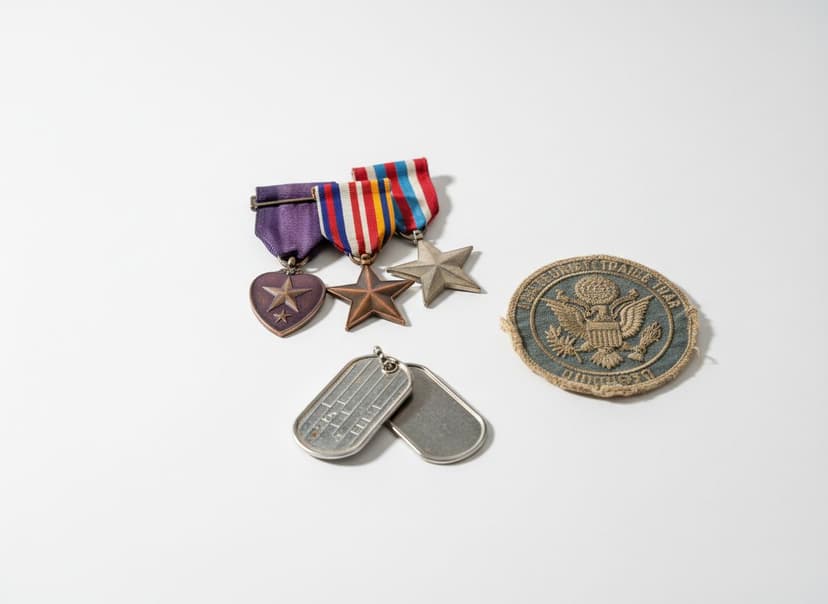
World War II militaria is a large, well-documented collecting field with detailed reference literature and a knowledgeable buyer base. Value depends on nationality, item category, unit attribution, and above all authenticity, because reproductions have been manufactured continuously since the 1960s and some are excellent. American items are the most plentiful given the size of US production and the number of veterans who brought material home, and common US items such as field gear, standard medals, and enlisted uniforms sell for modest sums. Higher values attach to items with documented unit or individual attribution, airborne and specialist equipment, and anything grouping a single veteran's material together. Insignia, patches, and medals are heavily reproduced and require pattern knowledge to authenticate. Sellers should be aware that certain items, including some German-era material, face legal restrictions in several countries and platform bans on many marketplaces regardless of the item's historical nature.
Authenticity is the dominant factor because the reproduction industry has operated for over sixty years and some copies are convincing. Collectors authenticate by examining stitching type, fabric weave, maker and date stamps, and hardware construction against documented originals. Attribution to a specific unit or individual is the largest value multiplier, and a helmet or uniform with documented provenance can be worth many times an anonymous example. Category matters, with airborne, specialist, and elite unit items well above standard infantry issue. Completeness of groupings is highly valued, and a single veteran's uniform, medals, documents, and photographs sold together bring far more than the pieces separately. Condition is graded normally, with moth damage on wool and rust on metal the common problems. Nationality affects both value and legality, and sellers should verify platform policies and local law before listing certain categories.
Buying & Selling Tips
Buying
Learn the reproduction tells for any category you collect. Stitching type, fabric weave, and stamp appearance are the main indicators.
Prioritize items with documented attribution. A named or unit-marked piece is worth many times an anonymous one.
Check maker and date stamps on US field gear. They are stamped on originals and often wrong or absent on copies.
Buy groupings intact when you find them. A single veteran's complete material is worth more together than apart.
Verify local law and platform policy before purchasing certain categories, which face restrictions in several countries.
Selling
Research and document any attribution you have. Unit markings and veteran paperwork multiply value substantially.
Photograph maker stamps, date stamps, stitching, and liner details close up. Those are what buyers use to authenticate.
Sell groupings together rather than splitting them. Breaking up a veteran's material destroys the provenance premium.
Check marketplace policies before listing. Many platforms restrict certain militaria categories regardless of historical context.
Consider a specialist militaria auction for significant material. General marketplaces cannot authenticate and buyers discount accordingly.
WWII Memorabilia FAQ
How can I tell if WWII militaria is authentic?
Examine stitching type, fabric weave, hardware construction, and maker and date stamps against documented originals. Reproductions have been made since the 1960s, so category-specific reference material is essential before buying.
What makes WWII items more valuable?
Documented attribution to a specific unit or veteran is the largest multiplier, often worth several times an anonymous example. Airborne and specialist equipment, and complete single-veteran groupings, also command large premiums.
Are WWII medals valuable?
Common US campaign medals were issued in the millions and bring $15 to $60. A named medal group with accompanying service documents and research reaches $400 to $5,000.
Should I break up a veteran's collection to sell it?
No. Complete groupings of a single veteran's uniform, medals, documents, and photographs are worth substantially more together, because the provenance is what collectors are buying.
Are there restrictions on selling WWII militaria?
Yes. Several countries restrict certain categories of material, and many online marketplaces have policies banning specific items regardless of historical context. Check both local law and platform rules before listing.
Got WWII Memorabilia to Value?
Upload a photo and get a free AI-powered valuation in seconds. No sign-up required.