Last updated: September 2026
How Much Is Waterford Crystal Worth?
Check current market values, learn what affects pricing, and get tips for buying and selling.
← All Crystal & Glassware valuationsWhat do you want to value?
Get the free app for unlimited scans


Waterford Crystal Price Guide
Current market values based on recent sales data and market trends.
| Item | Condition | Price Range |
|---|---|---|
| Lismore wine glass, Irish made | Excellent | $18 - $45 each |
| Lismore set of 8 glasses | Excellent | $120 - $280 |
| Alana or Colleen glass, Irish made | Excellent | $25 - $70 each |
| Waterford decanter, Irish made | Excellent with stopper | $70 - $250 |
| Waterford vase, 8-12 inch | Excellent | $40 - $180 |
| Waterford bowl, large cut | Excellent | $60 - $300 |
| Modern production (post-2009) | Excellent | 40% - 60% of Irish made |
| Limited edition or commissioned piece | Excellent with box | $200 - $2,000 |
| Waterford chandelier | Complete, working | $800 - $8,000 |
| Any piece with chips or cloudiness | Damaged | $5 - $25 |
What Determines Waterford Crystal Value
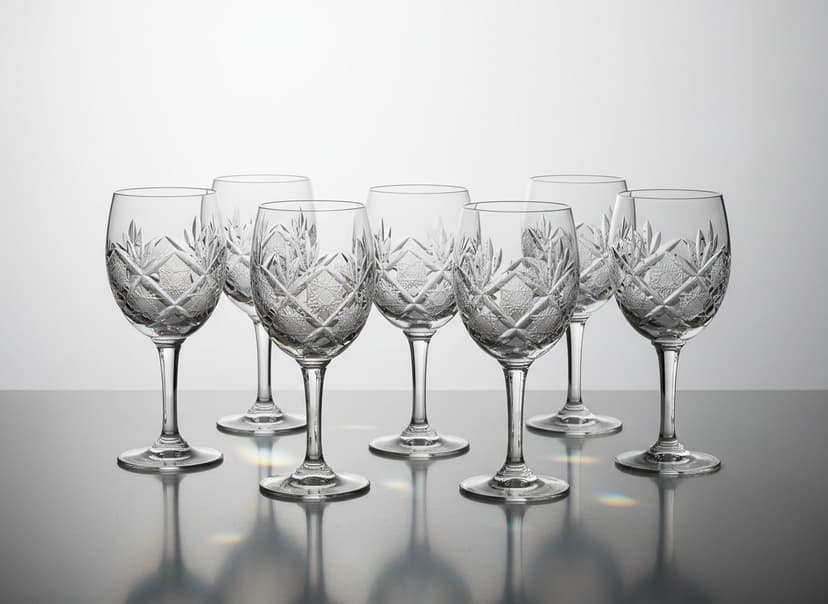
Waterford crystal follows the same downward trajectory as fine china, and for the same reasons: formal entertaining has declined and estates are liquidating faster than new collectors are forming. A set of eight Lismore wine glasses that retailed for six hundred dollars sells for one hundred and twenty to two hundred and fifty today. The single most important distinction in this category is where the piece was made. Waterford closed its original Irish factory in 2009 and moved most production to Europe and Asia, and pieces marked Made in Ireland command a consistent premium over later production. The acid-etched mark on the base identifies both origin and era. Pattern matters, with Lismore being by far the most produced and therefore the least valuable per piece, while discontinued and short-run patterns carry premiums. Large decorative pieces, chandeliers, and commissioned trophies occupy a separate and much higher tier than tableware.
Country of manufacture is the primary variable, and Irish-made pieces from before the 2009 factory closure command a consistent and substantial premium over later production of the same pattern. Pattern matters, with Lismore's enormous production volume making it the least valuable per piece and discontinued patterns bringing more. Form and size drive value, since a decanter or a large cut bowl involves far more hand work than a wine glass. Cut complexity and depth are visible quality indicators that buyers assess directly. Condition is judged on rim chips, which are common and easily missed, on internal cloudiness from dishwasher use or water sitting in decanters, and on any scratching from stacking. Completeness of stemware sets matters, and matched sets of eight or twelve sell better than odd numbers. Original boxes and certificates add value primarily for limited editions and gift pieces.
Buying & Selling Tips
Buying
Check the acid-etched mark on the base. Made in Ireland pieces are worth substantially more than later production.
Run a fingernail around every rim. Chips are common on stemware and are the most frequently hidden defect.
Hold decanters to light and check for internal cloudiness. Water left standing etches the interior permanently.
Buy discontinued patterns over Lismore if buying for value. Lismore was produced in enormous quantities.
Confirm decanters include their original numbered stopper. Stoppers were ground to fit individual decanters.
Selling
State Made in Ireland in the title if applicable. It is the first thing informed buyers look for.
Photograph the acid-etched base mark clearly. It establishes both authenticity and production era.
Sell matched sets of eight or twelve together. Odd numbers sell slowly and at a discount.
Clean thoroughly and photograph against a dark background. Crystal photographs badly on white and buyers judge clarity.
Pack each piece individually in bubble wrap inside a double box. Stemware breakage in transit is very common.
Waterford Crystal FAQ
Is Waterford crystal still valuable?
Less than it once was. A set of eight Lismore wine glasses that retailed for $600 now sells for $120 to $280. Irish-made pieces and discontinued patterns hold value best.
How can I tell if Waterford was made in Ireland?
Check the acid-etched mark on the base. Pieces made before the 2009 factory closure are marked Made in Ireland, and they command a consistent premium over later European and Asian production.
Which Waterford pattern is the most valuable?
Discontinued and short-run patterns such as Alana and Colleen bring more per piece than Lismore, which was produced in enormous quantities. Large decorative pieces and chandeliers are a separate and higher tier.
Can Waterford crystal go in the dishwasher?
No. Dishwasher detergent etches lead crystal, producing permanent cloudiness that cannot be polished out. Cloudy pieces sell for a small fraction of clear ones.
Why has Waterford crystal declined in value?
Formal entertaining has declined, younger households avoid hand-wash-only glassware, and estate liquidations have flooded the market. Production also moved out of Ireland in 2009, which reduced the brand's collector cachet.
Got Waterford Crystal to Value?
Upload a photo and get a free AI-powered valuation in seconds. No sign-up required.