Last updated: September 2026
How Much Is a Violin Worth?
Check current market values, learn what affects pricing, and get tips for buying and selling.
← All Violins valuationsWhat do you want to value?
Get the free app for unlimited scans


Violins Price Guide
Current market values based on recent sales data and market trends.
| Item | Condition | Price Range |
|---|---|---|
| Modern Chinese student violin | Playable, with case | $80 - $350 |
| German or Czech workshop violin, 1900s | Playable, no cracks | $400 - $1,800 |
| Better German workshop, labeled maker | Excellent | $1,500 - $6,000 |
| French workshop (Mirecourt), 1800s | Excellent | $3,000 - $15,000 |
| Named European maker, certified | Excellent | $8,000 - $60,000 |
| Italian instrument, certified maker | Excellent | $40,000 - $500,000+ |
| Violin with unrepaired crack | Playable | 40% - 70% of clean |
| Violin bow, pernambuco, unnamed | Good | $150 - $800 |
| Violin bow, named French maker | Excellent | $3,000 - $60,000 |
| Instrument needing full setup | Not playable | $100 - $400 below playable |
What Determines Violins Value
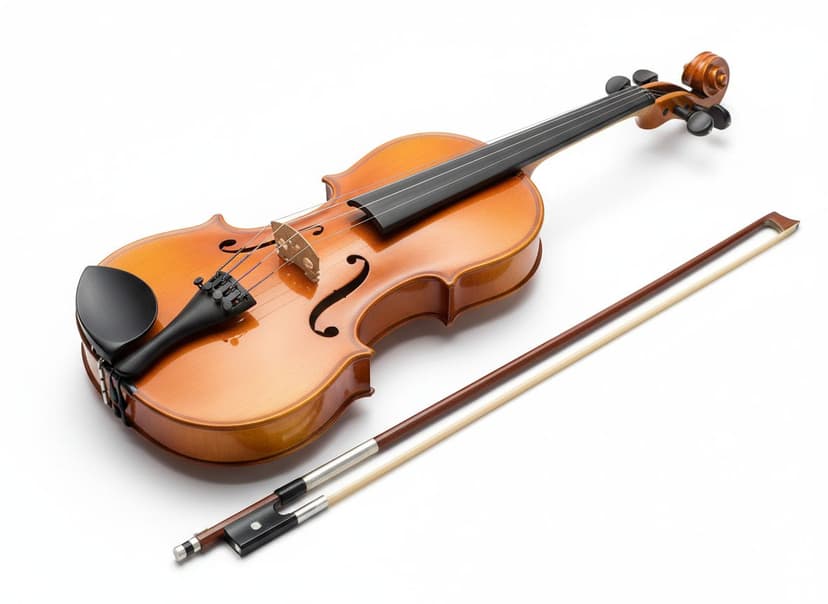
Violin valuation begins by disposing of the most common misconception: a label reading Antonius Stradivarius Cremonensis inside a violin almost never indicates a genuine Stradivari. Hundreds of thousands of German and Czech workshop violins made between 1880 and 1930 carry that label as a model designation, indicating the instrument copies the Stradivari pattern. Those violins are real instruments with real value, typically five hundred to three thousand dollars, but they are not the multimillion-dollar instruments people hope for. The actual market runs in tiers. Modern factory student violins from China are worth one hundred to four hundred dollars. Antique European workshop instruments occupy the middle. Named-maker instruments from recognized European workshops and individual luthiers reach five figures. Genuine Italian instruments by known makers start in the tens of thousands. Certification by a recognized expert is the only path to establishing value at the higher tiers.
Maker attribution is everything at the upper tiers, and it must be established by a recognized expert rather than by the label inside, which is unreliable. Origin and workshop matter in the middle tiers, with French Mirecourt and better German shops above generic production. Condition is assessed on cracks, with soundpost cracks on either the top or back being the most serious and reducing value by half or more. Repairs and their quality matter, and well-executed old repairs are accepted while poor ones are not. Sound quality and playability affect what performing musicians will pay, though collectors value provenance over sound at the top. Setup condition determines whether the instrument is playable, and a proper setup costs $150 to $400. Bows are valued entirely separately and a good bow can be worth more than the violin it came with. Case value is negligible unless it is an antique in its own right.
Buying & Selling Tips
Buying
Ignore the label. A Stradivarius label inside a violin is almost always a model designation, not an attribution.
Check for soundpost cracks by looking inside with a light. They are the most serious defect and halve the value.
Have any instrument over a few thousand dollars appraised by a recognized violin expert before purchase.
Evaluate the bow separately. A good bow can be worth more than a modest violin and is often overlooked.
Play the instrument or have someone play it. Sound quality varies enormously between instruments of similar description.
Selling
Get an expert appraisal before selling anything you believe is valuable. Attribution is what creates value and it requires expertise.
Photograph the front, back, sides, scroll, and the label through the f-hole.
Disclose all cracks and repairs. Violin buyers examine with lights and mirrors and undisclosed damage causes returns.
Have the instrument set up and playable. A violin that plays well sells much faster than one needing work.
Sell fine instruments through a specialist violin dealer or auction. General marketplaces cannot authenticate and buyers know it.
Violins FAQ
Is my violin a real Stradivarius?
Almost certainly not. Hundreds of thousands of German and Czech workshop violins from 1880 to 1930 carry a Stradivarius label as a model designation. Genuine Stradivari instruments number around 650 and their locations are largely documented.
How much is an old violin worth?
A typical German or Czech workshop violin from the early 1900s brings $400 to $1,800. Better attributed workshops reach $1,500 to $6,000, and certified named makers go into five and six figures.
What is a soundpost crack?
It is a crack in the top or back plate at the point where the soundpost presses against it. It is the most serious structural damage a violin can have and typically reduces value by half or more even after repair.
Are violin bows valuable?
Yes, and often more than people expect. A decent pernambuco bow brings $150 to $800, and bows by named French makers reach $3,000 to $60,000, sometimes exceeding the value of the violin they accompany.
How do I get a violin appraised?
Take it to a specialist violin shop or a recognized expert who issues written certificates. General antique appraisers cannot attribute instruments, and attribution is what determines value above the workshop tier.
Got Violins to Value?
Upload a photo and get a free AI-powered valuation in seconds. No sign-up required.