Last updated: September 2026
How Much Is a Vintage Tractor Worth?
Check current market values, learn what affects pricing, and get tips for buying and selling.
← All Tractors valuationsWhat do you want to value?
Get the free app for unlimited scans


Vintage Tractors Price Guide
Current market values based on recent sales data and market trends.
| Item | Condition | Price Range |
|---|---|---|
| Ford 8N or 9N | Running, unrestored | $1,800 - $4,000 |
| Ford 8N | Fully restored | $4,500 - $9,000 |
| Farmall H or M | Running | $1,500 - $4,500 |
| Farmall Cub | Running, good | $1,500 - $4,000 |
| John Deere Model A or B | Running | $2,500 - $7,000 |
| John Deere Model G or R | Restored | $8,000 - $25,000 |
| Allis-Chalmers WD or WD45 | Running | $1,500 - $4,000 |
| Rare variant (high-crop, industrial) | Restored, documented | $15,000 - $80,000 |
| Any tractor not running | Complete | $400 - $1,500 |
| Original unrestored survivor | Excellent, original paint | +20% - 60% |
What Determines Vintage Tractors Value
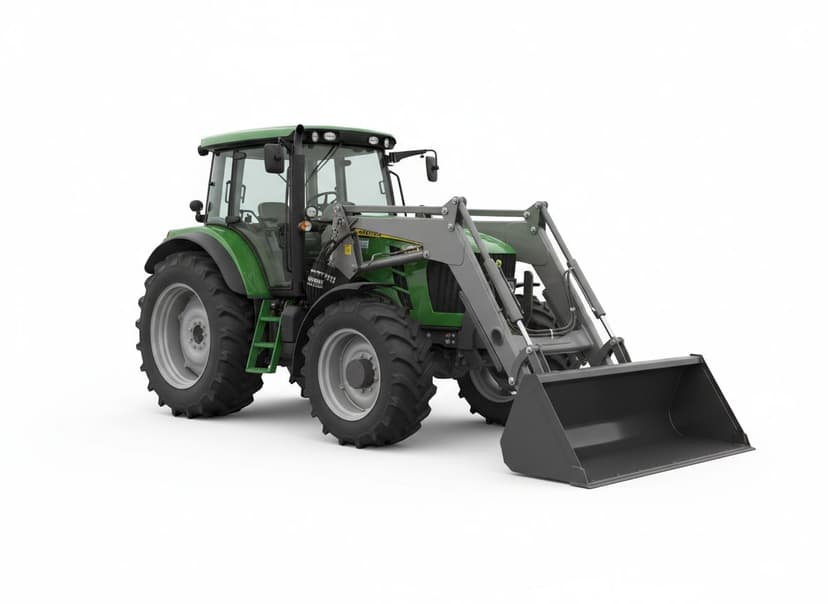
Vintage tractor collecting is driven by nostalgia, mechanical simplicity, and genuine ongoing usefulness, which gives it a broader buyer base than most antique machinery. The core of the market is American tractors from the 1930s through the 1960s, with John Deere two-cylinder models, International Harvester Farmalls, Ford N-series, and Allis-Chalmers forming the main collecting categories. John Deere two-cylinder tractors, particularly the letter series, have the most organized collector following with clubs and shows dedicated to them. The Ford 8N and 9N are the volume tractors of the hobby, produced in enormous quantities and still used on small properties, which keeps prices modest but demand steady. Value depends on make, model rarity, running condition, and restoration quality, with a properly restored show tractor worth several times a running field tractor. Rarity within a model line, including industrial variants, high-crop versions, and low-production years, is where the real money sits.
Make and model set the framework, and within each make the low-production variants carry the premiums. Running condition is the primary practical variable, since a tractor that starts and operates is worth several times a seized one and buyers test this directly. Restoration quality matters and the market distinguishes clearly between a repaint and a proper mechanical and cosmetic restoration, though the full cost of a restoration is rarely recovered on common models. Originality has grown in importance, and unrestored survivor tractors with original paint and decals now command premiums over repainted ones in some circles. Completeness of period-correct equipment, including belt pulleys, PTO, three-point hitch, and original implements, adds value. Tire condition is a real cost factor since rear tractor tires run $400 to $1,200 per pair. Documentation including original manuals and purchase records adds modestly.
Buying & Selling Tips
Buying
Start and operate the tractor before buying. A seized or non-running engine is the difference between a $3,000 tractor and a $600 one.
Check the rear tires. A pair costs $400 to $1,200 and worn tires should come off the purchase price.
Look for rare variants within common model lines. High-crop, industrial, and orchard versions are worth many times the standard model.
Inspect for cracked blocks and welded repairs on the castings. Frost damage is common on tractors stored outside.
Buy running rather than restored if you want value. Restoration costs rarely translate fully into price on common models.
Selling
Get the tractor running and show it running in a video. It roughly triples the value versus a non-runner.
Photograph the serial number plate, the engine, the tires, and all sides.
Include any original implements, manuals, and period equipment. They add real value and are hard for buyers to source.
State the model and serial number in the listing. Collectors use serial numbers to identify year and variant.
Sell locally or through a farm auction. Transporting a tractor is expensive and limits the buyer pool for distant sales.
Vintage Tractors FAQ
How much is an old Ford 8N tractor worth?
A running unrestored 8N brings $1,800 to $4,000 and a fully restored one reaches $4,500 to $9,000. They were produced in enormous quantities, which keeps prices modest but supply and parts availability excellent.
Which vintage tractors are the most collectible?
John Deere two-cylinder letter series tractors have the most organized following, and rare variants including high-crop, industrial, and orchard versions of any make bring $15,000 to $80,000.
Does restoring a tractor increase its value?
It increases the price but rarely covers the cost on common models. A full restoration can cost $8,000 to $15,000 while adding $3,000 to $5,000 to an 8N's value, so restore for enjoyment rather than profit.
Is an unrestored original tractor worth more?
Increasingly yes. Survivor tractors with original paint and decals in good condition now command twenty to sixty percent premiums in some collecting circles, mirroring trends in classic cars.
How much is a non-running vintage tractor worth?
Typically $400 to $1,500 as a project or parts tractor. The gap between running and non-running is the largest single variable in this market, so getting an engine turning is the highest-return action before selling.
Got Vintage Tractors to Value?
Upload a photo and get a free AI-powered valuation in seconds. No sign-up required.