Last updated: September 2026
How Much Are Vintage Barbie Dolls Worth?
Check current market values, learn what affects pricing, and get tips for buying and selling.
← All Barbie Dolls valuationsWhat do you want to value?
Get the free app for unlimited scans


Vintage Barbie Dolls Price Guide
Current market values based on recent sales data and market trends.
| Item | Condition | Price Range |
|---|---|---|
| 1959 Number One Barbie | Excellent, no box | $5,000 - $12,000 |
| 1959 Number One Barbie | NRFB | $20,000 - $30,000 |
| 1959-60 Number Two Barbie | Excellent | $2,500 - $6,000 |
| 1960 Number Three Barbie | Excellent | $700 - $2,000 |
| 1961-62 Bubble Cut Barbie | Excellent | $120 - $500 |
| 1964-66 Swirl Ponytail | Excellent | $250 - $900 |
| 1967 Twist 'N Turn | Excellent | $150 - $600 |
| 1971 Live Action / mod era | Excellent | $80 - $350 |
| 1980s-90s Barbie | NRFB | $20 - $150 |
| Reproduction / anniversary Barbie | NRFB | $30 - $150 |
What Determines Vintage Barbie Dolls Value
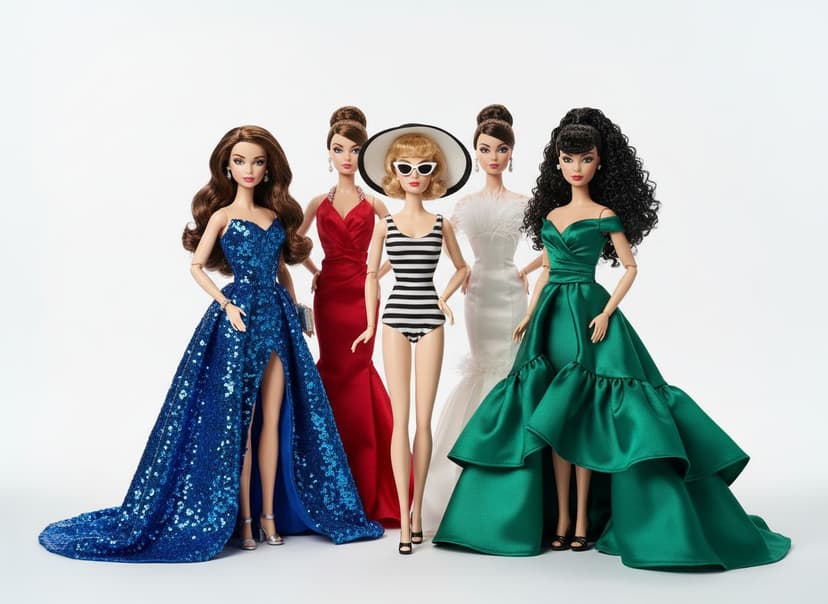
Barbie has been produced continuously since 1959 and the value curve across that history is steep and specific. The 1959 Number One Barbie, identifiable by holes in her feet with copper tubes for a stand, white irises, and heavy black eyeliner, is the flagship of the market and brings five figures in good condition. Values decline sharply through the early ponytail numbers, then again after 1967 when production scaled dramatically. The single most important valuation concept is NRFB, never removed from box, which can multiply a doll's value by five to ten times over the same doll played with. Identification runs through a set of markers: the body markings on the buttocks, eye color and eyeliner style, hair type and color, and the specific mold of the face. Reproduction Barbies issued from the 1990s onward look similar to the originals and are worth a small fraction, which is the most common mistake buyers make.
Year and issue number drive value most, and the first three numbered issues from 1959 to 1960 occupy a tier far above everything after. Condition is graded on a demanding scale where original hair set, unmarked face paint, and firm limbs all matter, and the most common defects are green ear discoloration from earring metal, neck splits, and faded or chewed hair. Original clothing and accessories add substantially, and a doll wearing her correct original outfit can be worth double a nude one. NRFB status is the largest single multiplier, and box condition within that grade matters too. Body markings are used both for dating and authentication, and reproductions have different markings that identify them immediately. Hair color affects value, with certain shades produced in smaller numbers. Finally, provenance and original purchase documentation matter at the top of the market where six-figure collections change hands.
Buying & Selling Tips
Buying
Check the buttock markings first. They date the doll and immediately distinguish originals from 1990s reproductions.
Look for green ear discoloration. It is caused by metal earrings corroding into the vinyl and is very difficult to remove.
Examine the neck knob and hip joints for splits. Vinyl degradation is progressive and reduces value substantially.
Buy dolls in original outfits when possible. Correct original clothing can double the value over a nude doll.
Learn the difference between a Number One and a Number Two Barbie. Foot holes are the fastest identifier and the price gap is enormous.
Selling
Do not restyle the hair or clean the face paint. Original condition, even if imperfect, outsells any restoration attempt.
Photograph the body markings, the face straight on, and the feet. Those three images let a buyer identify the issue.
Sell NRFB dolls without opening them under any circumstances. Opening the box can reduce value by eighty percent.
List the specific issue number and year. Collectors search by issue and generic Barbie listings get overlooked.
Consider a specialist doll auction for early issues. General marketplaces routinely undervalue Number One and Two dolls.
Vintage Barbie Dolls FAQ
How can I tell if my Barbie is a 1959 original?
The Number One Barbie has holes in the bottoms of her feet with copper tubes, white irises with pointed eyebrows, and specific body markings reading Barbie TM Pats Pend MCMLVIII. Reproductions lack the foot holes and have different markings.
What does NRFB mean for Barbie dolls?
Never Removed From Box. It is the highest condition grade and can multiply value five to ten times over a played-with example, because so few dolls survived unopened.
Why do vintage Barbies have green ears?
The metal in the original earrings corrodes and reacts with the vinyl head, producing a green stain that penetrates the material. It is very difficult to remove and reduces value significantly.
Are 1990s Barbie dolls worth anything?
Generally not much. Mass-produced 1980s and 1990s dolls bring $20 to $150 even in original boxes. The exceptions are limited designer collaborations and store exclusives with small production runs.
How much is the most valuable Barbie worth?
A 1959 Number One Barbie never removed from her box has sold in the $20,000 to $30,000 range. Excluding one-off diamond-encrusted charity dolls, that is the ceiling for a production Barbie.
Got Vintage Barbie Dolls to Value?
Upload a photo and get a free AI-powered valuation in seconds. No sign-up required.