January 7, 2026 · Updated March 2026
Most Valuable Barbie Dolls: Rare Dolls Worth Thousands
Why Vintage Barbie Dolls Are So Valuable
Since her debut at the American International Toy Fair on March 9, 1959, Barbie has become the best-selling fashion doll in history. Over one billion Barbie dolls have been sold worldwide. While the vast majority are worth very little on the secondary market, early vintage Barbies from 1959 to the mid-1960s can be worth thousands or even tens of thousands of dollars.
The earliest Barbie dolls were produced in much smaller quantities than later versions, and most were played with extensively by children, leaving very few in excellent condition. A combination of rarity, nostalgia, and the cultural significance of Barbie as an American icon drives the market for vintage examples.
The Most Valuable Barbie Dolls
1. Original 1959 #1 Barbie. $8,000 to $27,000+
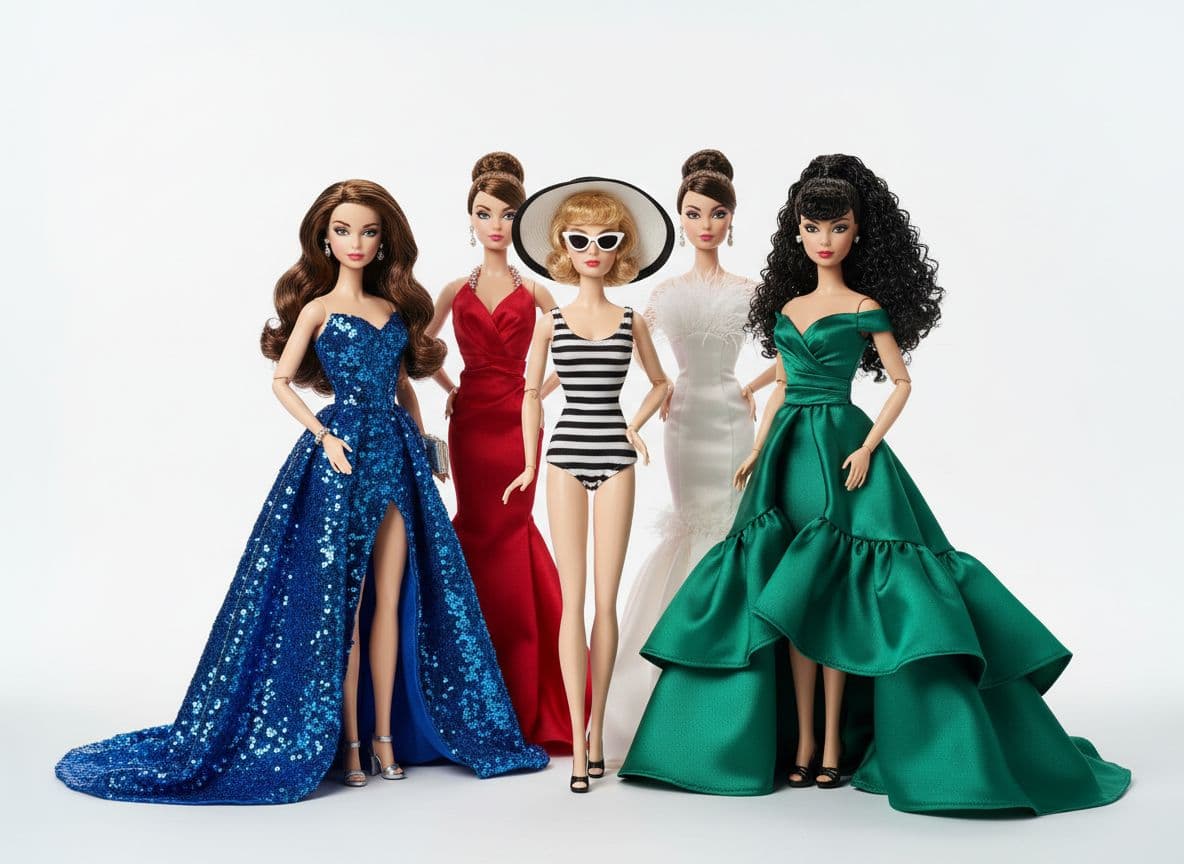
The very first Barbie doll, known as the #1 Ponytail Barbie, debuted in 1959. She can be identified by several features: holes in the feet with copper tubes (for the original stand), white irises with pointed eyebrows, gold hoop earrings, a black-and-white striped swimsuit, and a heavy, solid body. The #1 Barbie was available as a blonde or brunette.
In mint condition with original box and accessories, a #1 Barbie can sell for $20,000 to $27,000 or more. Without the box, in excellent condition, expect $8,000 to $15,000. Even in played-with condition with some flaws, a #1 Barbie is worth $2,000 to $5,000. The brunette version is rarer and commands a premium over the blonde.
2. #2 Ponytail Barbie (1959). $5,000 to $15,000
The #2 Barbie is nearly identical to the #1 but without the holes in the feet (the stand was redesigned). She still has the white irises and pointed eyebrows. Because she is so similar to the #1, identification requires careful examination. In mint condition with box, the #2 can sell for $10,000 to $15,000. Without box, in excellent condition, expect $5,000 to $8,000.
3. #3 Ponytail Barbie (1960). $1,000 to $5,000
The #3 introduced blue irises (replacing white) and curved eyebrows (replacing pointed). She retained the solid body. The #3 is more common than the #1 and #2 but still highly collectible. Mint-in-box examples sell for $3,000 to $5,000. Loose in excellent condition, expect $1,000 to $2,500.
4. Barbie and Ken Dressed Box Sets (1962–1964). $2,000 to $8,000
Mattel produced a series of dressed Barbie and Ken dolls in special window-box packaging from 1962 to 1964. These included outfits like “Career Girl,” “Red Flare,” and “Enchanted Evening.” Complete sets in original boxes are highly sought after. Never-removed-from-box (NRFB) examples can sell for $3,000 to $8,000 depending on the outfit and condition.
5. Bubble Cut Barbie (1961–1967). $200 to $2,500
The Bubble Cut Barbie replaced the ponytail with a short, curled hairstyle. She was produced in larger quantities but is still collectible, especially in rare hair colors. Standard blonde and brunette Bubble Cuts in excellent condition sell for $200 to $500. Rare hair colors like white ginger, brownette, and side-part are worth $500 to $2,500.
6. Vintage Francie (1966–1975). $200 to $4,000
Francie, Barbie’s “Modern Cousin,” debuted in 1966. The most valuable version is the “No Bangs” Francie from 1966, which is extremely rare. A NRFB No Bangs Francie can sell for $2,000 to $4,000. The “Black Francie” (the first African American doll in the Barbie line, released in 1967) is also highly valuable, selling for $1,000 to $3,000 in excellent condition.
7. Midge (1963–1966). $100 to $1,500
Barbie’s best friend Midge was introduced in 1963. The original straight-leg Midge with red hair is the most common. Rare variations include the bendable-leg Midge (1965) and Midge in rare hair colors. A mint-in-box straight-leg Midge sells for $300 to $800. Bendable-leg versions in the box can reach $1,000 to $1,500.
8. Skipper (1964–1975). $100 to $1,000
Barbie’s younger sister Skipper debuted in 1964. Early straight-leg Skippers in original outfits sell for $100 to $400. Bendable-leg versions and rare outfits command premiums. NRFB Skippers with original accessories can sell for $500 to $1,000.
9. Color Magic Barbie (1966). $500 to $3,500
The Color Magic Barbie featured hair and a swimsuit that changed color when a special solution was applied. Because the color-change feature degraded over time, finding a Color Magic Barbie in good condition with working color change is difficult. Mint examples with original accessories sell for $2,000 to $3,500. Dolls with non-working color change sell for $500 to $1,000.
10. De Beers 40th Anniversary Barbie (1999). $10,000 to $85,000
Created to celebrate Barbie’s 40th anniversary, this limited edition Barbie was adorned with real De Beers diamonds. Only a few were produced. The most extravagant version, featuring 160 diamonds, was valued at approximately $85,000. Other versions with fewer diamonds sell for $10,000 to $30,000.
Vintage Barbie Price Guide
| Doll | Year | Loose (Excellent) | Mint in Box (MIB) | Key Feature |
|---|---|---|---|---|
| #1 Ponytail Barbie | 1959 | $8,000–$15,000 | $20,000–$27,000 | Holes in feet, white irises |
| #2 Ponytail Barbie | 1959 | $5,000–$8,000 | $10,000–$15,000 | No holes in feet, white irises |
| #3 Ponytail Barbie | 1960 | $1,000–$2,500 | $3,000–$5,000 | Blue irises, curved brows |
| Bubble Cut (standard) | 1961–67 | $200–$500 | $500–$1,200 | Short curled hair |
| Bubble Cut (rare color) | 1961–67 | $500–$1,500 | $1,500–$2,500 | White ginger, brownette |
| Francie (No Bangs) | 1966 | $1,000–$2,000 | $2,000–$4,000 | Extremely rare variant |
| Black Francie | 1967 | $1,000–$2,000 | $2,000–$3,000 | First AA doll in Barbie line |
| Midge (straight-leg) | 1963 | $100–$300 | $300–$800 | Barbie’s best friend |
| Color Magic Barbie | 1966 | $500–$1,500 | $2,000–$3,500 | Color-changing feature |
| De Beers 40th Ann. | 1999 | N/A | $10,000–$85,000 | Real diamonds |
What to Look For When Evaluating Vintage Barbies
- Body marks: Early Barbies have “Barbie TM” or “Barbie ®” marks on their buttocks. The specific marking helps identify the year and version. “Japan” on the foot indicates early production.
- Hair condition: Original, untrimmed hair in good condition significantly increases value. Frizzy, cut, or styled-over hair reduces value dramatically.
- Face paint: Original, unfaded face paint is essential. Look for intact lip color, eyebrows, and eye paint. Retouched or repainted faces have reduced value.
- Original accessories: Shoes, earrings, sunglasses, stands, and original outfits all add substantial value. A complete outfit can be worth $50 to $500 on its own.
- Box and packaging: The original box can represent 30% to 50% of the total value. Never-removed-from-box (NRFB) dolls command the highest prices.
- Green ear syndrome: Many vintage Barbies develop green discoloration around the ears from a chemical reaction with the metal earrings. This is common and expected, and while it reduces value slightly, it does not make the doll worthless.
Tips for Buying and Selling Vintage Barbies
- Educate yourself first. Reference books like “The Ultimate Barbie Doll Book” by Marcie Melillo and Barbie collector websites help identify specific versions and their values.
- Buy from reputable sellers. Reproduction Barbies and replacement parts can fool inexperienced buyers. Established doll dealers and auction houses authenticate their merchandise.
- Check eBay sold listings. Filter by “Sold Items” to see real market values, not inflated asking prices.
- Attend doll shows. Regional and national doll shows offer the opportunity to see many dolls in person, compare conditions, and get multiple opinions from experienced collectors.
Think you might have a valuable Barbie doll? Upload a photo to our free AI valuation tool and get an instant estimate. Whether it’s a vintage ponytail or a modern limited edition, we can help you determine what your Barbie is worth.

Shop & Compare Prices
See current listings and recently sold items on eBay