Last updated: September 2026
How Much Are Used Golf Clubs Worth?
Check current market values, learn what affects pricing, and get tips for buying and selling.
← All Golf Clubs valuationsWhat do you want to value?
Get the free app for unlimited scans


Used Golf Clubs Price Guide
Current market values based on recent sales data and market trends.
| Item | Condition | Price Range |
|---|---|---|
| Current year flagship driver | Excellent | $300 - $450 |
| Driver, 3 years old | Excellent | $130 - $230 |
| Driver, 6+ years old | Good | $50 - $110 |
| Iron set, current generation | Excellent | $550 - $900 |
| Iron set, 5 years old | Good | $200 - $450 |
| Wedge, one season of play | Good | $35 - $70 |
| Scotty Cameron putter, standard model | Excellent with headcover | $250 - $600 |
| Scotty Cameron, limited or tour issue | Excellent | $1,200 - $8,000 |
| Ping Anser, early 1970s | Original | $150 - $2,000 |
| Hickory shaft clubs, pre-1930 | Playable | $25 - $400 |
What Determines Used Golf Clubs Value
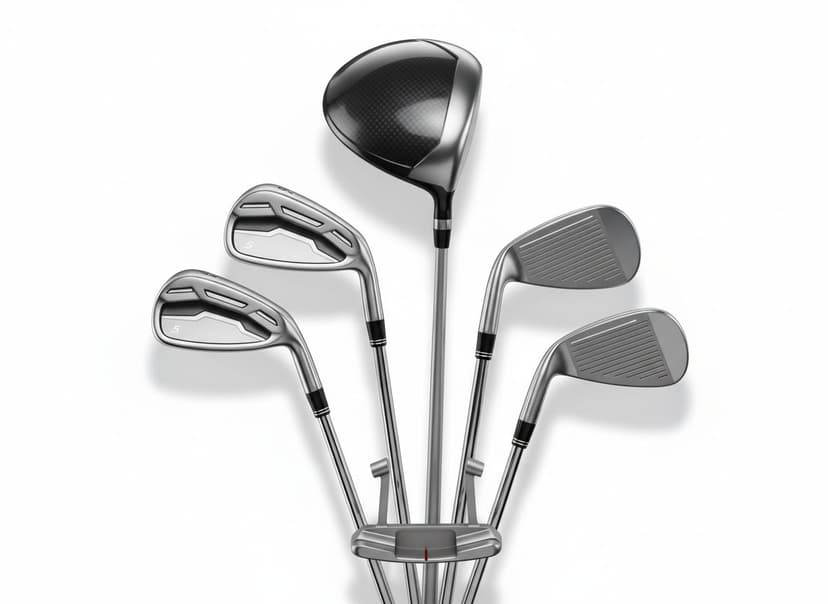
Golf clubs depreciate on a predictable schedule driven by manufacturer release cycles. Titleist, TaylorMade, Callaway, and Ping refresh their flagship lines roughly every one to two years, and each new release pushes the previous generation down by thirty to forty percent. A driver that cost six hundred dollars new sells for three hundred a year later and one hundred and eighty after three years. Irons hold slightly better because sets are replaced less often, and putters hold best of all because the technology changes least. Wedges are the exception in the other direction: grooves wear out with use, so a wedge with two seasons of play is functionally consumed and worth very little. Above the standard resale market sits a small collector segment for Scotty Cameron putters, certain Ping Anser models, and pre-1950 hickory-shafted clubs, where scarcity and provenance rather than performance determine the price.
Model year is the dominant driver for modern clubs, since manufacturers release new flagships annually and each release repositions the previous generation downward. Club type determines the depreciation rate, with putters slowest, irons intermediate, drivers fast, and wedges fastest because grooves are consumable. Brand matters, with Titleist, Ping, and Scotty Cameron holding value best. Shaft is a significant and often overlooked factor, since aftermarket premium shafts can add one to three hundred dollars to a driver's value. Condition is assessed on face wear and groove depth for irons and wedges, crown scratches and sky marks on drivers, and any dents in the head. Completeness with the original headcover, tool, and shaft adapter matters, and a missing headcover costs $30 to $60. Left-handed clubs sell more slowly but to a less price-sensitive market. Collector segments follow entirely different rules based on scarcity.
Buying & Selling Tips
Buying
Buy clubs two to three years old. The performance difference from current models is small and the price drop is fifty percent or more.
Check groove depth on irons and wedges with a fingernail. Worn grooves reduce spin and mean the club is near the end of its useful life.
Verify the shaft. Aftermarket premium shafts are worth hundreds and sellers frequently do not mention them.
Inspect driver crowns for sky marks, the scuffs from hitting the ball on the top edge. They are cosmetic but affect resale.
Confirm the headcover and adjustment tool are included on adjustable drivers. Replacements are expensive.
Selling
Sell before the next model launches. Prices drop thirty to forty percent within weeks of a new flagship release.
Clean the clubfaces and grooves thoroughly and regrip if the grips are worn. Both are cheap and visibly improve offers.
Photograph the face, the sole, the crown, and the shaft label of each club.
State the shaft make, flex, and any aftermarket upgrade in the title. Buyers filter on shaft specifications.
Sell iron sets complete rather than splitting them. Partial sets sell slowly and at a discount.
Used Golf Clubs FAQ
How fast do golf clubs depreciate?
A flagship driver loses roughly forty percent in the first year and sixty to seventy percent by year three, driven by annual model releases. Irons depreciate more slowly and putters slowest of all.
Are used golf clubs worth buying?
Yes. Clubs two to three years old perform nearly identically to current models and cost half as much. The exception is wedges, where groove wear means a used wedge may already be functionally spent.
Why do Scotty Cameron putters hold value?
Limited production runs, strong brand loyalty, and putter technology that changes very little mean demand stays constant. Standard models hold $250 to $600 and limited or tour issue putters reach $1,200 to $8,000.
Does the shaft affect a club's resale value?
Significantly. An aftermarket premium shaft can add $100 to $300 to a driver's value, and sellers who do not identify the shaft often leave that money on the table.
Are old hickory shaft golf clubs valuable?
Playable hickory clubs from before 1930 bring $25 to $400 depending on the maker and design. Unusual patented designs and clubs by recognized Scottish makers command the top of that range.
Got Used Golf Clubs to Value?
Upload a photo and get a free AI-powered valuation in seconds. No sign-up required.