Last updated: September 2026
How Much Is a Sacagawea Dollar Worth?
Check current market values, learn what affects pricing, and get tips for buying and selling.
← All Sacagawea Dollar valuationsWhat do you want to value?
Get the free app for unlimited scans


Sacagawea Dollars Price Guide
Current market values based on recent sales data and market trends.
| Item | Condition | Price Range |
|---|---|---|
| 2000-P / 2000-D common | MS-63 | $1 - $3 |
| 2000-P Cheerios Dollar | MS-66 | $3,000 - $6,000 |
| 2000-P Wounded Eagle | MS-64 | $250 - $500 |
| 2000-P Presentation Finish | MS-67 | $300 - $600 |
| 2000-P Goodacre Presentation | MS-67 | $500 - $900 |
| 2000-P Mule (Quarter Obverse) | MS-65 | $75,000 - $175,000 |
| 2001-P / 2001-D | MS-65 | $5 - $12 |
| 2002-2008 (collector only) | MS-66 | $4 - $10 |
| 2009-Present Native American | MS-66 | $2 - $6 |
| Any year Proof | PR-69 DCAM | $8 - $20 |
What Determines Sacagawea Dollars Value
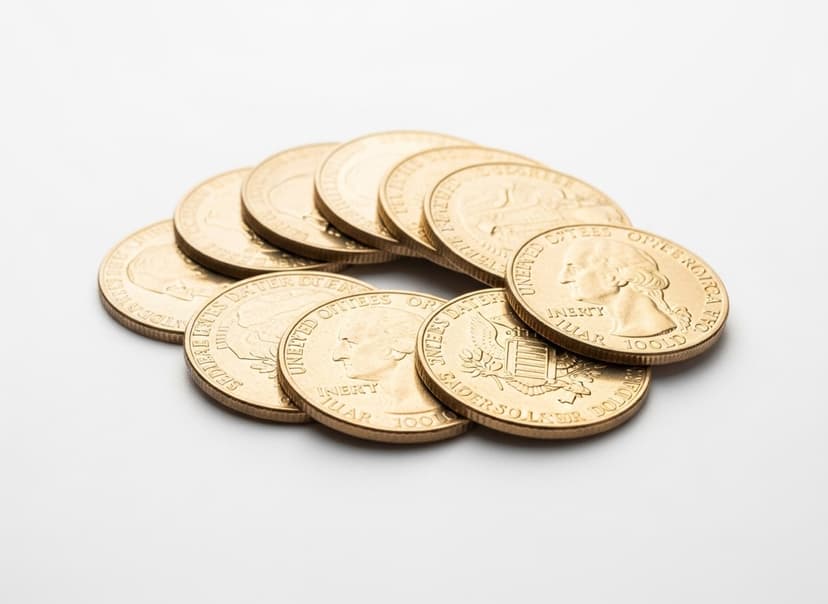
The Sacagawea dollar launched in 2000 with an enormous promotional push, including a Cheerios cereal box giveaway and heavy Mint marketing, and the public promptly refused to use it. Well over a billion coins were struck in the first two years alone and most sat in vaults, which is why the ordinary Sacagawea dollar in your drawer is worth exactly one dollar. The coin is not gold despite its color; it is manganese brass over a copper core. The genuine money in this series sits in three places: the 2000-P Cheerios dollar with enhanced tail feather detail, the 2000-P Wounded Eagle die gouge variety, and the famous Sacagawea-Washington quarter mule, one of the most valuable modern US error coins in existence. From 2009 onward the reverse changed annually under the Native American dollar program and those coins were struck only for collectors.
For the overwhelming majority of Sacagawea dollars, mintage is so high that only the top of the grading scale creates a premium, and even MS-66 examples of 2000-P sell for a few dollars. The real value drivers are the three special 2000-P varieties, each identified by specific die characteristics rather than by date or mint mark. The Cheerios dollar is confirmed by raised, individually detailed tail feathers on the eagle, and the market requires certification because ordinary 2000-P coins are routinely misrepresented as Cheerios examples. Spotting and discoloration are a chronic problem with the manganese brass alloy and reduce value, since collectors want even golden color. Mint packaging matters for the collector-only years from 2002 onward, where original rolls and bags carry the premium rather than the coins themselves.
Buying & Selling Tips
Buying
Never buy a Cheerios dollar raw. The variety is defined by fine die detail that is easy to fake in a photograph and impossible to confirm without certification.
Check 2000-P coins for the Wounded Eagle die gouge yourself. It is findable in circulation and costs nothing to search for.
Avoid heavily spotted coins. Manganese brass discoloration is progressive and will get worse in your holder.
For 2002 through 2008 dates, buy original Mint rolls rather than singles. The packaging is what holds the value.
Ignore listings advertising these as gold dollars. There is no gold in the coin and sellers using that language are usually overpricing.
Selling
Spend ordinary Sacagawea dollars or deposit them at face value. There is no dealer market for common circulated examples.
Submit any suspected Cheerios or Goodacre coin to PCGS with the variety attribution service. The fee is trivial against the potential value.
Photograph the eagle's tail feathers at high magnification if you are selling a claimed variety. That single image decides the sale.
Sell collector-year rolls unopened. Once you break a roll, buyers assume it has been searched and discount accordingly.
The mule error should go to a major numismatic auction house, never to a general marketplace where it will be assumed fake.
Sacagawea Dollars FAQ
Are Sacagawea dollars made of gold?
No. The golden color comes from a manganese brass outer layer over a pure copper core. There is no gold in the coin, and its metal value is only a few cents.
How much is a 2000-P Sacagawea dollar worth?
A normal one is worth $1. Over 767 million were struck in Philadelphia alone. The exceptions are the Cheerios variety, the Wounded Eagle die gouge, and the presentation finishes, which range from a few hundred to several thousand dollars.
What is the Cheerios Sacagawea dollar?
In 2000 the Mint placed 5,500 dollars in Cheerios boxes as a promotion. Those coins were struck from a prototype reverse with sharply detailed, individually separated tail feathers on the eagle. Certified examples sell for $3,000 to $6,000.
What is the Sacagawea mule error?
A small number of coins were struck with a Washington state quarter obverse paired with the Sacagawea reverse. Fewer than twenty are known and they sell in the $75,000 to $175,000 range, making it one of the most valuable modern US errors.
Why are Sacagawea dollars not in circulation?
Public resistance to dollar coins meant they piled up unused in Federal Reserve vaults. Since 2012 the Mint has struck them only for collectors, sold in rolls and bags rather than released to banks.
Got Sacagawea Dollars to Value?
Upload a photo and get a free AI-powered valuation in seconds. No sign-up required.