Last updated: September 2026
How Much Is a Ruby Worth Per Carat?
Check current market values, learn what affects pricing, and get tips for buying and selling.
← All Ruby valuationsWhat do you want to value?
Get the free app for unlimited scans


Rubies Price Guide
Current market values based on recent sales data and market trends.
| Item | Condition | Price Range |
|---|---|---|
| 1 ct, commercial quality, heated | Thailand / Africa | $300 - $900 per carat |
| 1 ct, good color, heated | Mozambique | $1,500 - $4,000 per carat |
| 1 ct, fine color, unheated | Mozambique, GIA | $5,000 - $12,000 per carat |
| 1 ct, pigeon blood, unheated | Burma, GRS certified | $15,000 - $40,000 per carat |
| 3 ct, fine color, unheated Burma | Certified | $40,000 - $120,000 per carat |
| 5 ct+, pigeon blood Burma | Certified | $100,000 - $300,000+ per carat |
| Star ruby, 5 ct | Good star, translucent | $150 - $1,200 per carat |
| Lead-glass composite ruby | Any size | $10 - $40 per carat |
| Lab-created ruby | Any size | $5 - $30 per carat |
| Antique ruby jewelry | Victorian to Art Deco | Varies widely |
What Determines Rubies Value
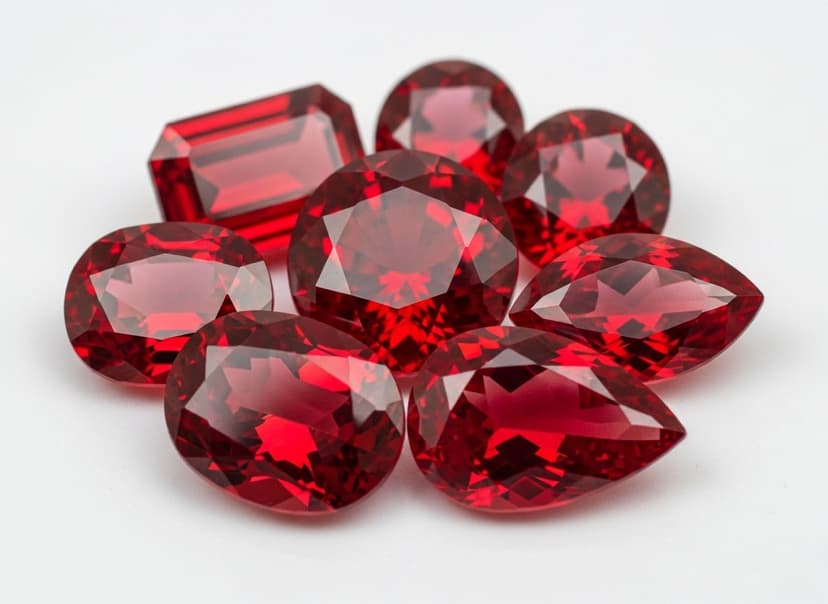
Ruby is the most valuable colored gemstone per carat, and top-quality examples exceed diamonds of the same weight by a wide margin. The market runs on three variables that matter far more than the four Cs framework used for diamonds: color, origin, and treatment. Color is judged on hue, saturation, and tone, with the trade term pigeon blood describing a pure, vivid red with a slight blue undertone and strong fluorescence. Origin carries real financial weight because Burmese rubies from the Mogok valley have historically produced the finest material and command premiums of two to five times over comparable stones from Mozambique or Thailand. Treatment is the variable most buyers misunderstand: the vast majority of rubies on the market are heat treated to improve color, which is accepted and disclosed, but glass-filled or lead-glass composite rubies are a fundamentally different product worth a tiny fraction and are sold widely without adequate disclosure.
Color dominates and is assessed as a combination of hue, saturation, and tone, with the ideal being a vivid pure red that is neither too dark nor pinkish. Origin is the second largest factor and Burmese material commands a substantial premium, which is why laboratory origin reports from GRS, SSEF, or Gübelin are standard on high-value stones. Treatment status creates the third major split, since an unheated stone of the same appearance sells for two to three times a heated one. Clarity is judged more leniently than in diamonds because rubies are naturally included, and silk inclusions can actually improve appearance by scattering light. Cut quality matters for brilliance but rubies are often cut to preserve weight, so windowing and poor proportions are common. Size drives price exponentially because fine ruby rough above two carats is genuinely rare. Certification is essentially mandatory above a few thousand dollars.
Buying & Selling Tips
Buying
Ask directly whether the stone is glass filled. Lead-glass composite rubies are common in mainstream retail and are worth a fraction of natural ruby.
Require a report from GIA, GRS, SSEF, or Gübelin for anything over a few thousand dollars. Origin and treatment both need laboratory confirmation.
View the stone under multiple light sources. Fine rubies fluoresce under daylight and look markedly better than lesser stones in sunlight.
Do not assume Burmese means better in every case. Mozambique now produces excellent material at a significant discount.
Check for windowing by holding the stone over text. If you can read through the center, the cut is too shallow and brilliance suffers.
Selling
Get a laboratory report before selling. Origin and no-heat status can multiply the price and buyers will not pay a premium on your assurance alone.
Sell fine stones at auction or through a colored stone specialist. General jewelers price conservatively on ruby because they lack the expertise.
Do not have a stone recut without expert advice. Recutting loses weight and can destroy value if the original proportions were intentional.
Photograph in natural daylight against a neutral background. Ruby photographs poorly under artificial light and looks dark or brownish.
For antique jewelry, get the piece evaluated as a whole. Period settings sometimes carry more value than the stone.
Rubies FAQ
What is pigeon blood ruby?
It is the trade term for the finest ruby color, a vivid pure red with a slight blue undertone and strong fluorescence. Laboratories including GRS apply it as a formal grading designation, and stones that earn it command large premiums.
Are rubies more expensive than diamonds?
Top-quality rubies are, substantially. A fine unheated Burmese ruby can exceed $40,000 per carat while a comparable diamond might be $10,000. Commercial-grade rubies, however, cost far less than diamonds.
Does heat treatment reduce a ruby's value?
Yes, considerably. Heat treatment is accepted and disclosed industry practice, but an unheated stone of equivalent appearance typically sells for two to three times as much because untreated fine material is far rarer.
What is a glass-filled ruby?
It is low-grade corundum whose fractures have been filled with lead glass to improve apparent clarity. It looks like ruby but is fragile, can be damaged by ordinary jewelry cleaning, and is worth $10 to $40 per carat rather than thousands.
How can I tell if my ruby is real?
Natural rubies show inclusions under magnification and fluoresce red under UV light. Lab-created stones are chemically identical and require gemological testing to distinguish, so a laboratory report is the only reliable answer for a valuable stone.
Got Rubies to Value?
Upload a photo and get a free AI-powered valuation in seconds. No sign-up required.